

Subscribe To Our Newsletter!
Subscribe to the newsletter to stay up to date with the latest news and most useful
Newsletter
↑
Back to Top


Fast storage is no longer a luxury in modern PCs - it’s the expectation. What really separates a good SSD from a forgettable one today is how consistently it performs, how reliable it feels over time, and whether it justifies its price. That’s where this Biwin Black Opal NV7400 SSD Review starts. The NV7400 is built for gamers, content creators, IT professionals, and everyday users who want PCIe Gen4 speed without paying top-tier premiums.
It combines high sequential performance, sensible thermal control, and dependable data protection in a standard M.2 form factor. On paper, it looks thoughtfully balanced rather than overdesigned. The real test, though, is whether that balance survives real workloads - or starts to crack under pressure.
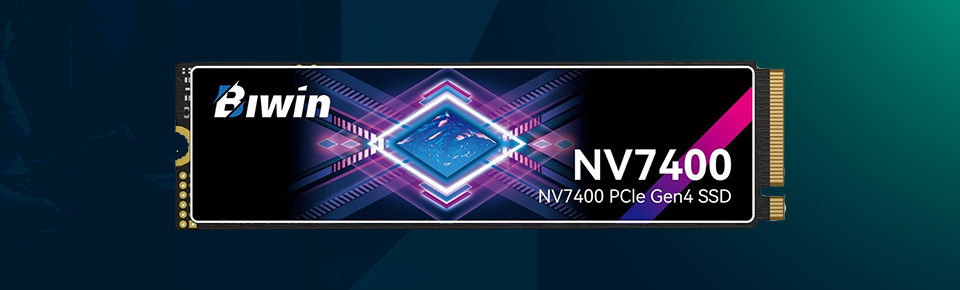
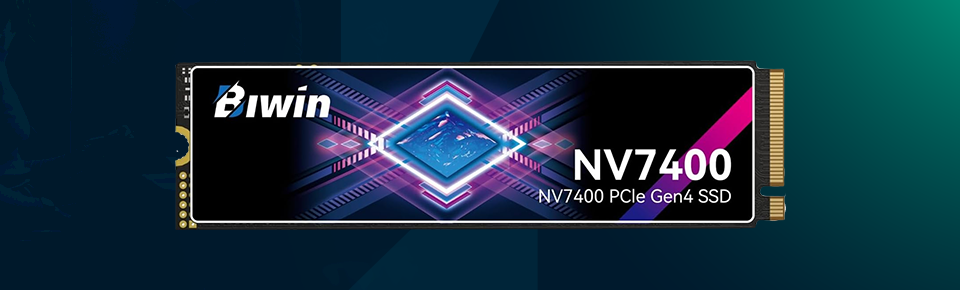
The Biwin Black Opal NV7400 SSD prioritizes performance above embellishments, which is evident in its spec-sheet provided below:
· PCIe Gen4 x4 interface with NVMe 1.4 support for reliable data transfers.
· Sequential read speeds reaching up to 7450 MB/s
· Sequential write speeds up to 6500 MB/s
· Strong random read and write IOPS for everyday responsiveness
· High-quality 3D TLC NAND designed for long-term use
· DRAM-less architecture supported by Host Memory Buffer
· Graphene thermal pad for improved heat control
· ECC and 4K LDPC error correction safeguard your data
· Capacities available in 512 GB, 1 TB, 2 TB, and 4 TB options to meet storage needs from OS boot to media libraries.
· M.2 2280 form factor allows easy installation in desktops, laptops, and compatible consoles.
· Five-year limited warranty adds confidence for extended ownership
Taken together, these specifications place the NV7400 firmly in the “reliable Gen4 workhorse” category rather than the headline-chasing elite.
The SSD market has shifted fast. Gen3 was the ceiling a few years back. Now Gen4 is mainstream, with Gen5 edging into consumer territory. This opens room where older-generation hardware stays affordable while still delivering solid performance. For most users, Gen4 remains the sweet spot. Industry insights from storage analysts, motherboard manufacturers, and TechAtlantix consistently show Gen4 SSDs leading upgrades due to responsiveness and cooling requirements needs.
Within this segment, buyers usually choose between premium drives with onboard DRAM and more affordable DRAM-less models that rely on Host Memory Buffer. As performance gaps have narrowed, many users now accept HMB designs without hesitation. Competing Gen4 SSDs from brands like Samsung, WD, and Kingston often charge more for relatively small gains. This is the space the NV7400 occupies, not as a record breaker, but as a practical answer to modern performance needs today.
The NV7400 doesn't chase aesthetics. It is a black PCB [Printed Circuit Board] featuring a minimalistic label – with no RGB and flashy heatsinks. This is beneficial if your motherboard features integrated M.2 cooling or if you are installing in a laptop with limited space. The graphene thermal pad is sufficiently thin to prevent clearance complications. Build quality feels solid with well-soldered components and no flex. At standard M.2 2280 dimensions, it fits any compatible slot without drama. The lack of a bulky heatsink means less weight for laptops. If you expect thick aluminum cooling, this looks stripped down - but the graphene pad works, and many motherboards provide thermal solutions anyway.
Overall, the design compliments compatibility, airflow, and enduring reliability over visual appeal- and that preference makes sense for its audience.
In day-to-day use, the NV7400 feels exactly how a Gen4 SSD should. Boot times are quick, applications launch without hesitation, and general system navigation feels smooth and immediate.
When pushed harder - installing large games, transferring 4K video files, or working with bulky project folders - sequential performance holds up well. In supported systems, read speeds approach the advertised limits.
During extended workloads, behavior remains controlled. Peak speeds may dip slightly over time, but throttling happens gradually, helping maintain consistent performance instead of sudden slowdowns.


Durability is one of the quieter strengths highlighted in this Biwin Black Opal NV7400 SSD Review. The use of 3D TLC NAND gives the drive a solid foundation for sustained, long-term use.
Data protection is handled through ECC and 4K LDPC error correction, which helps prevent corruption during heavier operations. Endurance scales with capacity. The 1TB model handles around 600 TBW—roughly 328GB daily for five years. Power efficiency hovers around 3-4 watts under load, competitive with other Gen4 drives. DRAM-less architecture means lower idle power. The NV7400 sits midrange - built for longevity without over-engineering.
Thermal performance is handled thoughtfully thanks to the graphene thermal pad and intelligent heat control. Heat kills SSD performance. The NV7400's graphene pad dissipates heat without bulk. During extended use, temperatures peak around 65-70°C under load with reasonable airflow. Pairing motherboard M.2 cooling helps. Laptops with limited airflow might run slightly hotter, but nothing triggers throttling in normal use.
Power draw lands in competitive Gen4 territory. Active use pulls 3-4 watts while idle drops under 50 milliwatts - matters for laptop battery life. DRAM-less design helps by eliminating constant cache power draw. Low-power states work smoothly with Windows management. This efficiency makes the NV7400 a practical choice for portable setups where performance and endurance need to coexist.
The NV7400 works smoothly with standard NVMe tools - rather than depending on proprietary software. No built-in cloning tool, but third-party options like Macrium Reflect work fine. This approach keeps software overhead low and avoids compatibility issues. Biwin provides basic utilities for health monitoring and firmware updates. Interface is straightforward and functional. Check SMART data, view lifespan estimates, perform secure erase.
While it lacks a branded dashboard, most users won’t miss it - especially those already comfortable with established tools.
Daily use feels responsive. Apps open quickly; file copies happen without lag. For gaming, the gap versus top-tier Gen4 drives is marginal. Benchmarks might show differences, but actual load times are fast enough. Creative workloads benefit from solid writes - video editors avoid stutters; photographers see snappy transfers. As an upgrade from SATA or Gen3, improvements are immediately noticeable. For budget builders, this hits the sweet spot.


Every SSD comes with trade-offs, and the NV7400 is no different.
· Strong Gen4 performance for everyday and gaming use
· Balanced price-to-performance value
· Efficient thermal behavior without bulky heatsinks
· Reliable TLC NAND with solid error correction
· Broad capacity range backed by a long warranty
· DRAM-less design limits extreme write-heavy workloads
· No bundled proprietary software tools
· Not designed for benchmark-chasing enthusiasts
· Performance varies slightly across capacities
Overall, the advantages clearly outweigh the limitations for its intended users.
This Biwin Black Opal NV7400 SSD Review ultimately comes down to practicality. The drive delivers fast, consistent PCIe Gen4 performance without unnecessary complexity or inflated pricing. It’s a strong fit for gamers, creators, and general users who value reliability more than bragging rights.
Pricing, design, and performance feel well judged - especially when sourced through Tech Atlantix, where availability and choice matter. The NV7400 doesn’t try to be everything. It simply does what it promises, and it does it well. If you’re looking for a sensible, future-ready SSD upgrade, this one is worth serious consideration.


Your email address will not be published. Required fields are marked *