

Subscribe To Our Newsletter!
Subscribe to the newsletter to stay up to date with the latest news and most useful
Newsletter
↑
Back to Top


Data does not slow down. It multiplies. Logs stack up, backups expand, and archives quietly eat through available capacity. That is exactly the environment the WD Ultrastar DC HC690 was built for. In this WD Ultrastar DC HC690 Review, we are looking at a drive designed for data centers, enterprise storage arrays, cloud platforms, and large archival systems that need massive capacity without adding more racks.
With up to 32TB in a single 3.5-inch form factor, this drive focuses on density and reliability rather than flashy speed claims. Its biggest strength is simple - store more in the same physical space. But does that make it the right choice for your infrastructure strategy? Let’s break it down carefully.


Before we sit to deeply dissect this drive, lets have a quick look at the core specifications that define this drive:
· Up to 32TB capacity for dense enterprise storage.
· SMR recording technology to maximize storage per drive.
· 7200 RPM spindle speed for consistent and stable sequential performance.
· 512MB cache buffer to enable an efficient data flow.
· SATA 6 Gb/s and SAS 12 Gb/s interface versions.
· The average latency of around 4.16 ms manages enough workloads.
· 1 × 10¹⁵ non-recoverable bit error rate
· 550TB per year workload rating
· 2.5 million hours MTBF rating
· Rated for 24×7 continuous enterprise operation
· Standard 3.5-inch form factor
· 5-year limited warranty
Collectively, this spec sheet display a drive design intended for high-capacity, round-the-clock operational environments rather than high-IOPS performance tasks.
Enterprise storage is simultaneously moving in two directions: On one hand SSDs excel in databases and analytics whereas high-capacity HDDs, on the other side, are still used to manage and build backups, compliance archives, media libraries, and cloud cold storage. According to industry reports from McKinsey & Company and Gartner, global data creation keeps rising year after year, pushing businesses to rethink cost per terabyte and rack efficiency.
Here is where drives like the WD Ultrastar DC HC690 prove their real worth. Unlike traditional CMR drives, it uses SMR (Shingled Magnetic Recording) to increase areal density. Compared to earlier Ultrastar models with lower capacities, the HC690 significantly raises storage per drive without changing the 3.5-inch footprint.
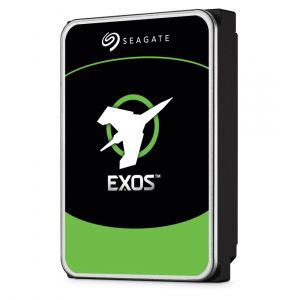
Competitors such as Seagate’s Exos high-capacity models also offer multi-terabyte enterprise drives, but the HC690 positions itself strongly with its 32TB ceiling and 550TB/year workload rating. The trade-off, as with most SMR-based solutions, is that it favors sequential and archival workloads over constant small random writes.
From a SWOT perspective, the strength lies in capacity and enterprise endurance. The limitation is workload type suitability. The opportunity is clear - organizations wanting to scale storage without expanding physical infrastructure. The threat? Increasing SSD price drops in cold storage tiers over time.
The HC690 follows a classic enterprise 3.5-inch design. It looks exactly how a serious data center drive should - no decorative elements, no distractions. Just a solid metal enclosure built for rack deployment.
The weight and construction feel sturdy. Enterprise HDDs are not meant to be handled daily like external drives. They are meant to sit inside server bays and operate continuously. Compatibility is straightforward. It fits standard server trays and storage arrays without modification. For IT teams, that simplicity matters more than appearance.


Let’s remain clear about the set expectations: this drive functions at 7200 RPM, which is the standard enterprise tier for balanced throughput and efficiency. It is not intended to compete with NVMe SSDs, and neither does it try to. Sequential workloads perform well. Large backup jobs, media ingestion, and archive transfers benefit from the 512MB cache buffer, which smooths out sustained writes.
However, because it uses SMR, frequent small-block rewrites can slow performance. That is the nature of overlapping track design. For write-once-read-many scenarios, performance remains consistent and predictable.
In short, this drive moves large volumes of data reliably. It is not meant for transactional database environments requiring low latency IOPS.
Enterprise drives are measured on endurance, not speed. WD Ultrastar DC HC690's 2.5 million hours MTBF puts it in the enterprise dependability tier.
The 550TB/year workload rating allows 1.5TB per day without exceeding limitations. For archival systems, that is more than sufficient.
The non-recoverable error rate of 1 in 10¹⁵ bits read provides strong data integrity assurance. For organizations managing compliance data or long-term records, this matters more than raw speed.
High-capacity drives generate heat, especially when packed tightly in storage arrays. The HC690 is built for continuous rack operation under controlled data center cooling. It does not include decorative heatsinks because it relies on server airflow systems. In properly ventilated racks, temperature stability remains within enterprise norms. As long as it operates within recommended environmental ranges, thermal behavior remains consistent even under sustained workloads.
Power efficiency becomes critical when deploying dozens or hundreds of drives. A 7200 RPM design balances performance with manageable energy use. Compared to higher RPM enterprise drives, power draw remains reasonable for dense arrays. Over time, reduced energy per terabyte directly lowers operational cost. For data centers optimizing total cost of ownership, this balance between density and consumption is a key advantage.
Western Digital supports enterprise management through monitoring tools such as WD utilities and compatibility with common RAID and storage management systems. Health checks, SMART monitoring, and firmware updates are straightforward in standard server environments. There are no consumer-style migration apps here because this is not a desktop product. Instead, it integrates smoothly into enterprise storage controllers and RAID infrastructures.
In real-world deployment, this drive shines in archival clusters. Imagine a streaming company storing nightly compressed video archives. Sequential write patterns align perfectly with SMR architecture. Hospitals retaining imaging records for compliance are another example. Files are large, written once, and retrieved occasionally. The HC690 handles this efficiently.
As an upgrade, replacing multiple lower-capacity drives with fewer 32TB units reduces rack usage, cabling complexity, and power consumption. That operational simplicity adds long-term value.


Every enterprise product is a blend of strengths and limitations. Here is a balanced view to have a closer look at its positives and drawbacks:
· Massive 32TB capacity reduces rack expansion
· Strong 550TB/year workload rating
· Enterprise-level 2.5M hours MTBF reliability
· SATA and SAS flexibility
· Five-year warranty support
· Not ideal for heavy random write workloads
· Slower than SSD solutions
· Designed mainly for archival and backup use
· Performance depends on workload pattern
Overall, the advantages clearly favor large-scale storage environments with sequential data flows.
This WD Ultrastar DC HC690 Review shows a drive built with one clear mission - maximize storage density without sacrificing enterprise reliability. It does not chase performance records. Instead, it solves a practical problem faced by data centers every day: “how to store more without building more?”.
For cloud providers, archival platforms, compliance storage, and backup infrastructures, this drive makes strategic sense. It lowers cost per terabyte, reduces physical expansion needs, and delivers stable 24×7 operation. If your workload is archival, sequential, and capacity-driven, the answer is simple - yes, it deserves serious consideration.


Your email address will not be published. Required fields are marked *