

Subscribe To Our Newsletter!
Subscribe to the newsletter to stay up to date with the latest news and most useful
Newsletter
↑
Back to Top


Faster storage is often the primary concern when upgrading. But the other problems, reliability, compatibility, and real-world performance, are just as significant. With that in mind, ADATA started selling this XPG Mars 980 Blade SSD – a PCIe Gen5 drive that it designed to be all about crazy fast speeds packed into a svelte, no-nonsense package.
The Mars 980 Blade, at least initially, is not a clipper that tries to grab your attention with style. Instead, it stealthily caters to gamers, laptop users, and PlayStation 5 owners who demand faster load times and smoother performance but don’t want the bulk that comes with hefty hardware. Better still, ADATA lists very high read/write speeds, making this SSD a solid contender amongst the Gen5 competition.
So, does it deliver on the hype? We will be taking a look at the ADATA XPG Mars 980 Blade SSD in this review and share our opinion of the drive. What we’ll do here is go over its specs, design, performance, thermal profile, and how it fares as a daily driver, to help you figure out whether it’s worth dropping your hard-earned cash on.


But before we can talk about real-world performance, let’s take a look at what this SSD offers in raw numbers. See here for a more detailed look at the ADATA XPG Mars 980 Blade, along with its key selling points and features:
These specs sound great on paper. But specs never tell the whole story, and that’s why practical testing and daily use count more.
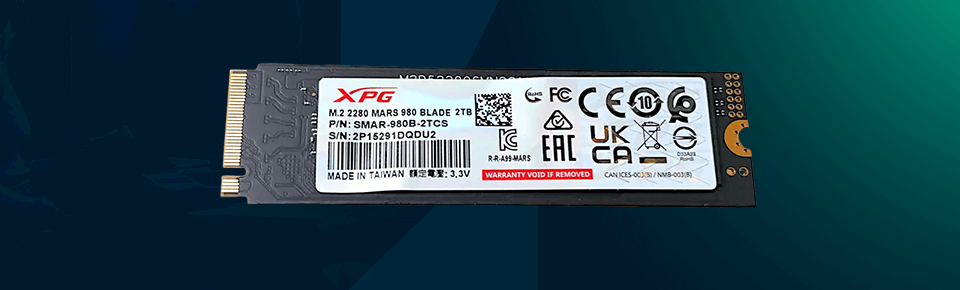
Design-wise, the Mars 980 Blade is a humble yet professional machine. There’s no RGB lighting, no massive heatsink, and there’s barely any styling either. Instead, ADATA aims for a tidy M.2 2280 form factor that fits nearly anywhere.
This SSD is ideal for laptops and ultrabooks due to its low power consumption. It’s also PS5 compatible, so you can save space by seamlessly plugging in a PS4 game drive directly into the console for installation.
Construction quality feels sturdy on its own. The PCB build quality is excellent, with parts organised tidily. For some users, particularly professionals and gamers, that is a good thing.
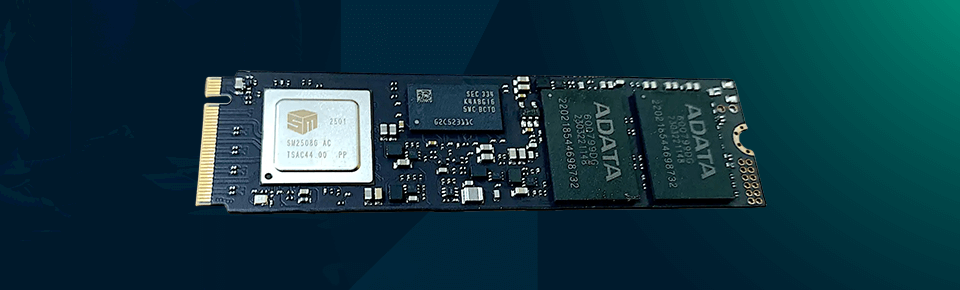
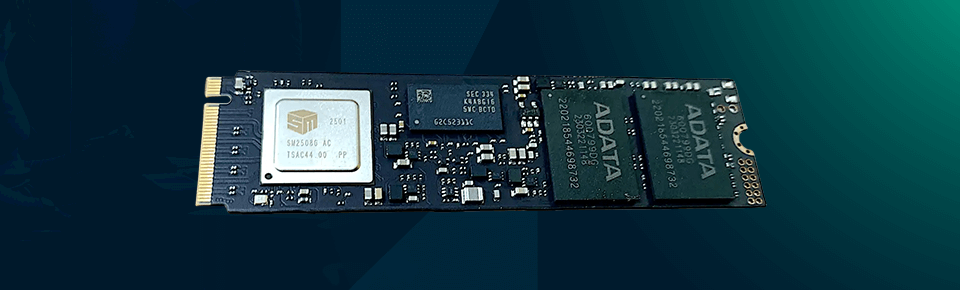
Performance is where the ADATA XPG Mars 980 Blade really excels. The SSD operates significantly faster than Gen3 drives and offers blistering fast PCIe Gen5 x4 speeds. From boot time to running applications, everything seems more rapid and more responsive.
The SSD performs well in day-to-day use. Games load quicker, large files transfer faster, and multitasking feels so smooth. Crispy 4k video files, big project folders, and games are done in no time.
That said, the Mars 980 Blade shares its speed capabilities with most high-speed NVMe SSDs by relying heavily on SLC cache. However, if you're constantly transferring a ton of data, write speed sometimes will fall once the cache is full. But for everyday use, such as gaming, editing, and daily computing, this would barely be noticeable.
For gamers, this SSD is a significant upgrade. On the PC, games load faster, textures appear quicker, and performance in general feels snappier. Things like your open-world games love the extra bandwidth.
There's also a reason for PS5 owners to get the SSD. It is at a speed considered acceptable by Sony and operates consistently as extended storage. Game installs are snappy, loading times are briefer, and fast traveling approaches the instantaneous.
It’s also low-profile, so it fits snugly on the PS5 without obstructing airflow. That makes it a convenient and secure choice for PlayStation fans.
Heat output is always something to watch out for with PCIe Gen5 SSDs. Thankfully, the Mars 980 Blade is somewhat heat-resistant. Even under typical workloads, temperatures are constant and well within safe ranges.
On longer, heavier transfers, that drive can get warm, though — and that’s perfectly normal. On a typical desktop with good airflow, this is not an issue. Nonetheless, users who anticipate running the SSD at full throttle will likely want to add a narrow aftermarket heatsink for additional cooling.
Thermal throttling is generally low and has little impact on everyday performance.
The ADATA XPG Mars 980 Blade is also a power-efficient SSD. It’s also surprisingly not much of a power hog, given its high-speed performance. This is a boon for laptop users concerned about battery life.
Lower power consumption also means less heat is produced, allowing for consistent performance. In terms of speed and efficiency, it’s a decent drive.
For an overview of the above analysis, here's a handy pros and cons list:
The ADATA XPG Mars 980 Blade SSD is a good option for those looking for speed, consistency, and up-to-date storage. It delivers strong Gen5 performance and is compatible across multiple platforms, ensuring stable operation for daily use.
It may not be the most affordable SSD on the market, but it offers a decent balance of speed, efficiency, and compatibility. Gamers will enjoy faster gameplay and quicker load times, while content creators and those looking to build or upgrade a PC will see powerful price-to-performance benefits.
In summary, if you’re looking for a reliable PCIe Gen5 SSD that focuses on performance rather than bundling superfluous bells and whistles, the ADATA XPG Mars 980 Blade is well worth considering.


Your email address will not be published. Required fields are marked *