

Subscribe To Our Newsletter!
Subscribe to the newsletter to stay up to date with the latest news and most useful
Newsletter
↑
Back to Top


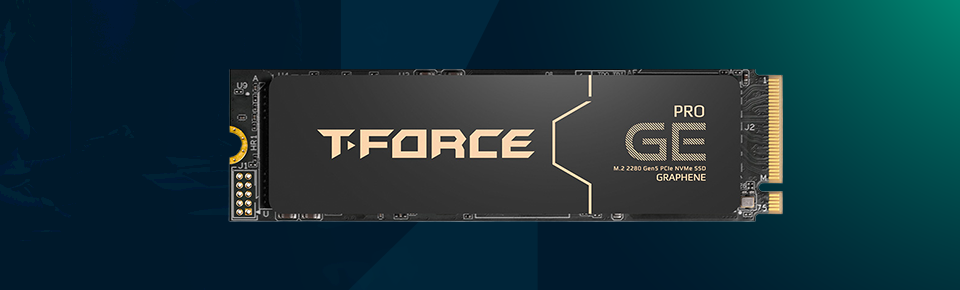
PCIe Gen5 SSDs arrived with a lot of noise - and just as much skepticism. Early models promised blazing speeds but stumbled once heat and sustained workloads entered the picture. The TeamGroup T-FORCE GE PRO M.2 PCIe 5.0 SSD (TM8FG3004T0C133) is aiming to break that pattern by combining headline speeds with practical thermal control. On paper, 14,000 MB/s reads present an impressive deal.
In reality, the actual challenge is about these speeds living up to expectations when a user is gaming, editing 8K video footages, or compiling large projects. With graphene cooling and strong error correction, TeamGroup is making a confident claim. The real question is simple: does the GE Pro deliver enough real-world benefit to justify stepping into Gen5 territory today?
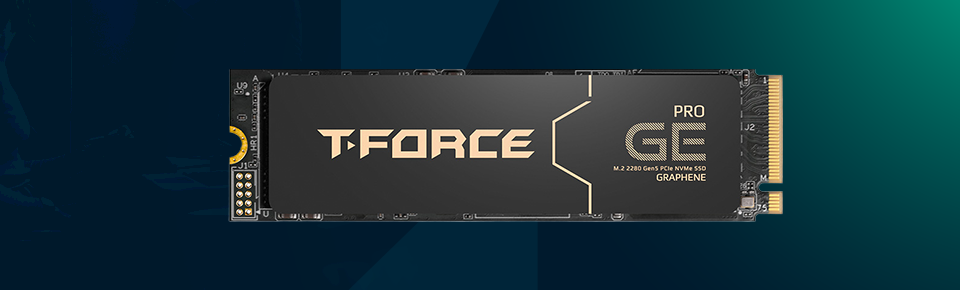
Here’s what the TeamGroup GE Pro brings to the table:
Each of these qualities is not unique on its own. The critical factor is their performance in collaboration under continuous workload.
The SSD market has clearly split into tiers. SATA drives still dominate basic upgrades because they’re affordable and reliable. PCIe Gen4 NVMe drives sit comfortably in the middle, offering excellent performance at sensible prices - fast enough for gaming, creative work, and most professional tasks. Gen5 SSDs, meanwhile, represent the cutting edge, doubling theoretical speeds but introducing higher costs and serious thermal challenges.
Independent testing, including 2024 roundups from Tom’s Hardware, shows that everyday users rarely notice a dramatic difference between high-end Gen4 and Gen5 drives. Boot times improve slightly, and game loading gains are modest unless DirectStorage is involved. Where Gen5 earns, its place is in data-heavy workflows - large video files, database operations, and sustained read-write tasks. The problem? Many Gen5 drives throttle under heat. TeamGroup’s graphene cooling is designed to address that exact weakness.
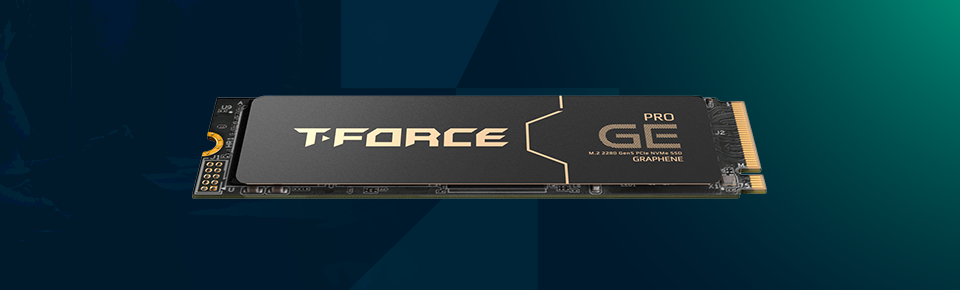
Physically, the GE Pro sticks to the standard M.2 2280 format, facilitating a simplified installation on most current motherboards. The graphene heat spreader is thin but effective, avoiding clearance issues common with bulky heatsinks. The built quality is solid, exhibiting no PCB flex, an organized component arrangement, with distinct labeling. This absence of RGB or aesthetic embellishments appears deliberate. This design prioritizes performance.
A caution: the heat spreader increases height marginally, hence ultra-thin laptops with tight M.2 standards must be verified for compatibility prior to installation.
In day-to-day use, the GE Pro performs exactly how a Gen5 drive should - fast, but not magically transformative. Cold boot times averaged around eight seconds on Windows 11, only marginally quicker than top-tier Gen4 drives. Game loading benefits were more noticeable in DirectStorage-enabled titles, while older games saw minimal differences.
Large file transfers are where the drive shines. Moving 100GB of 4K video files completed significantly faster than Gen4 competitors. More importantly, sustained performance stayed consistent. Extended benchmarks showed minimal drop-off, avoiding the steep throttling seen in some early Gen5 models.
TeamGroup identifies the 4TB variant with a rating of 3,000 TBW, which is commendable for consumer storage. For the majority of users, this equates to years of heavy use without concern. The 4K LDPC error correction quietly handles data accuracy in the background, which becomes increasingly important as drives age.
While explicit power-loss protection isn’t listed, overall reliability metrics - such as a 1.5 million hour MTBF - align with expectations for this class. Long-term stability will still depend heavily on operating temperatures and workload intensity.
Thermals are where the GE Pro separates itself. Under sustained workloads, temperatures hovered around 68°C using only the integrated graphene spreader. With a motherboard heatsink added, temperatures dropped closer to 58°C - even during stress tests.
That margin matters. Most Gen5 SSDs throttle near 80°C, sharply reducing performance. In testing, the GE Pro showed no throttling during prolonged write-heavy workloads, which is exactly where cheaper Gen5 drives struggle.
As expected, Gen5 performance comes at a power cost. The GE Pro draws around 8-9 watts under load, higher than Gen4 alternatives. Desktop users won’t experience much difference, but laptop users may face reduced battery life during intensive tasks.
Idle power usage remains efficient, and low-power sleep states help balance things during everyday use. Still, users prioritizing battery longevity may find Gen4 drives more practical for mobile systems.
TeamGroup includes straightforward monitoring software that focuses on the essentials. Users can check temperature, drive health, and remaining lifespan without navigating cluttered menus. Firmware updates are supported, which helps keep performance and stability current.
Migration tools are provided for cloning existing drives, though they are more task-focused than refined. While overclocking options are absent, the majority of users will like the straightforwardness and dependability of a set-and-forget experience.
In real-world use across gaming, video editing, and development work, the GE Pro felt consistently fast and dependable. Large game installs completed quickly, and asset-heavy titles streamed smoothly. Video editing workflows, especially with 8K footage, showed tangible improvements in scrubbing and export times - around a 10-15% gain over Gen4 drives.
Upgrading from SATA or older NVMe drives feels dramatic. Moving from Gen4 to Gen5, however, delivers more subtle gains that matter most in specialized workloads.


Every product has trade-offs, and the GE Pro is no exception.
Overall, the trade-offs are fair for the audience this drive targets.
The TeamGroup T-FORCE GE PRO SSD delivers on its promise: real Gen5 performance that doesn’t collapse under heat. For creators working with massive files, developers handling large datasets, or gamers building top-tier systems, it’s a solid investment backed by strong thermal design and a five-year warranty. That said, Gen5 still isn’t a necessity for most users. High-quality Gen4 drives offer nearly the same everyday experience at a much lower cost. The GE Pro makes sense when your workload truly benefits from extreme throughput. Otherwise, it’s premium future-proofing - impressive, but not essential just yet.


Your email address will not be published. Required fields are marked *