

Subscribe To Our Newsletter!
Subscribe to the newsletter to stay up to date with the latest news and most useful
Newsletter
↑
Back to Top


If you’re building a dependable NAS setup and want a drive built around stability instead of raw speed, the Western Digital Red Plus is a strong contender. At Tech Atlantix, we often work with IT teams and small businesses that rely on hardware designed for 24×7 workloads, and this drive consistently fits that profile.
With NAS-specific firmware, balanced vibration control and broad enclosure compatibility, the Red Plus targets users who want reliability, quiet operation and predictable performance. The main question we explore here is simple: does the WD Red Plus truly deliver the endurance, efficiency and smooth multi-user performance NAS owners expect?


First have a look at the core specs of this drive before we move to its performance in real environment:
These specifications show that the Western Digital Red Plus is built with NAS-specific needs in mind, not just generic storage.
From a physical and build-quality perspective, the WD Red Plus is similar to standard 3.5-inch NAS drives, and that’s a good thing. It fits traditional drive bays, uses a standard SATA connector, and its housing is designed to cope with the thermal and vibration stresses of multi-bay NAS usage.
The use of dual-plane balancing and NAS-rated electronics is reassuring for systems where multiple drives operate side-by-side. While it doesn’t have flamboyant aesthetics (no RGB lighting or flashy heatsinks), its build quality focuses on reliability, not showmanship. For NAS and small business users that’s exactly the right call.
Performance on the WD Red Plus leans toward smooth, reliable throughput rather than bursts of high speed. Some models list transfer speeds up to 175 MB/s. In one 8 TB variant listing the internal transfer was ~210 MB/s. What this means in practice: for file transfers, backups, media streaming and RAID-based usage it delivers solid performance.
However, if your workflow involves editing high-resolution video directly from the NAS or pushing extremely high I/O loads, an SSD-cached NAS or enterprise-grade HDD will perform better. The Red Plus is designed for consistency, not peak performance - and in multi-drive arrays, it excels exactly where it is meant to.
Durability is one of the stronger selling points of the WD Red Plus. With a 1-million-hour MTBF rating, a 180 TB/year workload limit and a 3-year warranty, the drive is engineered for always-on environments. Its RAID-error recovery control prevents desktop-drive issues such as dropping out of arrays during rebuilds.
Meanwhile, vibration balancing helps the drive operate smoothly in multi-bay setups where several drives spin at once. While it doesn’t reach the durability of WD Red Pro or enterprise models, it offers more than enough endurance for home offices and small businesses.


Heat and vibration are common enemies in multi-drive NAS systems. The WD Red Plus is engineered to run cooler with less power draw compared to older models. The housing, balancing technology and firmware tuning all aim to keep temperatures and vibration under control. That means in densely packed NAS enclosures, the drive is less likely to throttle or degrade quickly due to heat build-up. A well-ventilated NAS still matters, but you’re getting a drive designed with thermal awareness built-in.
Power efficiency is another area where the Red Plus performs well. Its architecture is tuned to reduce power draw without compromising reliability. This results in lower operating temperatures and reduced strain on NAS power supplies - both important when running multiple drives 24×7. Over time, especially in small-business setups with several bays populated, this can contribute to noticeably lower energy usage.
Software support may not be as prominent in an HDD as in SSDs, but the WD Red Plus does come with features worth noting. The NASware™ firmware optimizes drive behavior for NAS and RAID environments. Monitoring of drive health, vibration controls and compatibility testing with many NAS system vendors reduces configuration friction.
For users at Tech Atlantix serving business and public-sector clients, this means fewer surprises during deployment. It’s not about flashy dashboard tools - it’s about built-in reliability features that ease management and maintenance.
In day-to-day use, the WD Red Plus performs exactly as expected for a NAS-oriented drive. File transfers are smooth, media servers’ stream reliably, and RAID rebuilds stay stable. For home labs, Plex libraries, SMB file shares, office backups and surveillance video storage, it provides a calm, predictable experience.
The drive is quiet, doesn’t run excessively hot and handles long-running workloads without complaint. That said, this isn’t the drive for workstation-level tasks or intense creative workflows. Its value lies in reliability and endurance, not high-speed editing or heavy random I/O.
Demand for NAS-ready drives continues to increase as more homes and businesses transit toward shared data, backups and centralized storage. Unlike standard desktop HDDs, NAS drives must function continuously, manage multi-user traffic and integrate properly with RAID.
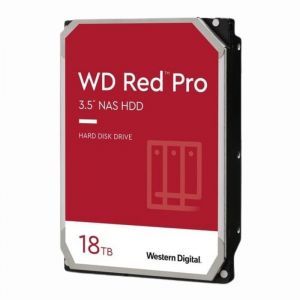
WD’s Red Plus line is built for up to 8-bay systems, while the Red Pro targets heavier 9–24-bay workloads with higher RPM and a longer warranty. Many users have learned the hard way that a desktop drive inside a NAS can lead to heat-related failures or RAID issues. The Red Plus sits firmly in the “purpose-built NAS drive” category and aims to justify its premium over generic HDDs.


Here’s a balanced view of what the Western Digital Red Plus brings to the table:
Overall, the pros heavily outweigh the cons for typical NAS users. You’re getting a stable, quiet and dependable drive that performs exactly as a mid-range NAS HDD should.
The Western Digital Red Plus is a dependable choice for anyone building or expanding a NAS system in a home office, studio or small business. It offers the right balance of capacity, power efficiency and around-the-clock reliability. With NAS-specific firmware, solid vibration control and a workload rating built for real multi-user environments, it stands out from ordinary desktop drives.
While it isn’t built for high-octane performance or large enterprise racks, it delivers outstanding value within its category. If your goal is dependable, steady NAS storage up to 8 bays, the WD Red Plus is a choice you can trust.


Your email address will not be published. Required fields are marked *