

Subscribe To Our Newsletter!
Subscribe to the newsletter to stay up to date with the latest news and most useful
Newsletter
↑
Back to Top


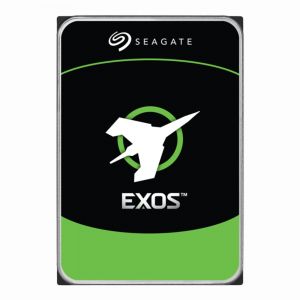
The Seagate Exos M is one of the most cutting-edge enterprise-standard hard disks available these days. It is a new family of HDDs powered by Mozaic 3+ technology, effectively making it a HAMR MAG. It still scores much higher than spinning hard disks on density and power.
Exos M is targeting modern data centers, cloud storage, AI workloads, and enterprise servers. They provide huge storage capacities but with the highest reliability and performance efficiency. This kind of drive is definitely a great thing for companies that need huge storage yet do not wish to make a complete switch away from SSDs.
This review will cover its design, performance, thermal and power efficiency, as well as general reliability and usage experiences. We'll also look over the advantages and disadvantages so we can figure out whether this enterprise HDD is for you.


Now, let’s take a look at its features and specifications.
All things considered, the Seagate Exos M features a professional design quite similar to any other enterprise HDD. The device has a 3.5-inch form factor, which means that the installation will be simple in most enterprise servers, storage arrays, and NAS systems.
Additionally, that drive has a helium-sealed case. This design is engineered to minimize internal friction and frictional loss; additionally, running at temperatures cooler than the chamber surface temperature helps transfer extra heat outside the engine, which also improves overall efficiency. It also allows Seagate to cram even more recording platters into the drive without requiring a commensurate increase in power consumption.
While not consumer desktop material, the drive itself is built industrial-grade tough. Every single component is built to perform 24/7, year after year, and even under arduous circumstances.
This is the aspect where our Tech Atlantix review team sees perhaps the biggest advantage of the Seagate Exos M: Performance. This drive is also designed for Mozaic 3+ technology with HAMR in HDDs to achieve much higher storage density than normally possible without sacrificing speed, as traditional enterprise HDDs do.
Depending on the capacity and workload, sequential transfer speeds can reach up to 270 MB/s. Hence, it scales better and runs faster while processing larger backups, media files, databases, and virtualization jobs.
Another bonus is a sizeable onboard cache, which assists with the response time on repeated workloads. Random performance is nowhere near NVMe SSDs, but the Exos M does very well as an enterprise mechanical drive.
With the increase in storage density, cloud providers and data centers that need to deal with massive petabyte-scale information will need fewer drives. This therefore reduces rack space, cooling demand and overall infrastructure cost.
Reliability is arguably the most compelling reason to buy an Exos M, as Seagate has designed this drive for mission-critical environments where downtime can be extremely expensive. It features a 550TB annual workload rating and an MTBF of 2.5 million hours. This enables 24/7 read-and-write all year long with ease.
Similarly, enterprise-grade vibration sensors keep multiple SATA drives working in sync within large storage enclosures. This reduces performance degradation from vibrations when other drives are present.
In addition, many models are equipped with Self-Encrypting Drive (SED) technology, which provides hardware-based encryption that can help secure valuable corporate data without adversely impacting overall performance.


Perhaps the biggest innovation for the Exos M is its Mozaic 3+ platform. The Mozaic 3+ isn't a normal conventional hard drive either, employing Heat-Assisted Magnetic Recording (HAMR). It heats microscopic points on the recording media during the write process, allowing for more data storage in a physical space.
This enables Seagate to scale storage densities at multi-terabyte levels while maintaining traditional media reliability and physical drive form factors. On top of all, Mozaic 3+ pushes the standards higher on capabilities by integrating:
· HAMR recording
· Advanced read/write heads
· New magnetic media
· Improved controller architecture
· Enhanced signal processing
Together, these evolutions allow the Exos M to deliver the future of mass HDD storage for businesses.
The Exos M has immense thermal management to support its dense storage density. A natural helium environment reduces air resistance within the drive enclosure. That means these spinning discs generate significantly less heat than traditional air-filled HDDs.
Enterprise servers also usually have superb airflow, so the drive doesn't overheat during continuous work and can continue to perform adequately, no matter how long the job takes. The thermal performance is good with no throttling during long read and write operations.
Another major plus for Exos M is its power efficiency. It's still quite a bit larger than any previous enterprise HDD generation, but thanks to PowerBalance technology and helium-sealed construction, its power consumption remains surprisingly low.
But since each drive can hold more information, organizations need fewer drives overall. This can help lower electricity consumption, cooling costs, rack space, and maintenance costs in total. For a big cloud provider, these savings become bigger and bigger.
Note that the Seagate Exos M is really an enterprise product and not a typical consumer PC drive. It works exceptionally well in:
· Cloud storage platforms
· Enterprise servers
· Large NAS systems
· Data centers
· AI infrastructure
· Video surveillance storage
· Big data analytics
· Backup and archival systems
· Virtualization servers
· High-capacity storage arrays
Conversely, for gamers or even just general desktop use, this drive is likely overkill.


Here is what it offers:
One of the most anticipated releases of advanced technology in the history of hard disk drives is Seagate Exos M (Mozaic 3+). So its HAMR (heat-assisted magnetic recording)-based Mozaic 3+ platform delivers top-notch storage density and the reliability that enterprises require.
With top-notch performance, enterprise-class endurance, high write rating, and very good power efficiency, it is the ideal solution for new cloud providers, AI infrastructure solutions, backup solutions, and large data centers.
It's purpose-built for mission-critical, high-capacity storage in a large, storable capacity with decent-plus function — as opposed to your run-of-the-mill home or gaming PC. However, for more general-purpose workloads, the Seagate Exos M is one of the best EAS hard drives available today and establishes a new standard peak for dense storage moving forward.


Your email address will not be published. Required fields are marked *