

Subscribe To Our Newsletter!
Subscribe to the newsletter to stay up to date with the latest news and most useful
Newsletter
↑
Back to Top


DDR5 is no longer something to plan for later. It has become the baseline for today’s desktop platforms. As customers are stepping away from DDR4, priorities are changing. Stability, compatibility, and reliable performance is considered more significant than running after just headline speeds. This Crucial DDR5-4800 C40 Memory (UDIMM) review focuses on what actually makes a difference in everyday systems. Operating at the JEDEC-standard 4800 MT/s, this memory is built for users who want reliable performance without the hassle of manual tuning. Tech Atlantix approaches this review from a practical angle, aimed at professionals, upgraders, and system builders who prefer consistency over marketing-driven promises.
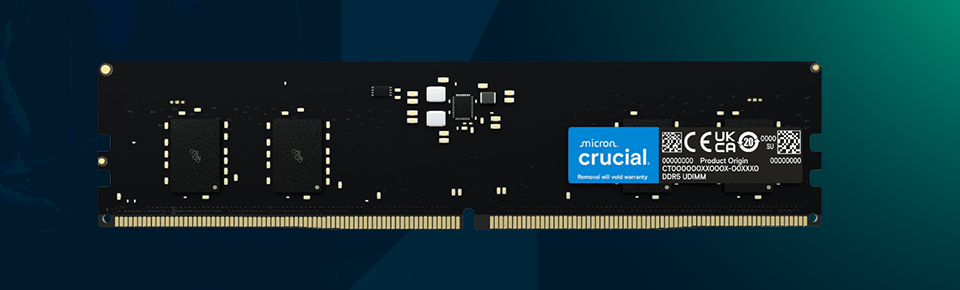
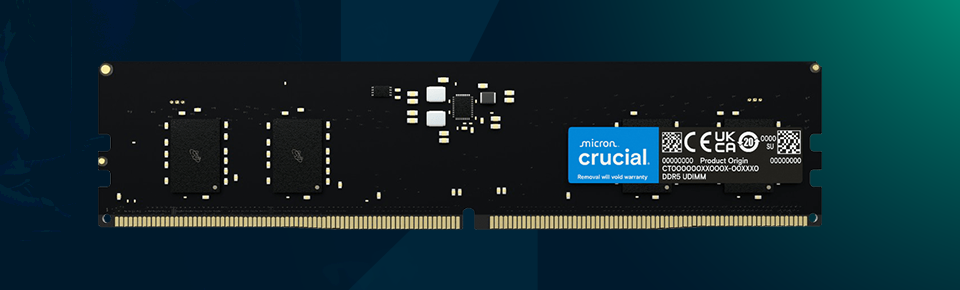
Before we begin to evaluate the performance, it is important to know the specs of this memory and the practical manifestation of those figures. Below are the specs in a single glance:
· Works at the JEDEC-standard 4800 MT/s speed for DDR5 desktop systems
· Uses a CAS latency of C40 to maintain a balance between responsiveness and stability
· Built on DDR5 architecture to offer increased bandwidth over DDR4
· Features an integrated power management IC on the module for improved voltage control
· Designed specifically for desktop motherboards that support DDR5 UDIMM memory
· Provides higher data throughput than DDR4-3200 in supported platforms
· Manufactured using Micron-validated memory components for consistent quality
· Runs at standard DDR5 operating voltage to support improved power efficiency
· Targeted at mainstream and professional users rather than manual overclocking
Collectively, these parameters establish the Crucial DDR5-4800 C40 Memory as a reliable, standards-compliant option for modern systems.
DDR5 brings to table practical design upgrades, and this module enable those changes to provide real world use. A significant upgrade is on-die ECC, which operates within the memory chips to guarantee data integrity at the cell level. This should be clarified as distinct from comprehensive system-level ECC; yet, it helps improve reliability in routine usage. Another notable change is the integrated power management IC. By diverting voltage regulation onto the module itself, DDR5 lowers the load on the motherboard and delivers steadier power. The rise in bank groups and parallelism also allows the memory to manage multitasking more efficiently. In contrast to DDR4, these updates place less focus on raw clock speeds and more on controlled, efficient performance that supports enduring stability.
The Crucial DDR5-4800 C40 Memory exhibits consistent stability and dependability in daily use. Office tasks are performed efficiently, applications launch rapidly, and multitasking between many programs is much smoother. Multitasking is significantly enhanced by the increased bandwidth, particularly when combined with modern CPUs. Basic content production tasks, such fundamental photo editing or code compilation, display slight yet considerable improvements compared to DDR4. Expectations must stay pragmatic. This is a basic DDR5 module, not an optimized performance kit. In gaming or GPU-intensive tasks, improvements may be limited. Storage speed, CPU architecture, and software refinement remain more significant factors. This memory is most effective when integrated into a well-balanced system rather than serving as an isolated performance enhancement.
Compatibility is a domain where many DDR5 upgrades falter, and our module maintains simplicity. A motherboard would be essential with native DDR5 UDIMM support, as DDR4 and DDR5 slots are not interchangeable. BIOS upgrades may be needed, specifically on early-generation DDR5 boards. Both Intel and AMD platforms support DDR5, but support differs by chipset and generation, so keeping a check on the motherboard QVL is always recommended. Installation itself is simple and familiar, similar to previous memory generations. Common mistakes consist of presuming DDR5 is compatible with older motherboards or combining DDR4 and DDR5 modules, which is unfeasible. Thorough checking prior to purchase prevents unwarranted frustration.
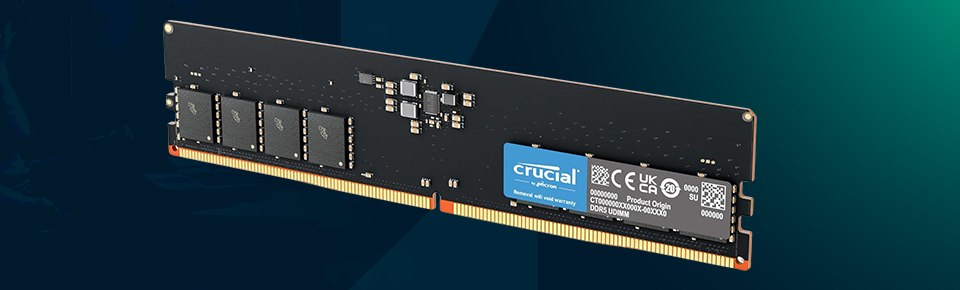
Stability is where this memory truly stands out. Functioning at JEDEC-standard speeds decreases pressure on both the memory and the memory controller. The integrated PMIC enables to manage stable voltage provision, which ensures enduring dependability. In comparison to DDR4, DDR5 runs at lower voltage, improving overall power efficiency. Heat output remains minimal in standard desktop environments, even during continuous workloads. Unlike high-frequency kits that may require additional cooling or tuning, this module is designed to operate comfortably within typical airflow setups. For users planning systems that run for long hours, base-speed DDR5 remains the safer and more predictable option.
Data reliability with DDR5 is often misunderstood. The on-die ECC used here improves internal error handling within the DRAM chips themselves. It helps correct minor bit-level issues before they affect system stability. However, it does not replace full ECC memory used in servers or workstations. For professional users, that distinction is important. What this module offers is better reliability than DDR4, not enterprise-grade fault tolerance. JEDEC compliance also ensures consistent behavior across supported platforms. For mainstream professionals and system builders, this approach delivers a practical balance between cost and dependability.
From a value perspective, the Crucial DDR5-4800 C40 Memory sits in a sensible position. It avoids the premium pricing of high-speed DDR5 kits while delivering the core benefits of the new standard. Crucial’s Micron-backed manufacturing adds confidence, and comparable Samsung modules follow the same JEDEC principles. Longevity is another strength. As DDR5 continues to mature, baseline 4800 MT/s memory remains widely supported and relevant. For many users, spending extra on higher frequencies offers diminishing returns. In practical terms, this memory delivers steady performance that aligns well with its cost.
Choosing DDR5 memory becomes easier when approached step by step.
These steps would guide you to opt for a memory which is compatible with both - your system and your usage needs - without incurring unnecessary costs.
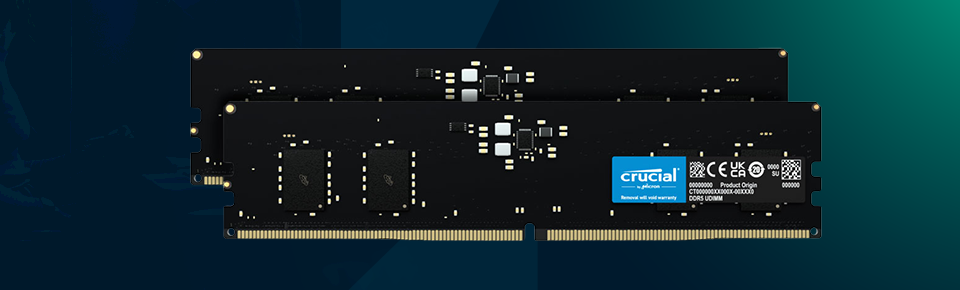
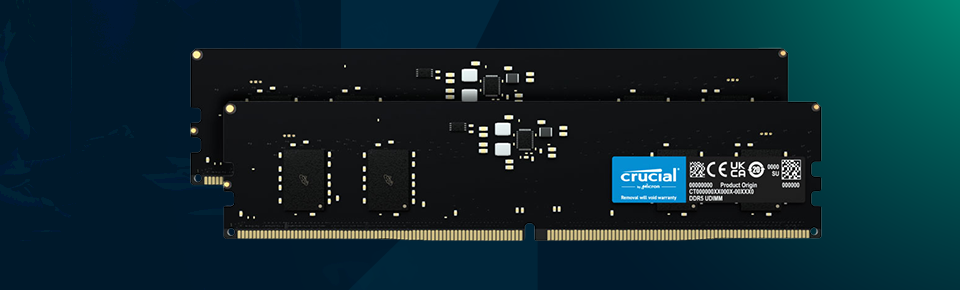
Every product has its strengths and limitations, and same is the case with this module – lets dissect its pros and cons:
Overall, the advantages strongly favor users who prioritize consistency and ease of use.
This Crucial DDR5-4800 C40 Memory (UDIMM) Review presents that not every upgrade is required to chase peak numbers. This module offers what most users actually search for: stable performance, enhanced efficiency, and long-term reliability. For general users, pros, and system architects, it signifies a pragmatic entry point into DDR5 technology. Tech Atlantix views this memory as a dependable foundation rather than a flashy upgrade. If your goal is a smooth transition to DDR5 with minimal risk and predictable results, this is a choice worth serious consideration.


Your email address will not be published. Required fields are marked *