

Subscribe To Our Newsletter!
Subscribe to the newsletter to stay up to date with the latest news and most useful
Newsletter
↑
Back to Top



Product Overview |
|---|
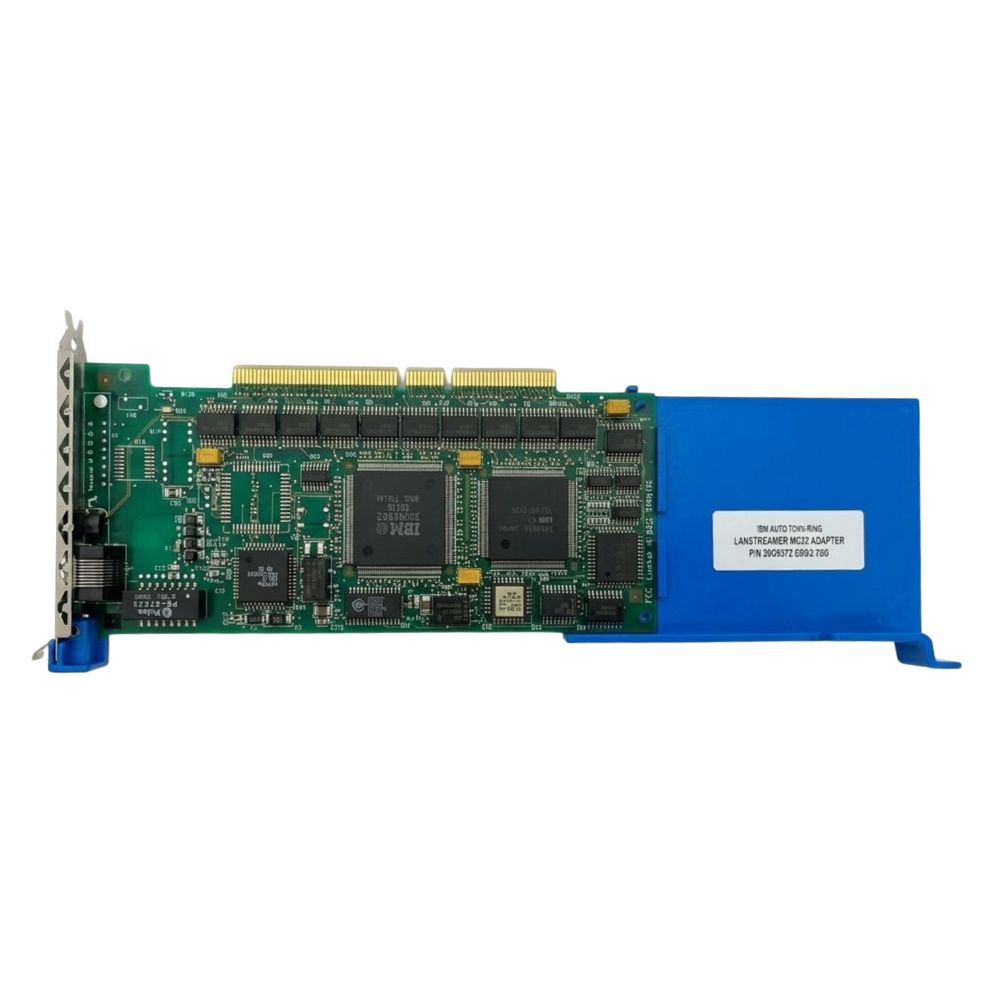
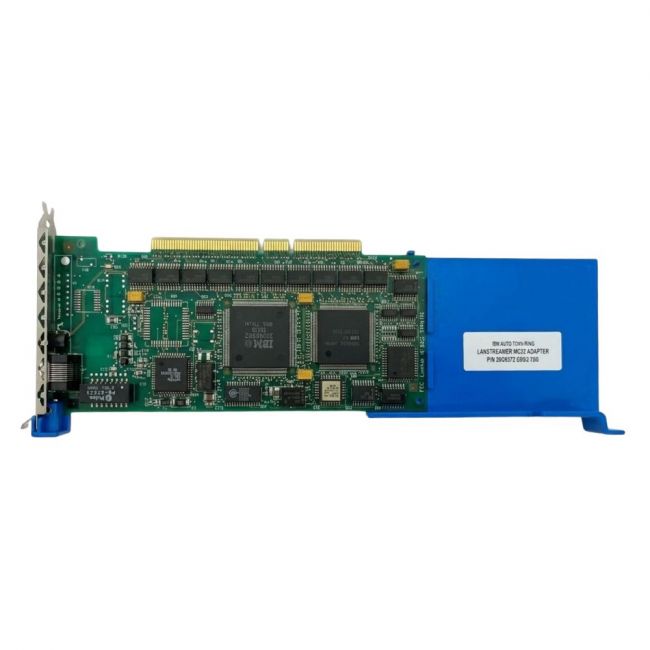
The IBM 86H2117 Network Adapter is engineered to provide Token Ring network connectivity with a 16 Mb/s data transfer rate. It includes support for the Auto LANStreamer protocol to facilitate efficient network traffic management, fitting into IBM system architectures that require this specific networking standard. |
General Information |
|
|---|---|
| Brand | IBM |
Technical Information |
|
|---|---|
| Product Type | Network Interface Card |
| Data Center Bridging | No |
| Number of Ports | 1-Port |
| Bracket Height | Full Height (Standard) |
Connectivity & Physical |
|
|---|---|
| Weight | 3.00 |
| Condition | Refurbished |
Miscellaneous |
|
|---|---|
| Assembly Required | No |
Product Description |
|---|
The IBM 86H2117 Network Adapter is a specialized interface card designed for Token Ring networks. It facilitates network connectivity and data transfer specifically through the Token Ring protocol at a speed of 16 Mb/s. This adapter is typically used within IBM systems that require integration into Token Ring topologies. This adapter supports the Auto LANStreamer protocol, which helps manage network traffic efficiently within Token Ring environments. Key Features
The IBM 86H2117 network adapter serves a focused role in connecting IBM systems to Token Ring networks, enabling data communication within such environments. Its support of Auto LANStreamer allows for streamlined network data handling, appropriate for organizations using Token Ring technology. |
Use Cases |
|---|
The IBM 86H2117 Network Adapter is mainly utilized in IBM environments where Token Ring networks are deployed. These environments often include legacy or specialized networks in enterprise settings that maintain Token Ring infrastructure. How It's Used:
This adapter provides a necessary interface for systems that depend on Token Ring protocols, ensuring continued network communication and integration within IBM-based infrastructures that have retained this networking technology. |
FAQ's |
|---|
|
 Shipping Options
 International Delivery
Requires a UPS, FedEx, or DHL account. Customers may arrange pickup from our US warehouse.
 Payment Methods
We accept Visa, Mastercard, AMEX, Discover, and Wire Transfer.
 Purchase Orders
We process purchase orders for government agencies, enterprises, data centers, and SMBs.