

Subscribe To Our Newsletter!
Subscribe to the newsletter to stay up to date with the latest news and most useful
Newsletter
↑
Back to Top



Product Overview |
|---|
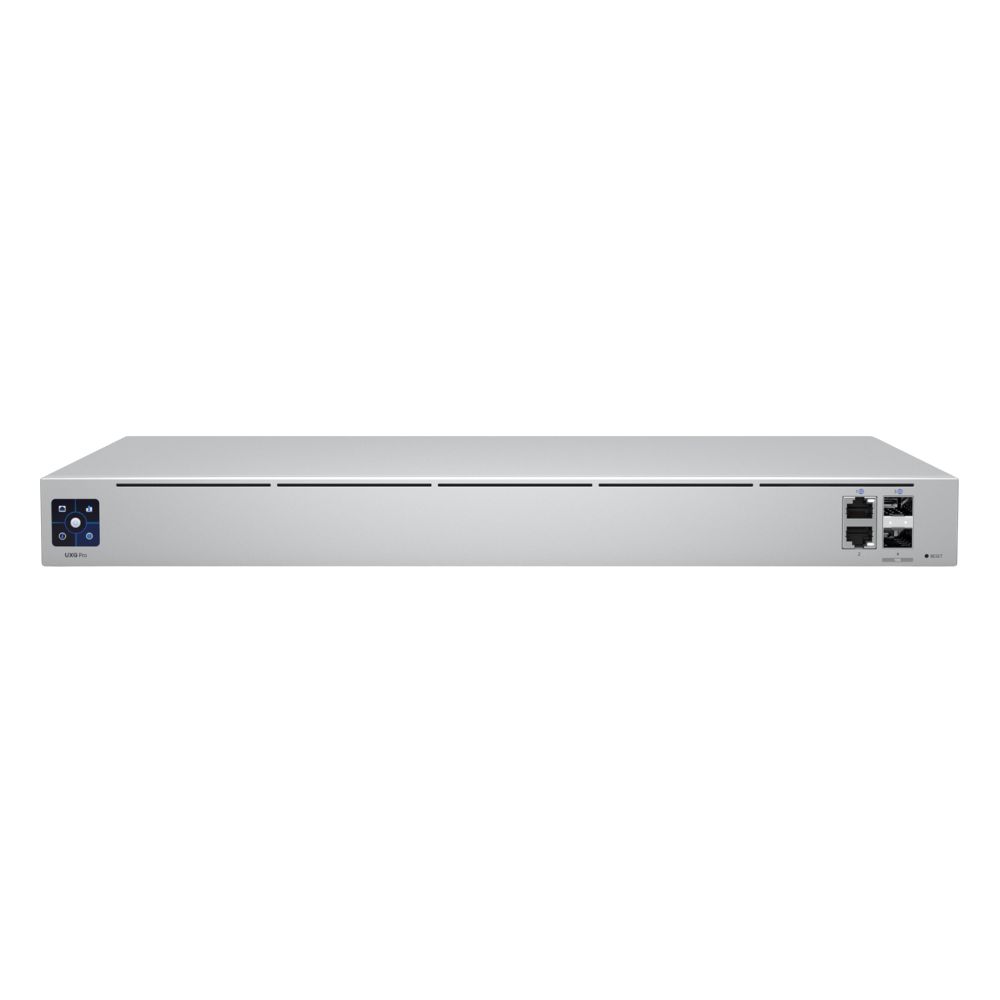
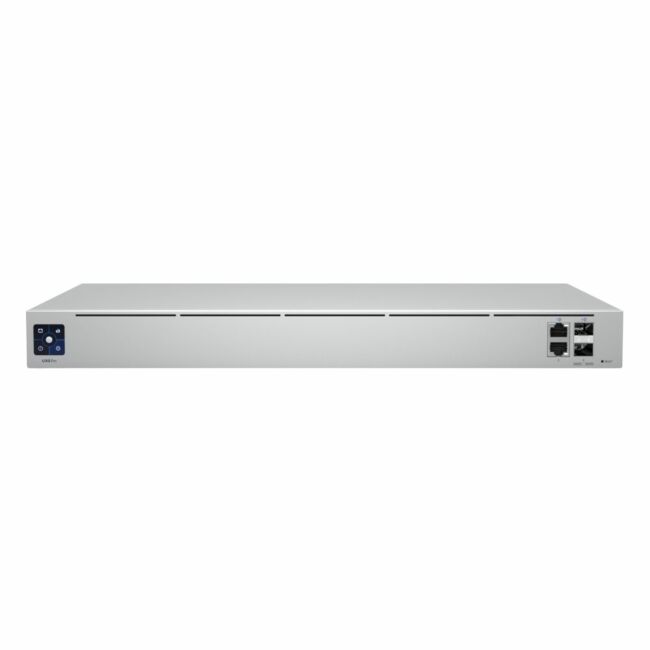
The UXG-Pro-US by Ubiquiti is a next-generation network gateway featuring two 10G SFP+ ports and two WAN ports, designed to provide high-speed connectivity and flexible routing options in enterprise network environments. |
General Information |
|
|---|---|
| Brand | Ubiquiti |
| Condition | Refurbished |
Technical Information |
|
|---|---|
| Input Voltage | AC 100-240V |
| Input Frequency | 50/60Hz |
| Hot Swappable | No |
| Redundant Support | No |
| Cooling Type | Active Fan |
| Modularity | Non-Modular |
| Number of Fans | 1 |
Compatibility |
|
|---|---|
| Form Factor | Proprietary |
Physical Characteristics |
|
|---|---|
| Weight | 3.00 |
Certifications and Environmental |
|
|---|---|
| Assembly Required | No |
| Compliance Standards | WEEE, RoHS, CE, FCC |
Product Description |
|---|
The Ubiquiti UXG-Pro-US is a network gateway designed to deliver advanced routing and security functions. It integrates two 10G SFP+ ports, allowing for high-throughput connections suitable for demanding network environments. The device also includes two WAN ports to manage multiple internet connections. This gateway is typically deployed in enterprise or data center settings where reliable traffic management and enhanced security are required. Network administrators and IT professionals benefit from its combination of speed, versatility, and network control. Key Features
This gateway acts as a central point for managing network traffic and security policies. Its 10G ports enable it to handle bandwidth-intensive applications, making it suitable for environments with significant data flow. The physical design allows easy deployment within standard rack setups. |
Use Cases |
|---|
The UXG-Pro-US is commonly used in enterprise networks requiring multi-gigabit throughput and reliable WAN connectivity. It suits environments with complex routing needs and where advanced WAN management is essential. How It's Used:
Its role focuses on centralizing network access and security control while supporting high-capacity data transfers. It helps maintain efficient network operation by managing WAN connections and fiber-based uplinks within larger IT infrastructures. |
FAQ's |
|---|
|
 Shipping Options
 International Delivery
Requires a UPS, FedEx, or DHL account. Customers may arrange pickup from our US warehouse.
 Payment Methods
We accept Visa, Mastercard, AMEX, Discover, and Wire Transfer.
 Purchase Orders
We process purchase orders for government agencies, enterprises, data centers, and SMBs.