

Subscribe To Our Newsletter!
Subscribe to the newsletter to stay up to date with the latest news and most useful
Newsletter
↑
Back to Top



Product Overview |
|---|
The HPE Aruba 2930F 48G PoE+ 4SFP Switch combines a high port density with Power over Ethernet capability, fitting well into medium-sized networks looking to simplify deployment of powered devices. It supports both essential switching and routing functions, making it a practical choice for many business environments. |
General Information |
|
|---|---|
| Brand | HPE |
| Part Number | 0957-2474 |
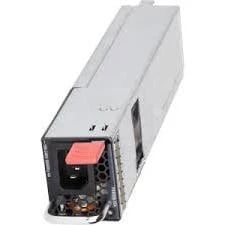
| Product Type | Network Equipment Power Supply |
| Condition | Refurbished |
Technical Information |
|
|---|---|
| Input Voltage | AC 100-240V |
| Input Frequency | 50-60Hz |
| Output | 54V DC (PoE) |
| Max. Output Power | 370W |
| Hot Swappable | No |
| Redundant Support | Yes |
| Cooling Type | Active Fan |
| Modularity | Non-Modular |
| rail_design | Single 54V Rail |
| Number of Fans | 2 |
Compatibility |
|
|---|---|
| Form Factor | Proprietary |
Physical Characteristics |
|
|---|---|
| Dimensions | 43.6 x 440 x 419 mm |
| Weight | 5.00 |
Certifications and Environmental |
|
|---|---|
| Eco Friendly | Yes |
| Compliance Standards | WEEE, RoHS, CE, FCC, UL, TUV, cULus |
Product Description |
|---|
The HPE Aruba 2930F 48G PoE+ 4SFP Switch is built to handle demanding network traffic while supplying power to connected devices like IP phones, cameras, and access points. Often found in enterprise office environments and branch networks, it delivers both data and power over a single cable, simplifying infrastructure. This switch is commonly used in setups where straightforward management and robust performance are needed without complex configurations. Network administrators, IT teams, and facilities with growing connectivity needs benefit from its balance of capacity and ease of use. Key Features
This switch is typically deployed in office floors, wiring closets, or network aggregation points where powering devices directly from the switch reduces cabling complexity. Its role often involves connecting end-user devices and uplinking to core switches, ensuring smooth and stable network performance. Real-world advantages include minimizing the need for separate power supplies, enabling efficient network growth, and maintaining straightforward operational control. |
 Shipping Options
 International Delivery
Requires a UPS, FedEx, or DHL account. Customers may arrange pickup from our US warehouse.
International Delivery
Requires a UPS, FedEx, or DHL account. Customers may arrange pickup from our US warehouse.
 Payment Methods
We accept Visa, Mastercard, AMEX, Discover, and Wire Transfer.
Payment Methods
We accept Visa, Mastercard, AMEX, Discover, and Wire Transfer.
 Purchase Orders
We process purchase orders for government agencies, enterprises, data centers, and SMBs.
Purchase Orders
We process purchase orders for government agencies, enterprises, data centers, and SMBs.