

Subscribe To Our Newsletter!
Subscribe to the newsletter to stay up to date with the latest news and most useful
Newsletter
↑
Back to Top



Product Overview |
|---|
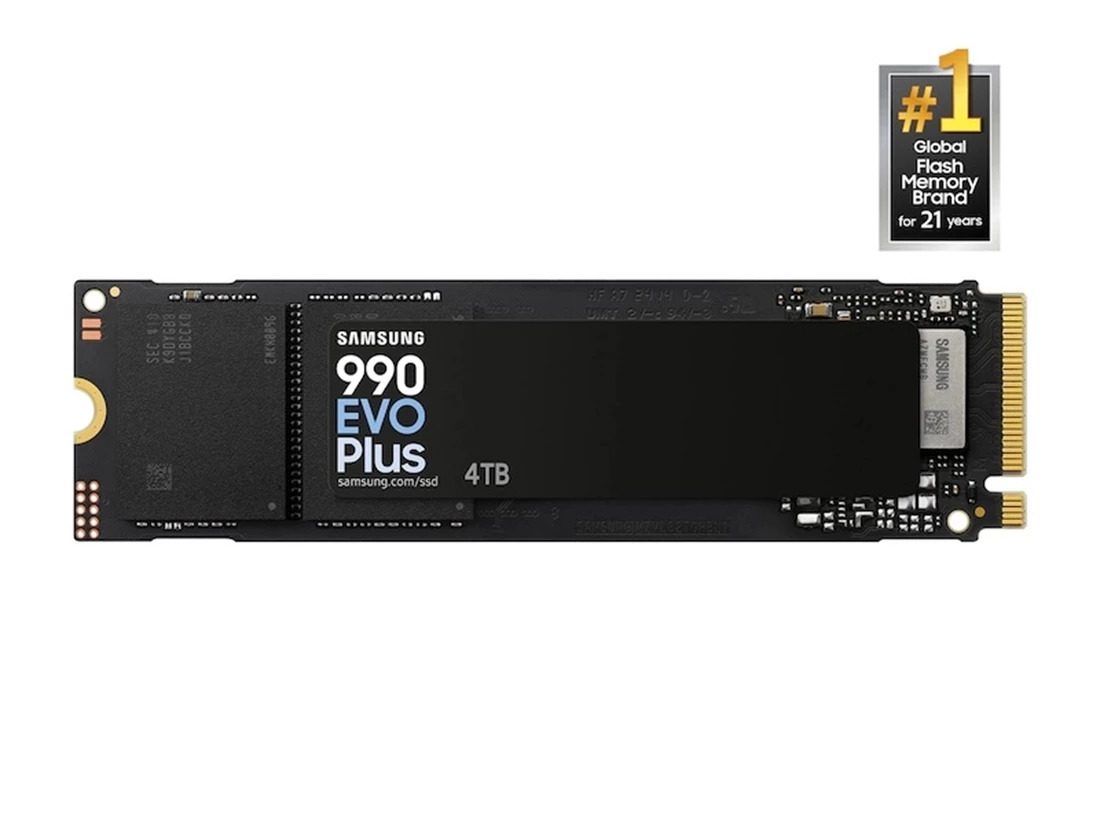
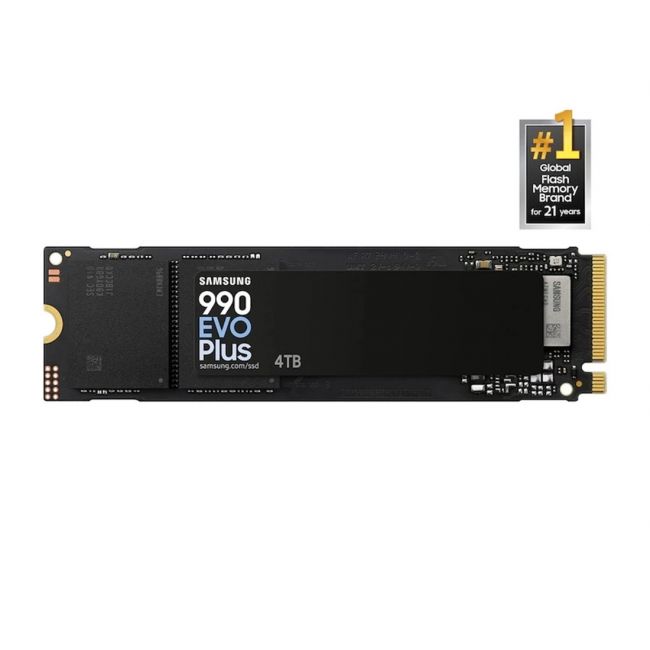
The Samsung 990 Evo Plus 4TB M.2 SSD offers cutting-edge performance with PCIe Gen 4.0 x4 and Gen 5.0 x2 interfaces, delivering ultra-fast data transfer rates and low latency. Designed for high-capacity storage in a compact M.2 2280 form factor, it suits gaming rigs, professional workstations, and high-end laptops. Combining massive storage space with advanced technology, this SSD meets the needs of users who demand speed, reliability, and scalability. |
General Information |
|
|---|---|
| Brand | Samsung |
| Part Number | MZ-V9S4T0 |
Technical Information |
|
|---|---|
| Capacity | 4TB |
| Form Factor | M.2 2280 |
| Interface | PCIe Gen 4.0 x4 |
Physical Characteristics |
|
|---|---|
| Weight | 3.00 |
| Condition | Refurbished |
Product Description |
|---|
The Samsung MZ-V9S4T0 990 Evo Plus is a 4TB M.2 2280 solid state drive engineered for high-performance computing environments. It supports PCIe Gen 4.0 x4 and PCIe Gen 5.0 x2 interfaces, enabling lightning-fast data transfer speeds and reduced latency. Utilizing the NVMe 2.0 protocol, this SSD provides optimal efficiency and responsiveness for gaming, content creation, and professional workloads. Its compact M.2 2280 form factor fits seamlessly into desktops and laptops, offering large capacity storage with superior speed. Key Features
This drive is ideal for users seeking a powerful combination of speed and capacity, perfect for demanding applications that require quick access to large data sets. |
Use Cases |
|---|
The Samsung 990 Evo Plus 4TB SSD is ideal for environments demanding high-capacity and high-speed storage solutions, such as data-intensive professional workflows and advanced personal computing setups. It suits users who require rapid access to large datasets and minimal latency in performance-critical applications. How It's Used:
By integrating this SSD, organizations can enhance operational efficiency through accelerated data access and improved scalability. Its compatibility with modern system architectures supports evolving storage demands without compromising throughput or responsiveness. |
 Shipping Options
 International Delivery
Requires a UPS, FedEx, or DHL account. Customers may arrange pickup from our US warehouse.
International Delivery
Requires a UPS, FedEx, or DHL account. Customers may arrange pickup from our US warehouse.
 Payment Methods
We accept Visa, Mastercard, AMEX, Discover, and Wire Transfer.
Payment Methods
We accept Visa, Mastercard, AMEX, Discover, and Wire Transfer.
 Purchase Orders
We process purchase orders for government agencies, enterprises, data centers, and SMBs.
Purchase Orders
We process purchase orders for government agencies, enterprises, data centers, and SMBs.