

Subscribe To Our Newsletter!
Subscribe to the newsletter to stay up to date with the latest news and most useful
Newsletter
↑
Back to Top



Product Overview |
|---|
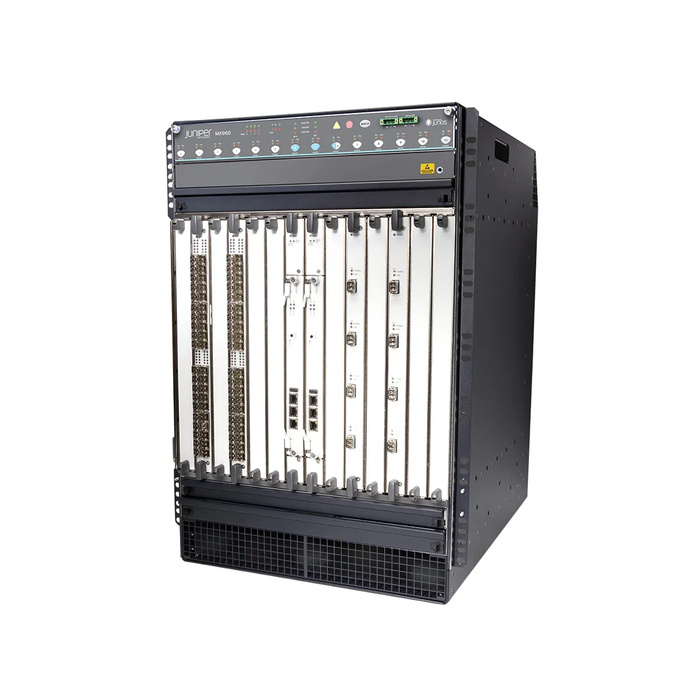
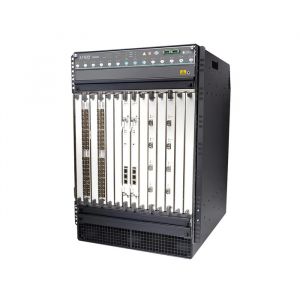
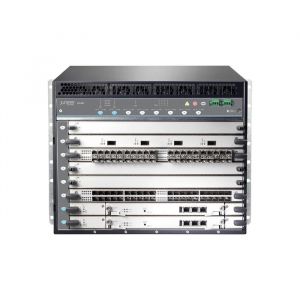
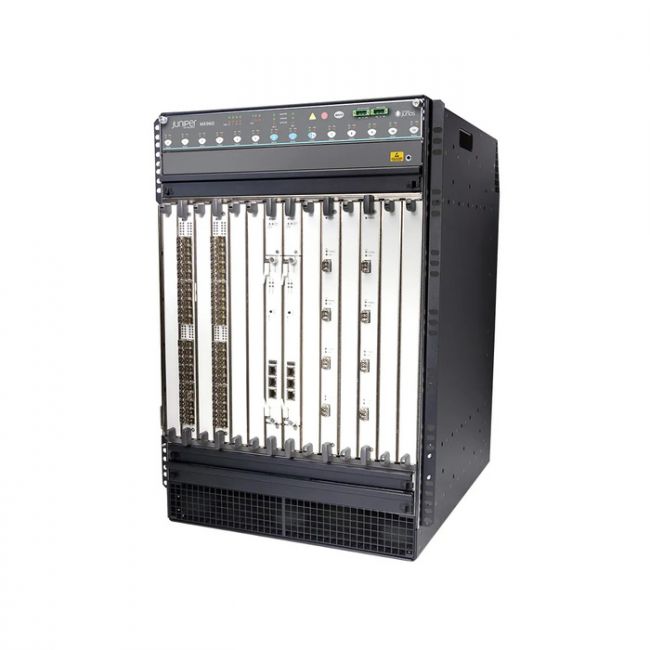
The MX960BASE3-DC chassis extends the capacity of the Juniper MX960 router by adding 14 slots for additional network modules. It fits directly into existing MX960 setups, providing a practical way to increase port density and support more complex network configurations without replacing the primary system. |
General Information |
|
|---|---|
| Brand | Juniper Networks |
| Condition | Refurbished |
Technical Information |
|
|---|---|
| Switch Ports | No |
| POE Support | No |
| VLAN Support | No |
| Stackable | No |
Power & Cooling |
|
|---|---|
| Power | -48 VDC |
| Power Supply | DC Power Supply (-48 VDC) |
Physical Characteristics |
|
|---|---|
| Weight | 3.00 |
Product Description |
|---|
The MX960BASE3-DC is an expansion chassis built to complement the Juniper MX960 router, extending its capacity with 14 additional slots for interface cards and network modules. Often found in large-scale networking environments, this chassis enhances the system's ability to handle increased traffic and complex configurations. Engineered for network administrators and IT professionals managing service provider or enterprise infrastructures, it supports scalability and flexibility without significantly altering the existing system architecture. Key Features
This expansion chassis plays a crucial role in network scalability by allowing systems to grow alongside increasing data demands. It offers reliable hardware integration that maintains system stability and performance as network complexity increases. |
Use Cases |
|---|
The MX960BASE3-DC is typically deployed in environments requiring expanded network capacity, such as large enterprise data centers and service provider edge networks. It benefits users who need to scale their existing MX960 routers without extensive infrastructure changes. How It's Used:
By providing additional slots, the MX960BASE3-DC supports efficient growth of network infrastructure. It allows organizations to adapt to evolving traffic needs while maintaining operational efficiency and system reliability. |
 Shipping Options
 International Delivery
Requires a UPS, FedEx, or DHL account. Customers may arrange pickup from our US warehouse.
International Delivery
Requires a UPS, FedEx, or DHL account. Customers may arrange pickup from our US warehouse.
 Payment Methods
We accept Visa, Mastercard, AMEX, Discover, and Wire Transfer.
Payment Methods
We accept Visa, Mastercard, AMEX, Discover, and Wire Transfer.
 Purchase Orders
We process purchase orders for government agencies, enterprises, data centers, and SMBs.
Purchase Orders
We process purchase orders for government agencies, enterprises, data centers, and SMBs.