

Subscribe To Our Newsletter!
Subscribe to the newsletter to stay up to date with the latest news and most useful
Newsletter
↑
Back to Top



Product Overview |
|---|
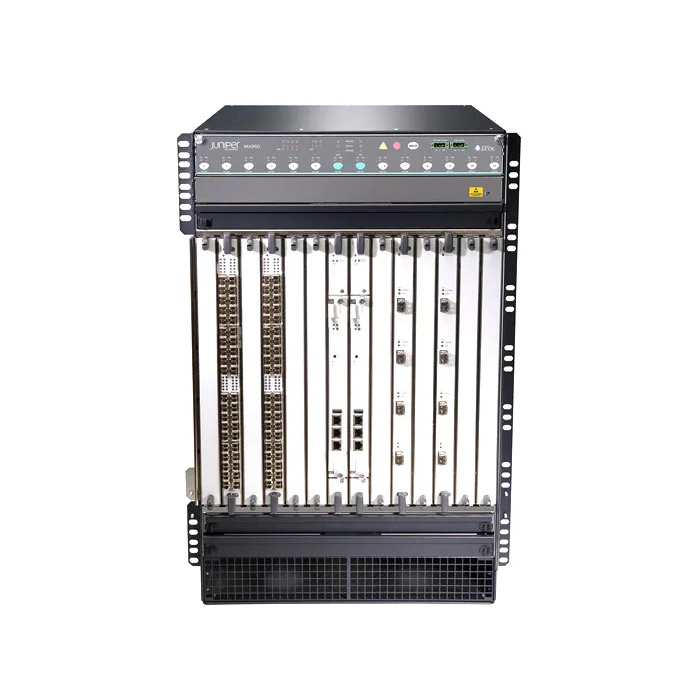
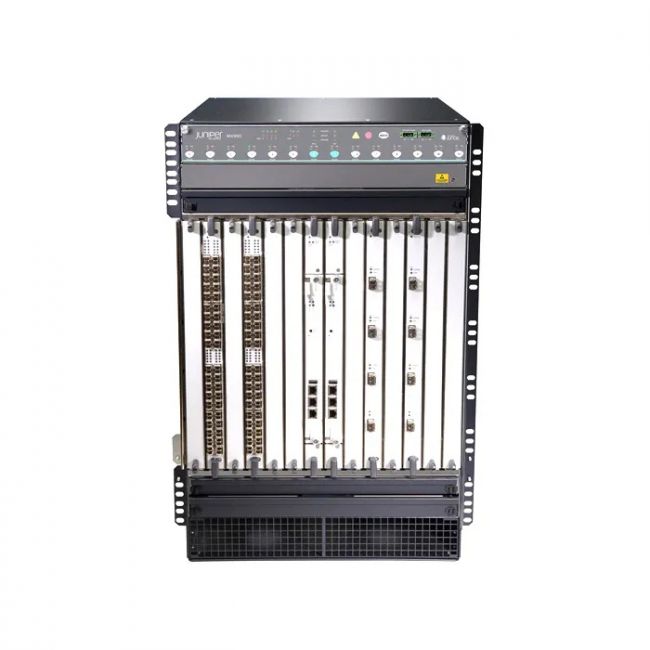
The MX960-PREMIUM2-AC-ECM is an expansion chassis designed to increase the capacity of Juniper's MX960 routers by providing an additional 14 slots for interface cards. It fits into larger network architectures where scalable interface growth is necessary, ensuring that systems maintain operational reliability while adapting to increased traffic loads. |
General Information |
|
|---|---|
| Brand | Juniper Networks |
| Condition | Refurbished |
Technical Information |
|
|---|---|
| Stackable | No |
Power & Cooling |
|
|---|---|
| Power Supply | AC |
Physical Characteristics |
|
|---|---|
| Weight | 3.00 |
Product Description |
|---|
The MX960-PREMIUM2-AC-ECM serves as a 14-slot expansion chassis that extends the capabilities of the Juniper MX960 series routers. It is commonly found in network infrastructures requiring increased interface density and enhanced routing capacity. Built for environments that demand robust performance and scalability, this chassis is often installed alongside primary MX960 routers to support growing bandwidth needs. Network engineers and IT professionals benefit from its modular design and reliable hardware integration. Key Features
This expansion chassis plays a vital role in scaling network infrastructure, enabling organizations to accommodate evolving connectivity demands without replacing core hardware. Its dependable performance and compatibility ensure continuous operation in complex routing environments. |
Use Cases |
|---|
This expansion chassis is typically employed in large-scale network environments where there is a need to extend the interface capacity of existing MX960 routers. It suits service providers and enterprise IT teams managing high-throughput routing tasks and looking to scale hardware modularly. How It's Used:
By adding this chassis, organizations can efficiently increase their router capacity and maintain network performance under heavier workloads. It supports operational flexibility and ensures that infrastructure can evolve alongside business requirements. |
 Shipping Options
 International Delivery
Requires a UPS, FedEx, or DHL account. Customers may arrange pickup from our US warehouse.
International Delivery
Requires a UPS, FedEx, or DHL account. Customers may arrange pickup from our US warehouse.
 Payment Methods
We accept Visa, Mastercard, AMEX, Discover, and Wire Transfer.
Payment Methods
We accept Visa, Mastercard, AMEX, Discover, and Wire Transfer.
 Purchase Orders
We process purchase orders for government agencies, enterprises, data centers, and SMBs.
Purchase Orders
We process purchase orders for government agencies, enterprises, data centers, and SMBs.