

Subscribe To Our Newsletter!
Subscribe to the newsletter to stay up to date with the latest news and most useful
Newsletter
↑
Back to Top


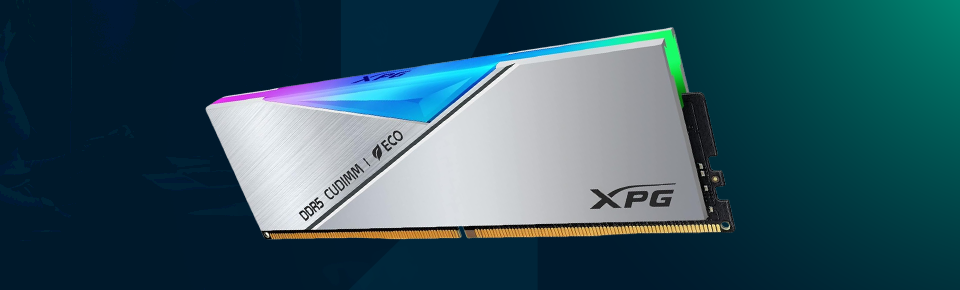
Adata's XPG series has always been a series with something interesting to offer when it comes to pushing the boundaries of memory performance. The XPG Lancer is one of those kits that truly gets the attention of enthusiasts. This module is definitely geared towards overclockers and power users who don't want to settle for anything less than the best, with speeds that most high-end DDR5 kits can only dream of. It's at the pinnacle of consumer memory today.
The CUDIMM form factor is what makes this kit interesting. CUDIMMs are different from conventional UDIMMs in that they have an on-board clock driver which helps maintain clean signal integrity even at high frequencies. This isn't a marketing ploy, it's a real thing when it comes to getting DDR5 to perform above 8000 MT/s. Add full RGB lighting and a sleek aluminum heatspreader and you have a package that's as impressive as it is capable.
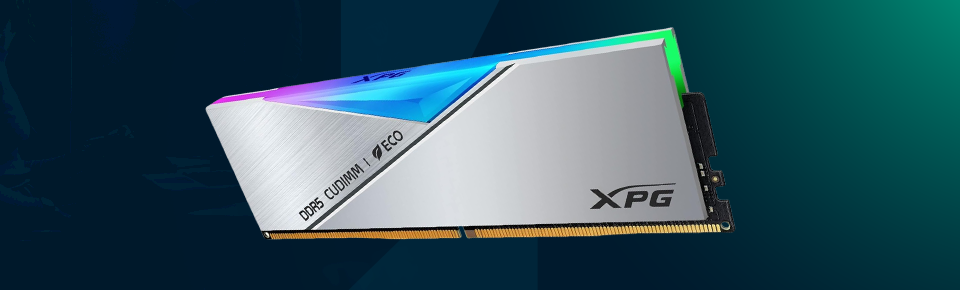
Before you get into the hands-on impressions, here's a quick rundown of what this kit has to offer:
● Memory Type: DDR5 CUDIMM
● Memory: 16GB (XMP/EXPO supported)
● Memory Options: 16GB and 32GB per stick (up to 64GB)
● The Form Factor is CUDIMM (with onboard clock driver chip).
● RGB Lighting: Addressable RGB with XPG PRIME sync support
● Heatspreader: Aluminum alloy, low profile design
● Current: 1.25A at rated speeds
● CAS Latency: CL46
● PCB: High-density PCB with 10 layers.
● Supported by Intel platforms (Arrow Lake, Meteor Lake) with CUDIMM support.
The XPG Lancer CUDIMM RGB DDR5-9200 is an impressive product from the get-go. The aluminum heatspreader is brushed and has angular cuts for a premium, almost aggressive appearance. It's definitely geared towards gaming and enthusiast builds, but it's not over-the-top. The RGB strip is located on the top edge and spreads light evenly throughout the module, making it look great in a windowed case.
The build quality is decent. The heatspreader is flush with the PCB with no gaps or rattling and is consistent all the way around. This kit features a 10-layer PCB, a feature you don't find in budget or mid-range memory. The additional layers assist in signal routing at extreme frequencies, and it is evident in the stability of the kit in real-world applications.
This is where the XPG Lancer CUDIMM really shines. With DDR5-9200, it offers memory bandwidth that is quite different from the standard DDR5-6000 or even DDR5-7200 kits. The difference is real and significant in workloads that demand memory, such as video encoding, 3D rendering, processing large datasets, or simulation software.
The performance boost is more situational when it comes to gaming.
With high resolutions and a high-performance GPU, the additional bandwidth might not always be reflected in the frame rate. The DDR5-9200 kit does, however, outperform in CPU-heavy situations and at lower resolutions where memory latency and throughput become more significant. The results from the benchmark indicate that read speeds are well over 140 GB/s on compatible Intel platforms, a significant feat for a consumer DIMM.


Adata has obviously thought about the durability of this product. The 10-layer PCB is more flex and physically stress resistant than the standard 6-layer design. The aluminum heatspreader also provides protection against minor physical damage to the DRAM chips and helps to minimize the risk of electrostatic damage when installing the DRAM chips.
The modules come packaged in ESD-safe packaging, and the quality of the build seems to indicate that these sticks are designed for long-term use in demanding systems, rather than short-term showcase builds.
The DDR5 at 9200 MT/s does produce more heat than at stock speeds, and Adata is aware of this. The aluminum heatspreader is the entire surface of the PCB and effectively removes the heat from the DRAM chips. In open air or well-ventilated cases, temperatures remain in a completely safe range even with continuous load.
If the memory slots are packed tightly and there is not much room for air to circulate, it is still a good idea to install a small fan that blows across the memory slots, but the heatspreader will take care of most situations without any help.
This kit will use more power than standard DDR5 at 1.1V, but at 1.45V for rated DDR5-9200 speeds. This is a non-issue for desktop builds that have a good PSU. It's a good consideration in smaller form factor systems or in situations where every watt counts. The power consumption is not excessive under normal workloads, and peaks only during memory-intensive operations.
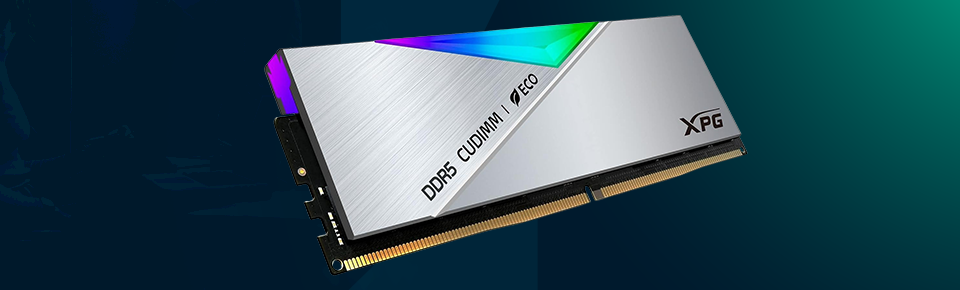
There are many things to enjoy here, but nothing is perfect:
● Best-in-class DDR5-9200 performance in the consumer market.
● CUDIMM design provides better signal integrity at high speeds
● High quality construction, 10-layer PCB and solid heatspreader.
● Attractive RGB which is compatible with XPG PRIME software.
● Easy setup with XMP and EXPO profile support.
● For now, CUDIMM is compatible with certain Intel platforms.
● The premium price makes it inaccessible to budget-conscious builders.
● A bit higher voltage of 1.45V than standard DDR5
● To get the most out of RGB software, it must be installed.
The Adata XPG Lancer CUDIMM RGB DDR5-9200 is not for everyone, and it was never intended to be. It is a specially designed solution for enthusiasts, overclockers and professionals who require the highest memory performance from their Intel-based systems. The CUDIMM technology really does help to achieve those high speeds with real-world stability, and the build quality supports the high price tag.
This kit is one of the best available if you are looking for a platform that supports CUDIMMs and maximum memory bandwidth is a priority. It's fast, stable, well-built, and looks good, and does all of these things without sacrificing anything in the way of a top-tier DDR5 kit.


Your email address will not be published. Required fields are marked *