

Subscribe To Our Newsletter!
Subscribe to the newsletter to stay up to date with the latest news and most useful
Newsletter
↑
Back to Top



Product Overview |
|---|
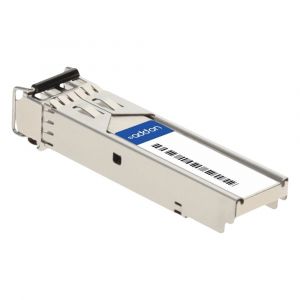
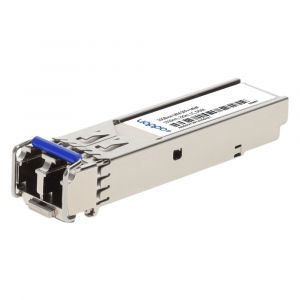
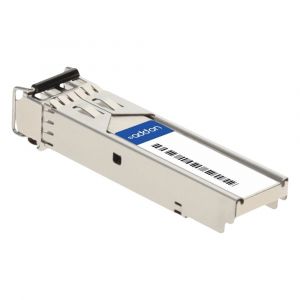
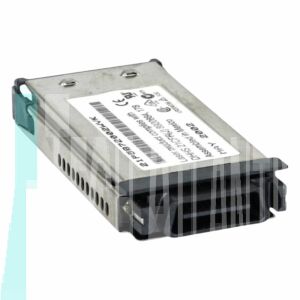
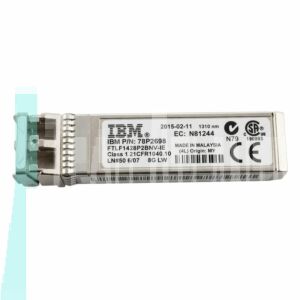
The AE146A HPE XP24000 4Gb/s 4GBase-LW SFP (mini-GBIC) Transceiver provides 4Gb/s fiber channel connectivity using the 4GBase-LW optical standard. It fits into SFP slots, facilitating flexible deployment in HPE XP24000 storage systems and similar environments requiring long-wavelength fiber optic transmission. |
General Information |
|
|---|---|
| Brand | HPE |
Technical Information |
|
|---|---|
| Form Factor | SFP |
| Media | SMF |
| Type | LX |
| Protocols | 4GBase-LW,Fibre Channel |
| Connector | LC Duplex |
Physical Characteristics |
|
|---|---|
| Weight | 3.00 |
| Condition | Refurbished |
Product Description |
|---|
The AE146A HPE XP24000 4Gb/s 4GBase-LW SFP (mini-GBIC) Transceiver is a fiber optic module designed to provide high-speed connectivity for storage area networks. It supports a data transfer rate of 4 Gigabits per second using the 4GBase-LW standard, enabling long-wavelength transmission over optical fiber. This transceiver fits into SFP slots, allowing flexible and modular network configurations, commonly used in enterprise storage environments like the HPE XP24000 series. It is suited for IT professionals managing fiber channel networks requiring specific optical interface components. Key Features
This transceiver plays an essential role in maintaining data integrity and connectivity within fiber channel storage networks. Its modular design and adherence to industry optical standards make it a practical choice for data center environments focused on storage connectivity. |
Use Cases |
|---|
This transceiver is typically used in enterprise storage networks where fiber channel connectivity is required over long distances. It is suited for data centers and IT infrastructures deploying HPE XP24000 storage arrays or compatible systems needing 4Gb/s optical links. How It's Used:
In operation, the transceiver supports high-speed data transfers essential for storage networking. Its compatibility with SFP slots allows network administrators to adapt or expand fiber channel infrastructure with minimal disruption. |
FAQ's |
|---|
|
 Shipping Options
 International Delivery
Requires a UPS, FedEx, or DHL account. Customers may arrange pickup from our US warehouse.
 Payment Methods
We accept Visa, Mastercard, AMEX, Discover, and Wire Transfer.
 Purchase Orders
We process purchase orders for government agencies, enterprises, data centers, and SMBs.