

Subscribe To Our Newsletter!
Subscribe to the newsletter to stay up to date with the latest news and most useful
Newsletter
↑
Back to Top



Product Overview |
|---|
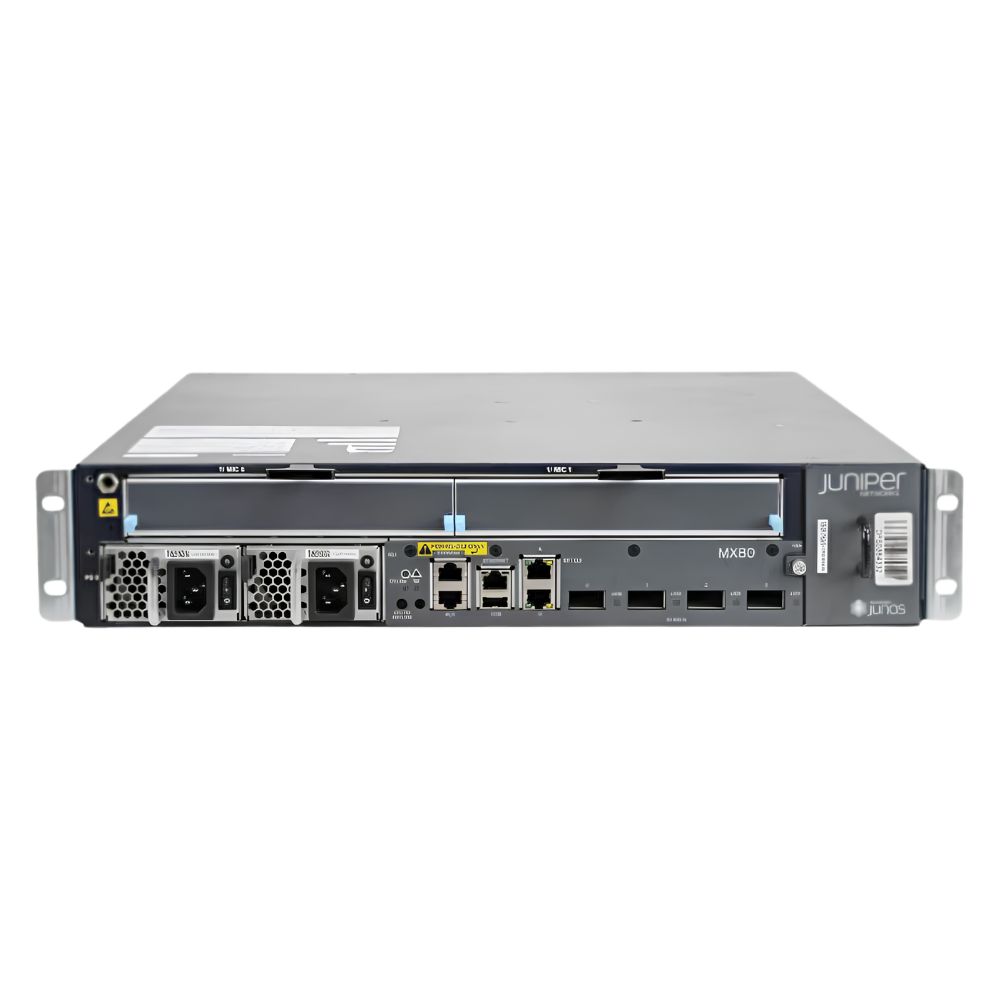
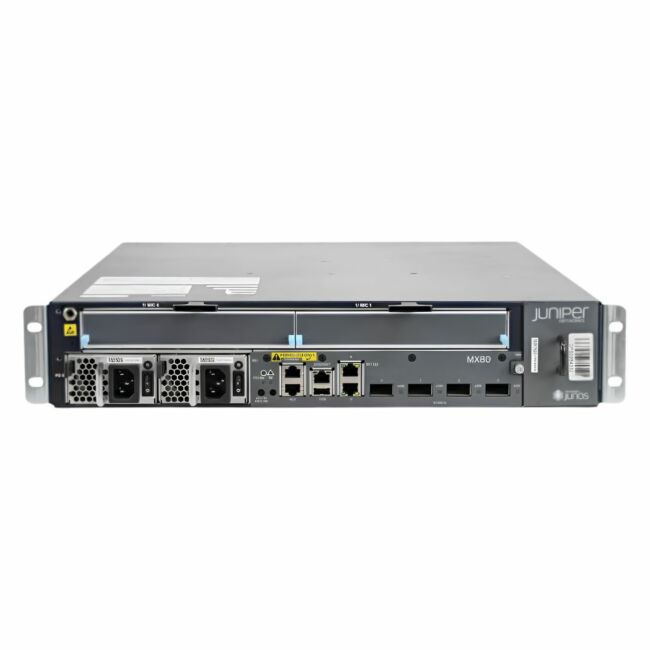
The Juniper MX80 4-Ports XFP + 2-Ports Expansion MIC Modules provides high-speed 10 Gigabit Ethernet connectivity through four XFP ports, along with two additional MIC slots for modular expansion. It fits into Juniper MX Series routers and enables scalable, flexible interface configurations. |
General Information |
|
|---|---|
| Brand | Juniper |
Technical Information |
|
|---|---|
| Ports | 4 XFP, 2 expansion MIC |
| Compatibility | Juniper MX80 |
| Data Transfer Rate | 10Gbps per XFP port |
| Connector Type | XFP (LC) |
Physical Characteristics |
|
|---|---|
| Weight | 3.00 |
| Condition | Refurbished |
Miscellaneous |
|
|---|---|
| Assembly Required | No |
Product Description |
|---|
The Juniper MX80 is a modular interface card designed for use in Juniper MX Series routers. It features four 10 Gigabit Ethernet XFP ports to enable high-speed optical connections and two expansion Modular Interface Card (MIC) slots for flexible network expansion. This module is typically used by network operators and service providers who require adaptable interface options in their routing infrastructure. It enables customization and scaling of network interfaces according to deployment needs. Key Features
The MX80 module plays a critical role in expanding the interface capabilities of MX Series routers, allowing organizations to tailor their network hardware to specific performance and connectivity requirements. Its modularity supports evolving network demands without replacing the entire system. |
Use Cases |
|---|
The MX80 module is commonly deployed in network environments requiring high-capacity optical interfaces and flexibility for expansion. It suits service providers and enterprises managing dynamic traffic and evolving interface needs. How It's Used:
This module supports network infrastructure growth by allowing administrators to add or change interface modules according to operational requirements. It helps maintain flexible and adaptable routing solutions in complex network architectures. |
FAQ's |
|---|
|
 Shipping Options
 International Delivery
Requires a UPS, FedEx, or DHL account. Customers may arrange pickup from our US warehouse.
 Payment Methods
We accept Visa, Mastercard, AMEX, Discover, and Wire Transfer.
 Purchase Orders
We process purchase orders for government agencies, enterprises, data centers, and SMBs.