

Subscribe To Our Newsletter!
Subscribe to the newsletter to stay up to date with the latest news and most useful
Newsletter
↑
Back to Top



Product Overview |
|---|
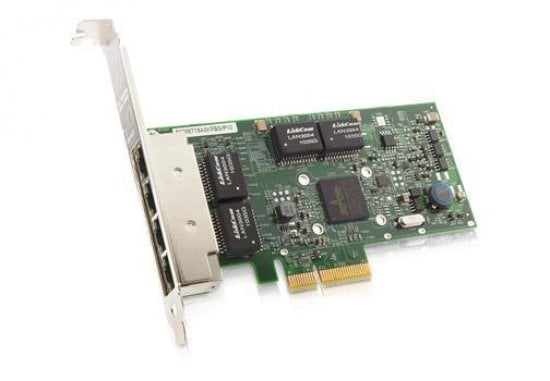
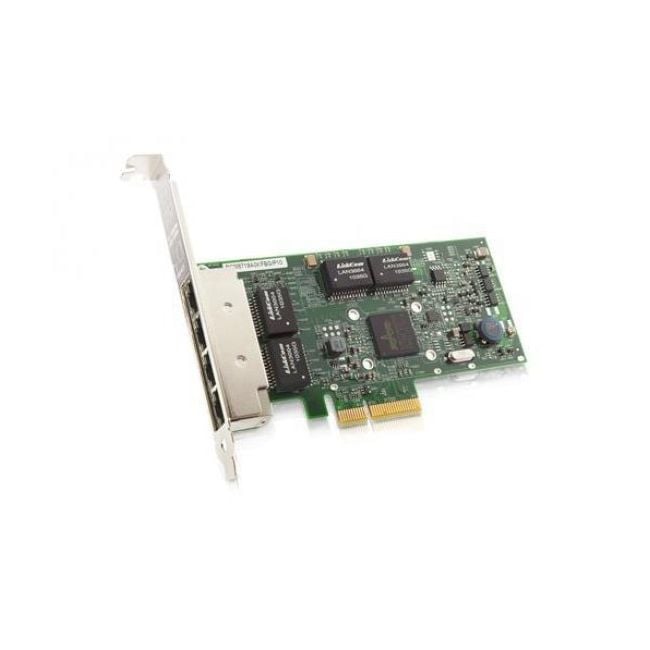
The XF9VF Dell 5719 network card offers four Gigabit Ethernet ports through a PCI Express 2.0 x4 interface, fitting into select PowerEdge servers. It provides reliable multi-port network connectivity, ideal for data center tasks or business server applications needing consistent Ethernet performance. |
General Information |
|
|---|---|
| Brand | Dell |
| Part Number | XF9VF |
Technical Information |
|
|---|---|
| Chipset/Controller | Broadcom BCM5719 |
| Data Rate (Speed) | 1GbE |
| Data Center Bridging | No |
| Storage Over Ethernet | iSCSI |
| Interface (Bus) | PCIe 2.0 x4 |
| Number of Ports | 4-Port (Quad) |
| OS Compatibility | RHEL, VMware ESXi |
| Network Management | SNMP |
| Offload Support | PXE Boot, Wake-on-LAN (WoL), TCP Stateless Offload, Jumbo Frames |
| Bracket Height | Both Brackets Included |
Connectivity & Physical |
|
|---|---|
| Form Factor | Standard PCIe Card |
| Port Type | RJ-45 (Copper) |
| Cabling Type | Cat7 |
| Weight | 5.00 |
| Condition | Refurbished |
Miscellaneous |
|
|---|---|
| Compliance Standards | WEEE, RoHS, CE, FCC |
Product Description |
|---|
This network interface card provides four Gigabit Ethernet ports, allowing servers to connect to multiple networks or aggregate bandwidth for enhanced performance. It's commonly fitted into Dell PowerEdge models such as T605, R820, and R730xd, often used in data centers and enterprise environments. Built for IT administrators and professionals managing server networks, this card supports reliable and scalable connectivity for tasks like virtualization, storage, and web hosting. Its PCI Express 2.0 x4 interface ensures efficient communication between the card and the server motherboard. Key Features
This card is typically installed in rack or tower servers where reliable network connectivity is critical. It helps maintain consistent data flow and supports network redundancy or link aggregation configurations to improve uptime and performance. |
Use Cases |
|---|
The XF9VF Dell 5719 network interface card is engineered for high-density server environments where multiple Gigabit Ethernet connections are essential. It is particularly suited for IT administrators managing Dell PowerEdge servers that require reliable, simultaneous network access for virtualization, storage, or clustered computing tasks. How It's Used:
This network card enables efficient multi-port connectivity that supports operational scalability by consolidating Ethernet interfaces within a single server slot. It allows IT teams to streamline network architectures while maintaining consistent data transfer performance across various demanding server workloads. |
 Shipping Options
 International Delivery
Requires a UPS, FedEx, or DHL account. Customers may arrange pickup from our US warehouse.
International Delivery
Requires a UPS, FedEx, or DHL account. Customers may arrange pickup from our US warehouse.
 Payment Methods
We accept Visa, Mastercard, AMEX, Discover, and Wire Transfer.
Payment Methods
We accept Visa, Mastercard, AMEX, Discover, and Wire Transfer.
 Purchase Orders
We process purchase orders for government agencies, enterprises, data centers, and SMBs.
Purchase Orders
We process purchase orders for government agencies, enterprises, data centers, and SMBs.