

Subscribe To Our Newsletter!
Subscribe to the newsletter to stay up to date with the latest news and most useful
Newsletter
↑
Back to Top



Product Overview |
|---|
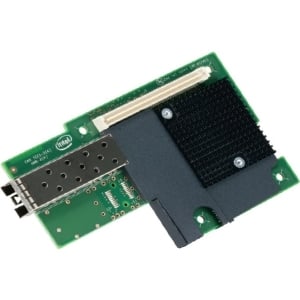
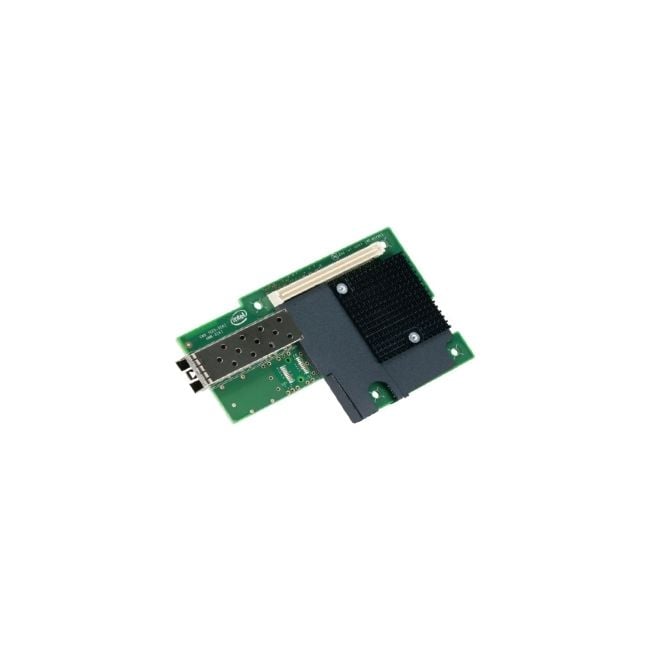
The X520DA1OCP Intel 1-Port SFP+ adapter provides a solid solution for adding 10 Gigabit Ethernet connectivity to servers. It fits into PCI Express 2.0 x8 slots and supports converged networking, making it suitable for environments that require efficient data and storage traffic handling. This card is frequently used in enterprise data centers to enhance network performance without requiring complex setups. |
General Information |
|
|---|---|
| Brand | Intel |
| Part Number | X520DA1OCP |
Technical Information |
|
|---|---|
| Chipset/Controller | Intel X520 (82599) |
| Virtualization Support | SR-IOV, VMDq, NetQueue, vNIC |
| Data Rate (Speed) | 10GbE |
| Data Center Bridging | Yes |
| Storage Over Ethernet | iSCSI |
| Interface (Bus) | PCIe 2.0 x8 |
| Number of Ports | 1-Port |
| OS Compatibility | Windows Server 2022, RHEL, VMware ESXi |
| Network Management | SNMP, RMON |
| Offload Support | iSCSI, FCoE, PXE Boot, Wake-on-LAN (WoL), Jumbo Frames |
Connectivity & Physical |
|
|---|---|
| Form Factor | OCP 2.0 |
| Port Type | SFP+ |
| Cabling Type | AOC |
| Weight | 5.00 |
| Condition | Refurbished |
Miscellaneous |
|
|---|---|
| Assembly Required | Yes |
| Eco Friendly | Yes |
| Compliance Standards | RoHS, CE, FCC, UL, TUV, cULus |
Product Description |
|---|
The X520DA1OCP is a network adapter card designed to deliver high-speed 10 Gigabit Ethernet connectivity through a single SFP+ port. It commonly appears in data centers and enterprise servers where fast data transfer and low latency are essential. This card is built for IT professionals managing server infrastructure who need a reliable and efficient way to handle both Ethernet and storage traffic on the same device. Key Features
In practice, this adapter is often found in blade servers or rackmount servers, where space and power efficiency are key. It helps improve network speed and reliability, making it easier to manage large-scale data flows and reduce bottlenecks in storage and networking operations. |
Use Cases |
|---|
The X520DA1OCP Intel 1-Port SFP+ adapter is typically deployed in enterprise data centers and server rooms where high-speed 10Gb/s connectivity is essential. It is especially beneficial for IT professionals managing converged network infrastructures that require robust and efficient handling of both Ethernet and storage traffic in virtualized and cloud computing environments. How It's Used:
By delivering consistent high-bandwidth connectivity and supporting converged networking, this adapter enables IT environments to maintain operational efficiency and scale network performance as demands increase. Its compatibility with PCI Express 2.0 x8 slots ensures it fits seamlessly into existing server architectures, aiding in streamlined infrastructure management. |
 Shipping Options
 International Delivery
Requires a UPS, FedEx, or DHL account. Customers may arrange pickup from our US warehouse.
International Delivery
Requires a UPS, FedEx, or DHL account. Customers may arrange pickup from our US warehouse.
 Payment Methods
We accept Visa, Mastercard, AMEX, Discover, and Wire Transfer.
Payment Methods
We accept Visa, Mastercard, AMEX, Discover, and Wire Transfer.
 Purchase Orders
We process purchase orders for government agencies, enterprises, data centers, and SMBs.
Purchase Orders
We process purchase orders for government agencies, enterprises, data centers, and SMBs.