

Subscribe To Our Newsletter!
Subscribe to the newsletter to stay up to date with the latest news and most useful
Newsletter
↑
Back to Top



Product Overview |
|---|
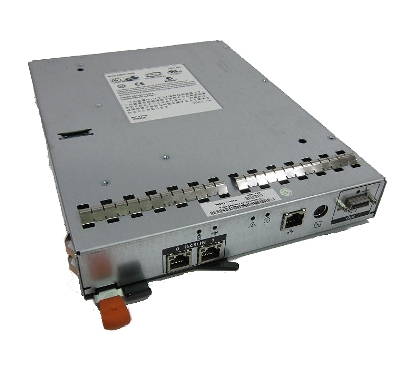
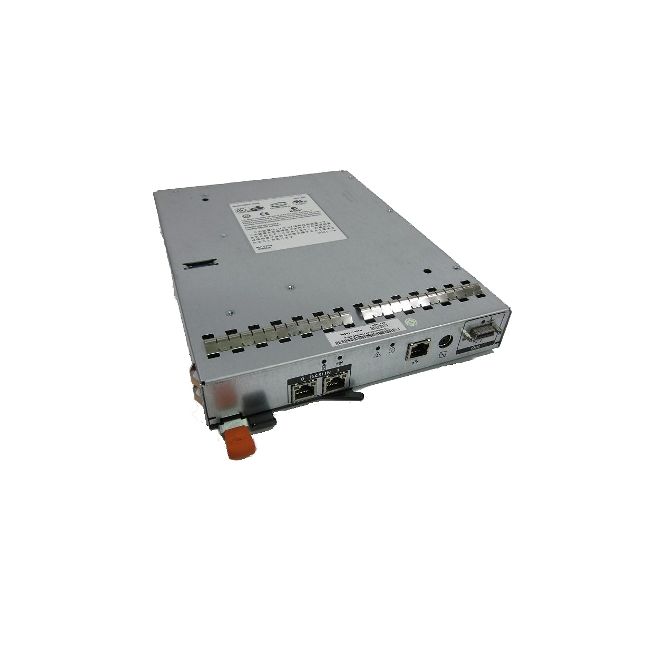
The Dell X2R63 PowerVault MD3000i RAID controller manages iSCSI storage arrays, fitting into Dell’s PowerVault MD3000i lineup. It handles data distribution and redundancy across multiple drives, offering reliable networked storage solutions for business environments that demand steady performance and flexible scalability. |
General Information |
|
|---|---|
| Brand | Dell |
| Part Number | X2R63 |
Technical Specification |
|
|---|---|
| Host Interface | iSCSI (Gigabit Ethernet) |
| Data Rate | 1 Gbps per port |
| RAID Levels | 0,1,5,6,10,50 |
| Cache | 512 MB battery-backed write cache per controller |
| Ports | 2 |
| Connectivity | Ethernet |
| External Interface | RJ-45 (10/100/1000Base-T) |
| Compatibility | Dell PowerVault MD3000i enclosure; Microsoft Windows Server, VMware ESX/ESXi, Red Hat Enterprise Linux, SUSE Linux Enterprise Server |
Physical Characteristics |
|
|---|---|
| Form Factor | Hot-plug controller module |
| Weight | 5.00 |
| Condition | Refurbished |
Miscellaneous |
|
|---|---|
| Eco Friendly | Yes |
| Compliance Standards | WEEE, RoHS, CE, FCC, UL, TUV, cULus |
Product Description |
|---|
The Dell X2R63 PowerVault MD3000i RAID controller manages storage arrays using iSCSI protocols, allowing multiple servers to connect over a network. It's commonly found in small to mid-sized business environments where SAN storage needs to be both reliable and scalable. Built for IT administrators and storage professionals, this controller helps optimize data access speeds while ensuring redundancy through various RAID configurations. It’s often deployed in data centers or server rooms that require flexible and cost-effective storage solutions. Key Features
This RAID controller is typically deployed in enterprise settings where consolidated storage resources simplify backup and data sharing. Its role helps reduce downtime by securing data with RAID redundancy and enables easier maintenance of SAN infrastructures. |
 Shipping Options
 International Delivery
Requires a UPS, FedEx, or DHL account. Customers may arrange pickup from our US warehouse.
International Delivery
Requires a UPS, FedEx, or DHL account. Customers may arrange pickup from our US warehouse.
 Payment Methods
We accept Visa, Mastercard, AMEX, Discover, and Wire Transfer.
Payment Methods
We accept Visa, Mastercard, AMEX, Discover, and Wire Transfer.
 Purchase Orders
We process purchase orders for government agencies, enterprises, data centers, and SMBs.
Purchase Orders
We process purchase orders for government agencies, enterprises, data centers, and SMBs.