

Subscribe To Our Newsletter!
Subscribe to the newsletter to stay up to date with the latest news and most useful
Newsletter
↑
Back to Top



Product Overview |
|---|
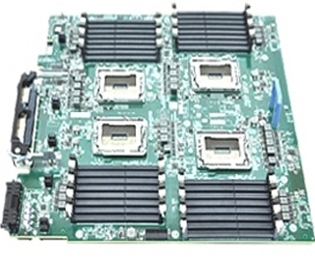
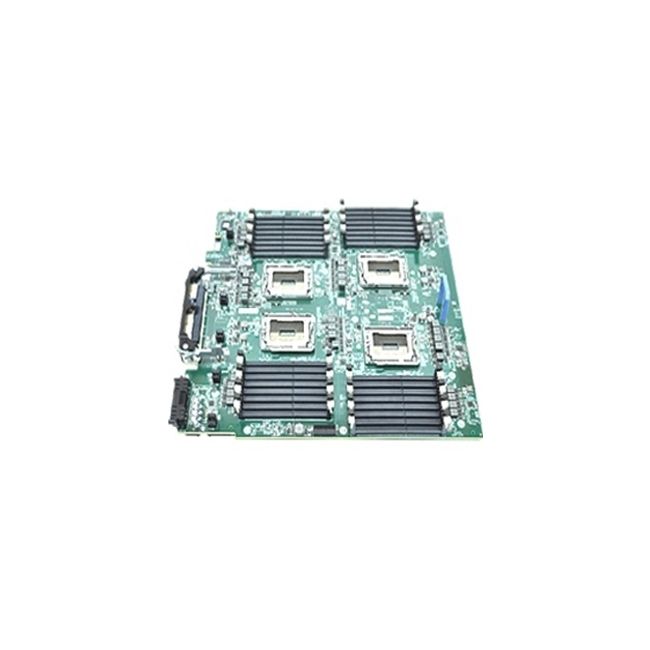
The W13NR Dell system board serves as the backbone for the PowerEdge R815 Server V2, managing essential hardware interactions and supporting multi-processor configurations. It fits into server setups where dependable performance and expandability are key, helping keep complex computing tasks running smoothly. |
General Information |
|
|---|---|
| Brand | Dell |
| Part Number | W13NR |
Technical Information |
|
|---|---|
| Compatible Processors | AMD Opteron 6100 series (Magny-Cours) and 6200 series (G34) - quad-socket capable |
| Board Socket Type | Socket G34 |
| Memory Slots | 32 |
| Memory Support | DDR3 ECC Registered (RDIMM) and Unbuffered (UDIMM), ECC support, up to 16GB per DIMM (dependent on DIMM type) |
| Storage Interfaces | SATA II (3.0Gb/s) onboard; SAS via add-on RAID/SAS controller (PERC/LSI) |
| Expansion Slots | Multiple PCIe 2.0 slots (x16 and x8) for RAID/NIC/HBA cards |
Physical Characteristics |
|
|---|---|
| Form Factor | Proprietary (Dell PowerEdge R815 2U server motherboard) |
| Weight | 5.00 |
| Condition | Refurbished |
Miscellaneous |
|
|---|---|
| Assembly Required | Yes |
| Eco Friendly | Yes |
| Compliance Standards | WEEE, RoHS, cURus, CE, FCC, CCC, UL, TUV, cULus, CSA, cUL |
Product Description |
|---|
The W13NR system board is a core component crafted specifically for the Dell PowerEdge R815 Server V2. It acts as the central platform that connects the CPU, memory, and other critical hardware, ensuring smooth data processing and communication within the server. Often found in enterprise data centers and used by IT professionals, this system board supports workloads requiring reliable and scalable computing power. It’s built to handle demanding server applications and virtualization tasks. Key Features
This system board is typically deployed in rack servers within corporate or managed service provider environments. It plays a crucial role in maintaining performance stability and supporting virtualization and database applications where uptime is vital. |
Use Cases |
|---|
The Dell W13NR System Board is integral to enterprise IT infrastructures where robust processing power and memory capacity are required. It is commonly deployed in data centers and server rooms that run virtualized workloads and high-demand applications, providing reliable hardware management for critical operations. How It's Used:
This system board enhances operational efficiency by supporting multi-processor configurations and high memory loads, which are essential in maintaining scalable and high-performing server environments. Its role is critical in ensuring consistent hardware communication and expandability in complex workloads. |
 Shipping Options
 International Delivery
Requires a UPS, FedEx, or DHL account. Customers may arrange pickup from our US warehouse.
International Delivery
Requires a UPS, FedEx, or DHL account. Customers may arrange pickup from our US warehouse.
 Payment Methods
We accept Visa, Mastercard, AMEX, Discover, and Wire Transfer.
Payment Methods
We accept Visa, Mastercard, AMEX, Discover, and Wire Transfer.
 Purchase Orders
We process purchase orders for government agencies, enterprises, data centers, and SMBs.
Purchase Orders
We process purchase orders for government agencies, enterprises, data centers, and SMBs.