

Subscribe To Our Newsletter!
Subscribe to the newsletter to stay up to date with the latest news and most useful
Newsletter
↑
Back to Top



Product Overview |
|---|
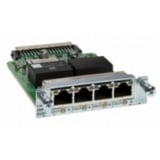
The VWIC3-4MFT-T1/E1 card enables integrated voice and WAN connectivity through four T1/E1 ports, fitting into Cisco routers used in enterprise or provider networks. It balances voice and data transmission over the same interfaces, making it a practical option for setups requiring reliable multiflex trunking and flexible telephony support. |
General Information |
|
|---|---|
| Brand | Cisco |
| Part Number | VWIC3-4MFT-T1/E1 |
Connectivity & Physical |
|
|---|---|
| Weight | 5.00 |
| Condition | Refurbished |
Miscellaneous |
|
|---|---|
| Assembly Required | Yes |
| Eco Friendly | Yes |
| Compliance Standards | RoHS, CE, FCC |
Product Description |
|---|
The VWIC3-4MFT-T1/E1 is a versatile interface card that provides four ports capable of handling T1 and E1 lines. It’s commonly found in branch offices or enterprise environments where voice and WAN services need to coexist on the same infrastructure. This card is built for network administrators who require reliable trunking capabilities to manage multiple voice and data channels efficiently. Key Features
Typically deployed in service provider and enterprise networks, this card helps optimize bandwidth by consolidating multiple channels into a single trunk. It's often used where voice and data need to share the same physical connection without interference, making it a practical choice for organizations managing legacy telephony alongside modern data traffic. |
Use Cases |
|---|
The VWIC3-4MFT-T1/E1 Cisco interface card is primarily deployed in enterprise and service provider networks that require consolidated voice and data transmission over T1/E1 lines. Organizations with existing TDM infrastructure or those integrating legacy telephony systems alongside IP-based networks find this module essential for maintaining seamless communication and WAN connectivity. How It's Used:
This card enhances network design flexibility by enabling efficient multiplexing of voice and data, reducing the need for separate circuits. Its use in diverse environments supports operational efficiency and scalability, especially in networks balancing legacy telephony with modern data requirements. |
 Shipping Options
 International Delivery
Requires a UPS, FedEx, or DHL account. Customers may arrange pickup from our US warehouse.
International Delivery
Requires a UPS, FedEx, or DHL account. Customers may arrange pickup from our US warehouse.
 Payment Methods
We accept Visa, Mastercard, AMEX, Discover, and Wire Transfer.
Payment Methods
We accept Visa, Mastercard, AMEX, Discover, and Wire Transfer.
 Purchase Orders
We process purchase orders for government agencies, enterprises, data centers, and SMBs.
Purchase Orders
We process purchase orders for government agencies, enterprises, data centers, and SMBs.