

Subscribe To Our Newsletter!
Subscribe to the newsletter to stay up to date with the latest news and most useful
Newsletter
↑
Back to Top



Product Overview |
|---|
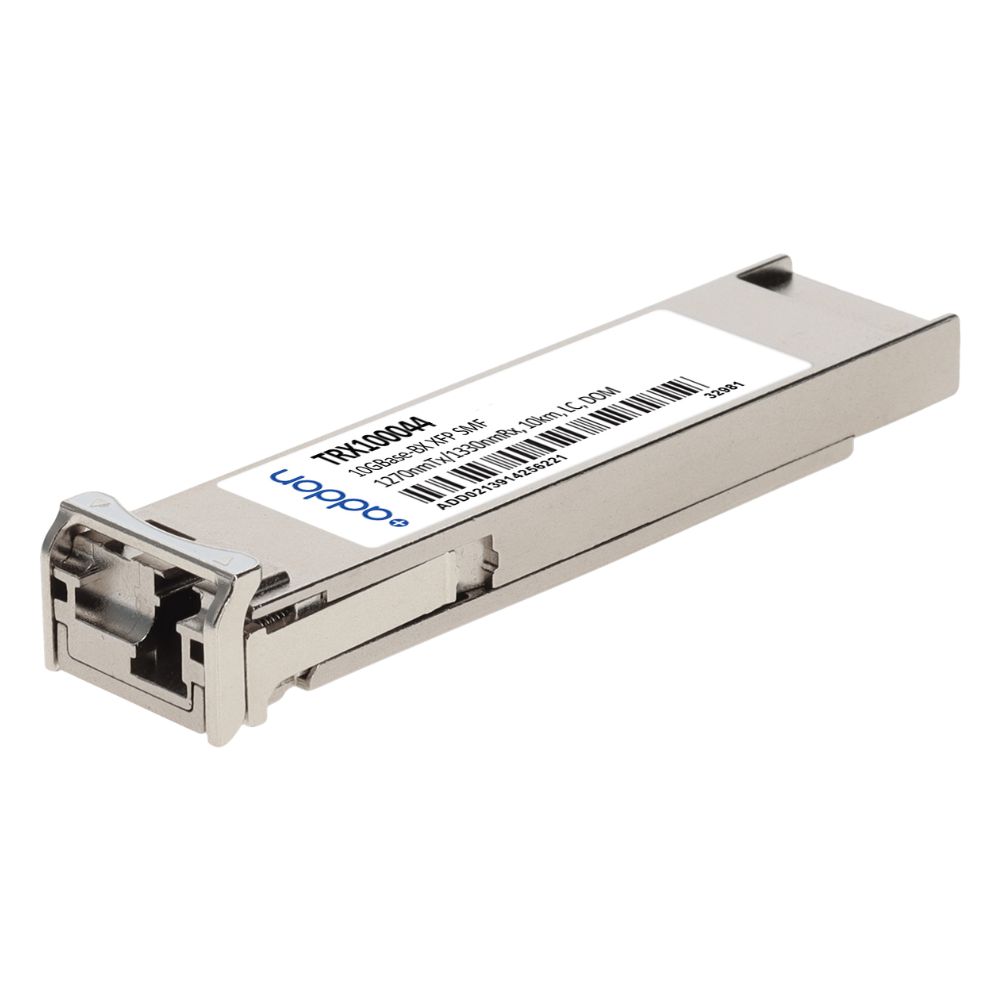
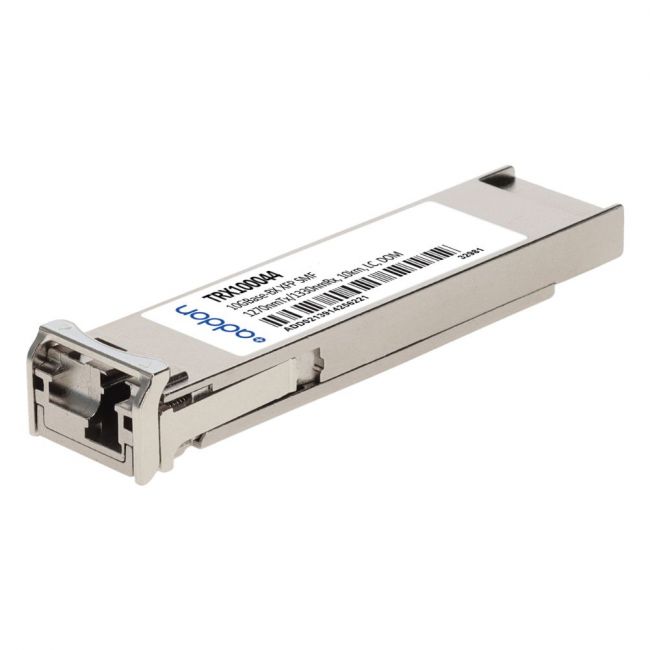
The TRX100044-AO by AddOn Networks is a 10GBase-LR optical transceiver module designed for 10 Gigabit Ethernet applications. It fits into the XFP slot of networking hardware and supports single-mode fiber transmission at 1310nm wavelength, achieving distances up to 10 kilometers. |
General Information |
|
|---|---|
| Brand | AddOn Networks |
Technical Information |
|
|---|---|
| Form Factor | XFP |
| Media | SMF |
| Type | DFB |
| Protocols | 10GBase-LR |
| Connector | LC Duplex |
Physical Characteristics |
|
|---|---|
| Weight | 3.00 |
| Condition | Refurbished |
Product Description |
|---|
The TRX100044-AO from AddOn Networks is a 10GBase-LR XFP optical transceiver designed to enable 10 Gigabit Ethernet transmission over single-mode fiber. It operates at a wavelength of 1310nm and supports a maximum reach of 10 kilometers, making it suitable for medium-range network connections. This module is primarily used in enterprise networks and data centers where reliable 10G connectivity over extended distances is required. Network administrators and IT professionals typically deploy this transceiver in switches, routers, or other optical communication equipment that supports the XFP interface. Key Features
This AddOn Networks transceiver provides a standardized solution for extending high-speed Ethernet connections over single-mode fiber. Its support for the XFP form factor allows for easy integration in compatible network equipment, facilitating scalability and flexibility in network design. |
Use Cases |
|---|
The TRX100044-AO is typically used in enterprise and data center environments requiring 10 Gigabit Ethernet connectivity over single-mode fiber. It supports medium-range network links where high bandwidth and distance are factors. How It's Used:
This transceiver plays a role in enabling 10 Gigabit Ethernet communications where longer fiber runs are necessary. It allows network designers to maintain performance while bridging physical distances in campus or metropolitan area networks. |
FAQ's |
|---|
|
 Shipping Options
 International Delivery
Requires a UPS, FedEx, or DHL account. Customers may arrange pickup from our US warehouse.
 Payment Methods
We accept Visa, Mastercard, AMEX, Discover, and Wire Transfer.
 Purchase Orders
We process purchase orders for government agencies, enterprises, data centers, and SMBs.