

Subscribe To Our Newsletter!
Subscribe to the newsletter to stay up to date with the latest news and most useful
Newsletter
↑
Back to Top



Product Overview |
|---|
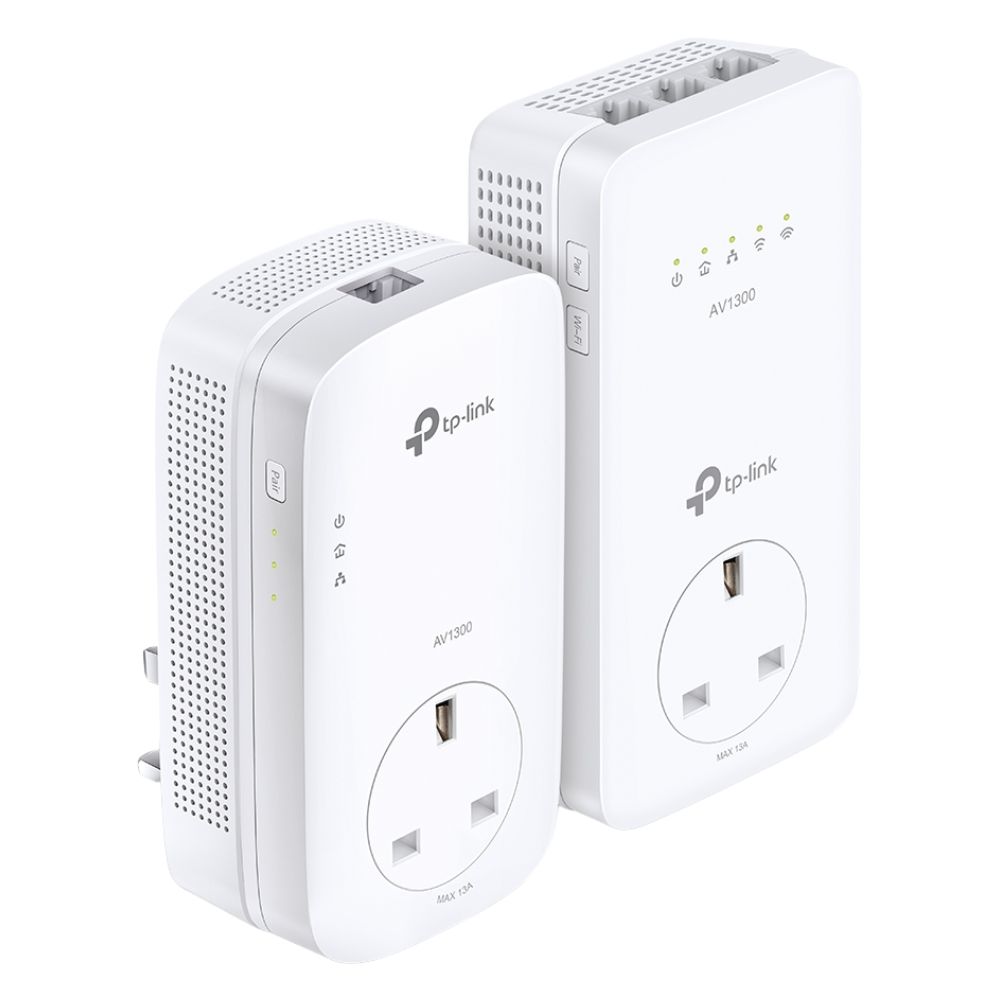
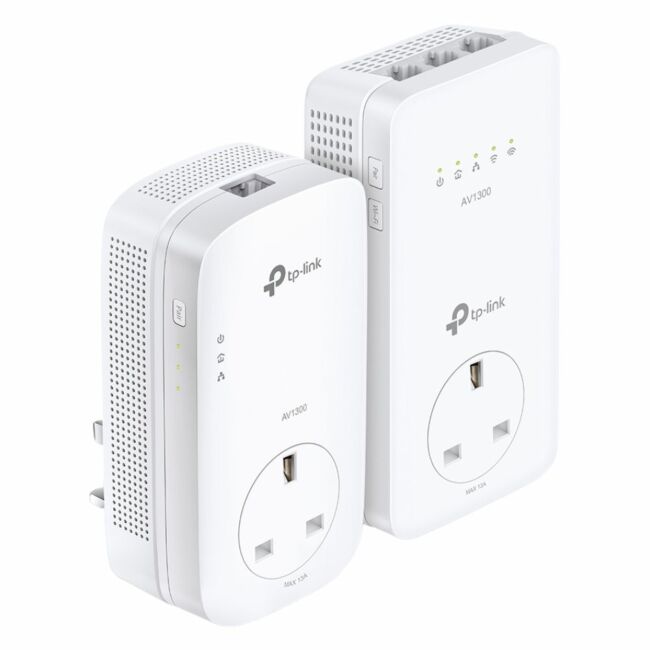
The TL-WPA8631P from TP-Link is a Powerline Wi-Fi adapter designed to extend network connectivity through electrical wiring at speeds up to 1300Mbps. It features dual-band Wi-Fi for flexible wireless connections and includes a pass-through power socket to retain power outlet functionality while providing network access. |
General Information |
|
|---|---|
| Brand | TP-Link |
| Condition | Refurbished |
Technical Information |
|
|---|---|
| Input Voltage | AC 100-240V |
| Input Frequency | 50/60Hz |
| Cooling Type | Passive |
Physical Characteristics |
|
|---|---|
| Weight | 3.00 |
Certifications and Environmental |
|
|---|---|
| Assembly Required | No |
| Compliance Standards | WEEE, RoHS, CE, FCC |
Product Description |
|---|
The TP-Link TL-WPA8631P AV1300 Powerline Wi-Fi Adapter extends your home network using your existing electrical wiring. It is designed to provide wired and wireless network access in areas where Wi-Fi coverage is limited or difficult to reach. This adapter is typically used in residential or small office environments to improve network connectivity without requiring additional Ethernet cabling. It is suited for users who want to extend their network coverage for devices that require stable internet access. Key Features
By leveraging existing electrical wiring, the TL-WPA8631P helps overcome network dead zones and supports both wired and wireless devices. Its pass-through socket design maintains power outlet availability, making it practical for various home layouts. |
Use Cases |
|---|
The TL-WPA8631P is used primarily in homes or small offices where extending wired and wireless network coverage is necessary. It benefits environments with Wi-Fi dead spots or where running new Ethernet cables is not practical. How It's Used:
This adapter generally serves as a network extender offering wired and wireless access by utilizing powerline communication, making it appropriate for environments with challenging wireless coverage. |
FAQ's |
|---|
|
 Shipping Options
 International Delivery
Requires a UPS, FedEx, or DHL account. Customers may arrange pickup from our US warehouse.
 Payment Methods
We accept Visa, Mastercard, AMEX, Discover, and Wire Transfer.
 Purchase Orders
We process purchase orders for government agencies, enterprises, data centers, and SMBs.