

Subscribe To Our Newsletter!
Subscribe to the newsletter to stay up to date with the latest news and most useful
Newsletter
↑
Back to Top



Product Overview |
|---|
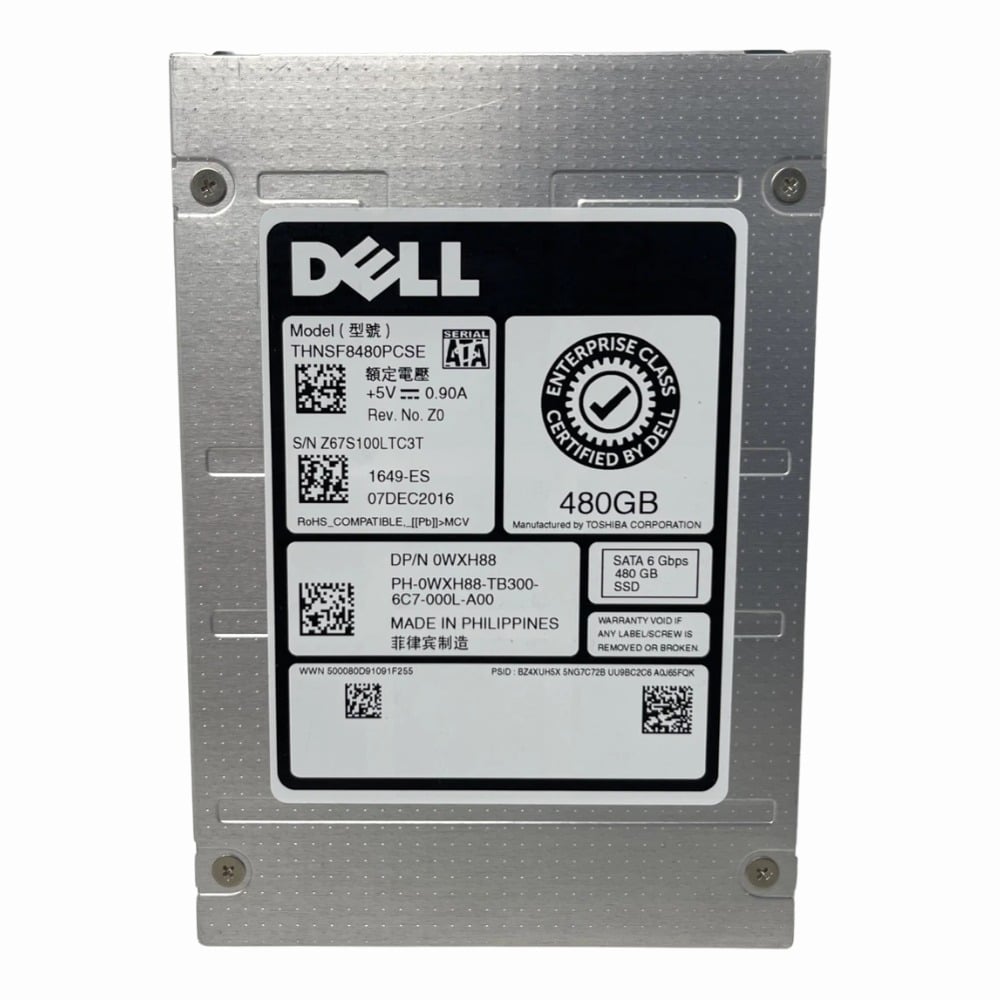
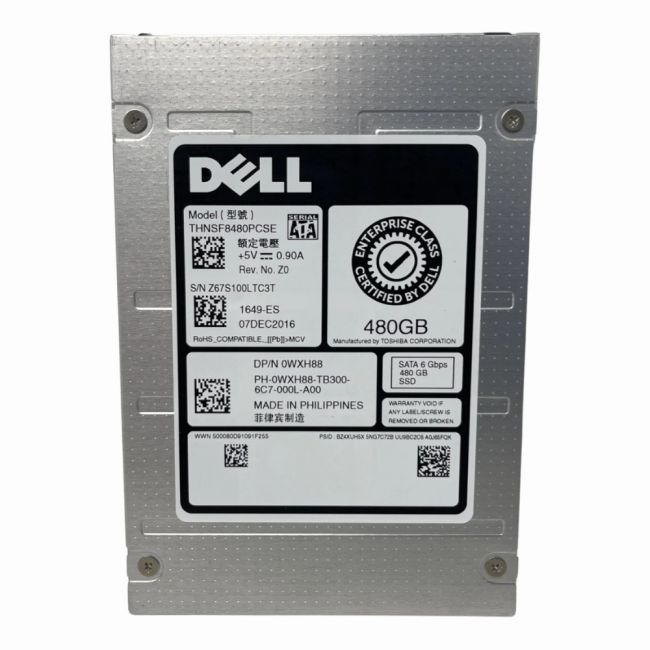
The Toshiba HK4R Series 480GB SSD offers read-focused performance through MLC NAND technology, ideal for enterprise storage solutions. It integrates hardware encryption compliant with TCG standards and includes power loss protection to maintain data integrity. Designed as a 2.5-inch SATA drive, it fits diverse server and storage environments where secure, reliable read access is a priority. |
General Information |
|
|---|---|
| Brand | Toshiba |
| Part Number | THNSF8480PCSE |
Technical Information |
|
|---|---|
| Capacity | 480GB |
| Memory Technology | Multi-Level Cell (MLC) |
| Form Factor | 2.5-inch |
| Interface | SATA 6GB/s |
| MTBF | 2,000,000 hours |
| Hot Swappable | Yes |
| Hot Pluggable | Yes |
Performance |
|
|---|---|
| Max Sequential Read | up to 550 MB/s |
| Max Sequential Write | up to 520 MB/s |
Physical Characteristics |
|
|---|---|
| Dimensions | 7 x 69.85 x 100 mm |
| Weight | 1.10 |
| Condition | Refurbished |
Product Description |
|---|
The Toshiba HK4R Series 480GB SSD is built to handle read-intensive enterprise environments, delivering consistent performance for data center applications and servers. This solid state drive fits into a standard 2.5-inch bay and connects via SATA 6Gb/s, providing a good balance between speed and compatibility. Often found in systems requiring secure and reliable storage, it features hardware-based encryption compliant with Trusted Computing Group (TCG) standards, making it a smart choice for organizations needing data protection. IT professionals and system administrators typically deploy this drive where dependable read performance and security are critical. Key Features
This drive is commonly installed in enterprise servers, storage arrays, and high-availability systems where sustained read workloads dominate. Its combination of security features and data reliability contributes to maintaining operational stability and protecting critical information in real-world use. |
Use Cases |
|---|
The Toshiba HK4R Series 480GB SSD is optimized for enterprise environments requiring consistent read performance and data security. It is suited for IT professionals managing storage infrastructure that demands robust encryption and power loss protection while handling predominantly read-intensive workloads. How It's Used:
This drive supports operational efficiency by maintaining data integrity and security in demanding enterprise scenarios. Its design enables scalability for growing read-centric workloads, making it a dependable component within diverse storage ecosystems. |
 Shipping Options
 International Delivery
Requires a UPS, FedEx, or DHL account. Customers may arrange pickup from our US warehouse.
International Delivery
Requires a UPS, FedEx, or DHL account. Customers may arrange pickup from our US warehouse.
 Payment Methods
We accept Visa, Mastercard, AMEX, Discover, and Wire Transfer.
Payment Methods
We accept Visa, Mastercard, AMEX, Discover, and Wire Transfer.
 Purchase Orders
We process purchase orders for government agencies, enterprises, data centers, and SMBs.
Purchase Orders
We process purchase orders for government agencies, enterprises, data centers, and SMBs.