

Subscribe To Our Newsletter!
Subscribe to the newsletter to stay up to date with the latest news and most useful
Newsletter
↑
Back to Top



Product Overview |
|---|
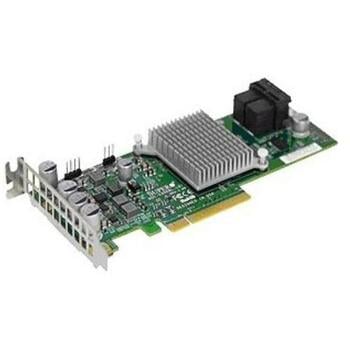
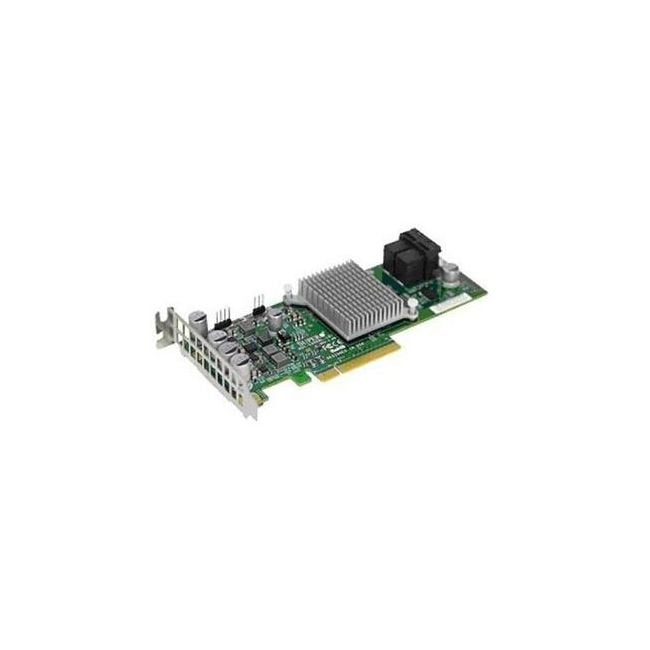
The AOC-S3008L-L8E SuperMicro internal RAID adapter facilitates fast and reliable connections between server systems and SAS storage devices. It fits well in high-performance storage setups where multiple drives need to be managed directly through a PCI Express slot, providing a balance of speed and flexibility for enterprise use. |
General Information |
|
|---|---|
| Brand | Supermicro |
| Part Number | AOC-S3008L-L8E |
Technical Specification |
|
|---|---|
| Chipset | Broadcom / LSI SAS3008 (SAS 3.0 ROC) |
| Host Interface | PCI Express 3.0 x8 (Gen3 x8) |
| Data Rate | 12Gb/s SAS |
| Ports | 8 |
| Compatibility | Windows Server, Linux (RHEL/CentOS/SUSE), VMware ESXi, FreeBSD, Supermicro motherboards |
Physical Characteristics |
|
|---|---|
| Form Factor | Low-profile PCIe add-in card (half-height), single-slot |
| Weight | 3.00 |
| Condition | Refurbished |
Miscellaneous |
|
|---|---|
| Eco Friendly | Yes |
| Compliance Standards | WEEE, RoHS, cURus, CE, FCC, CCC, UL, TUV, cULus, CSA, cUL |
Product Description |
|---|
The AOC-S3008L-L8E is a powerful internal RAID adapter that connects storage drives to a server system via a high-speed 12Gb/s SAS interface. It’s commonly used in enterprise data centers and server environments where reliable, high-throughput connectivity to storage devices is critical. Built for IT professionals managing storage arrays, this adapter often appears in setups requiring fast data access and efficient drive management. It supports diverse configurations ranging from simple direct-attached storage to complex RAID arrays. Key Features
This adapter is typically installed inside rack-mounted or tower servers where multiple SAS drives require fast, reliable connectivity. Its role is crucial in environments that demand consistent performance for database servers, virtualization, and backup solutions. By handling data traffic efficiently, it reduces bottlenecks and improves overall system responsiveness, making it a solid choice for storage-intensive applications. |
 Shipping Options
 International Delivery
Requires a UPS, FedEx, or DHL account. Customers may arrange pickup from our US warehouse.
International Delivery
Requires a UPS, FedEx, or DHL account. Customers may arrange pickup from our US warehouse.
 Payment Methods
We accept Visa, Mastercard, AMEX, Discover, and Wire Transfer.
Payment Methods
We accept Visa, Mastercard, AMEX, Discover, and Wire Transfer.
 Purchase Orders
We process purchase orders for government agencies, enterprises, data centers, and SMBs.
Purchase Orders
We process purchase orders for government agencies, enterprises, data centers, and SMBs.