

Subscribe To Our Newsletter!
Subscribe to the newsletter to stay up to date with the latest news and most useful
Newsletter
↑
Back to Top



Product Overview |
|---|
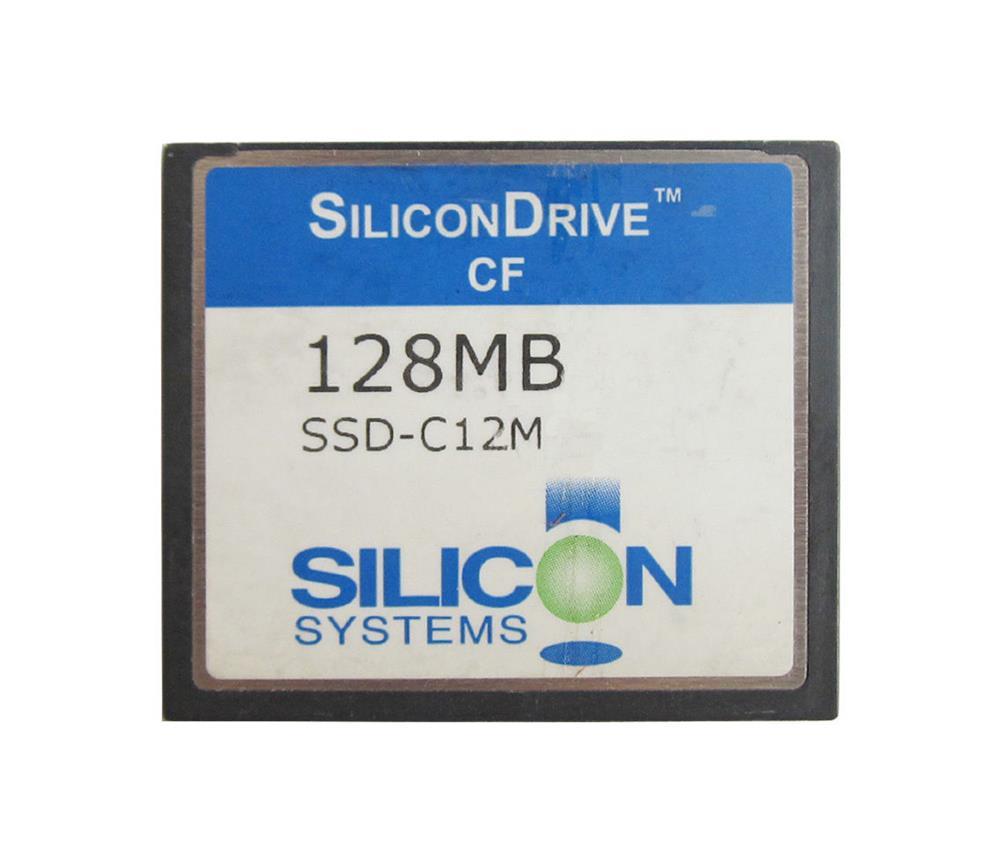
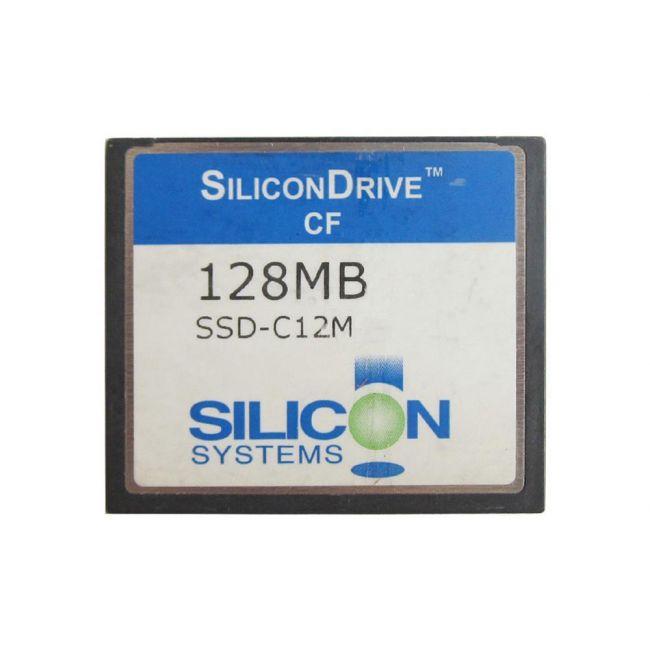
The SSD-C12M-3112 is a compact, solid state storage device using a 128MB flash memory with an ATA/IDE interface. It fits into systems requiring reliable, vibration-resistant storage in a CompactFlash form factor, commonly used in embedded and industrial environments where traditional hard drives aren’t practical. |
General Information |
|
|---|---|
| Brand | Silicon Power |
| Part Number | SSD-C12M-3112 |
Technical Information |
|
|---|---|
| Capacity | 128MB |
Physical Characteristics |
|
|---|---|
| Dimensions | 43.0 x 36.4 x 3.3 mm |
| Weight | 5.00 |
| Condition | Refurbished |
Product Description |
|---|
The SSD-C12M-3112 Silicon 128MB ATA/IDE CompactFlash Solid State Drive provides reliable flash storage using a CompactFlash card format with an ATA/IDE interface. It’s often found in embedded systems and industrial applications where conventional hard drives might fail due to vibration or mechanical wear. Built for environments that need stable, non-volatile storage without the complexities of newer interfaces, this drive suits developers or engineers working with older hardware platforms that still demand dependable storage solutions. Key Features
In practice, this SSD is commonly deployed in industrial controllers, point-of-sale terminals, and legacy computing equipment where solid-state reliability is crucial. It offers a straightforward upgrade path for systems needing dependable storage without moving parts. |
Use Cases |
|---|
The Silicon Power SSD-C12M-3112 is primarily employed in legacy industrial and embedded systems where traditional hard drives are unsuitable due to mechanical fragility. Its CompactFlash form factor combined with ATA/IDE interface ensures compatibility with older hardware platforms requiring reliable, vibration-resistant storage solutions. How It's Used:
This compact flash SSD supports operational efficiency by minimizing downtime caused by mechanical failures and enabling legacy system integrations. It provides a scalable option for embedded applications where performance consistency and physical resilience are mandatory. |
 Shipping Options
 International Delivery
Requires a UPS, FedEx, or DHL account. Customers may arrange pickup from our US warehouse.
International Delivery
Requires a UPS, FedEx, or DHL account. Customers may arrange pickup from our US warehouse.
 Payment Methods
We accept Visa, Mastercard, AMEX, Discover, and Wire Transfer.
Payment Methods
We accept Visa, Mastercard, AMEX, Discover, and Wire Transfer.
 Purchase Orders
We process purchase orders for government agencies, enterprises, data centers, and SMBs.
Purchase Orders
We process purchase orders for government agencies, enterprises, data centers, and SMBs.