

Subscribe To Our Newsletter!
Subscribe to the newsletter to stay up to date with the latest news and most useful
Newsletter
↑
Back to Top



Product Overview |
|---|
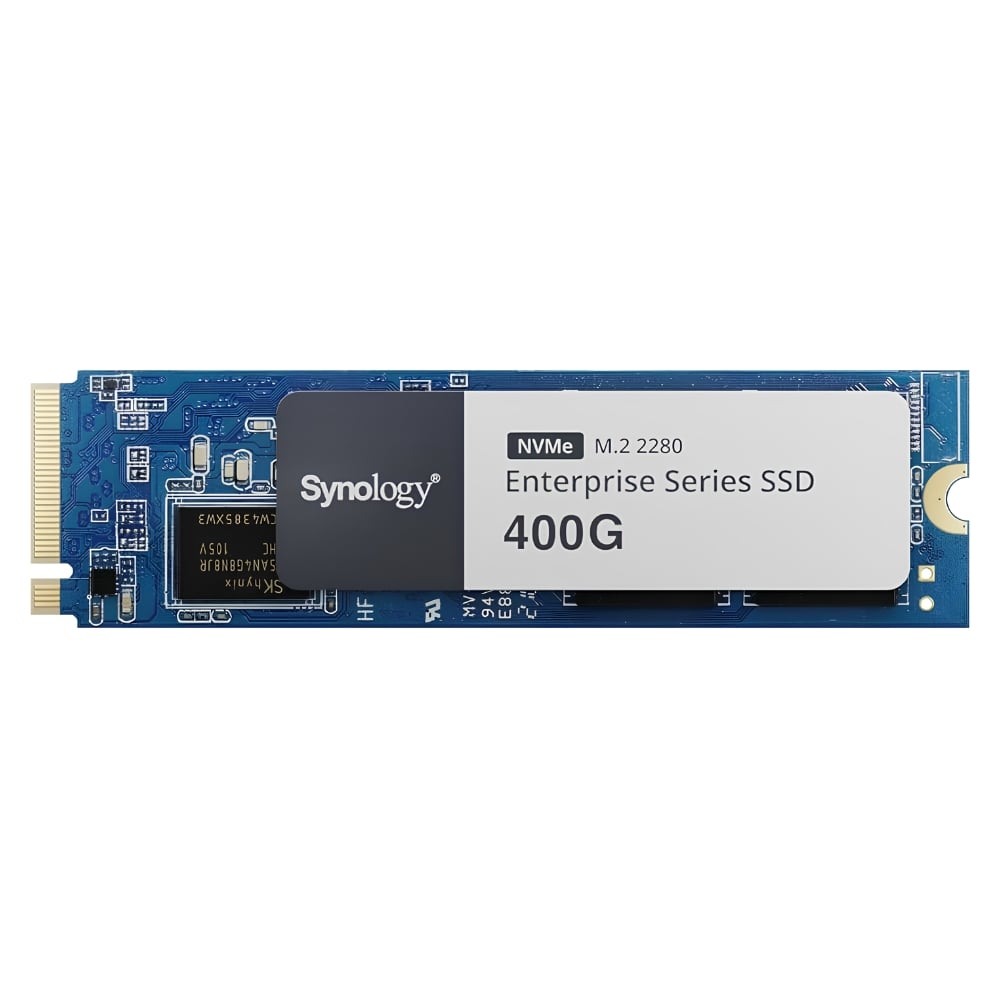
The SNV5420-400G Synology 400GB NVMe PCIe Gen3 x4 M.2 2280 SSD features a compact M.2 2280 form factor, supports NVMe protocol over PCIe Gen3 x4 lanes, offers 400GB of storage capacity, and is engineered for high endurance and performance within Synology NAS environments. |
General Information |
|
|---|---|
| Brand | Synology |
| Part Number | SNV5420-400G |
Technical Information |
|
|---|---|
| Capacity | 400GB |
| Form Factor | M.2 2280 |
| Interface | PCIe Gen 3.0 x4 |
Physical Characteristics |
|
|---|---|
| Weight | 0.60 |
| Condition | Refurbished |
Product Description |
|---|
The Synology SNV5420-400G is an enterprise-class NVMe SSD engineered specifically for Synology NAS environments, delivering consistent high-performance storage caching that accelerates demanding workloads and improves overall system responsiveness. Built with durability in mind, this drive features end-to-end data protection, featuring capacitors that reserve enough power to flush cached data during unexpected power loss events, ensuring your critical data remains intact and consistent. Key Features
This SSD serves as an ideal caching solution for Synology NAS systems, enabling faster metadata operations, quick file indexing, and accelerated virtual machine performance. The drive's enterprise-grade components ensure sustained performance under heavy workloads while maintaining low latency characteristics essential for latency-sensitive applications. |
Use Cases |
|---|
Enterprise NAS caching deployments and demanding storage environments where low latency and consistent I/O performance are critical requirements for business-critical applications and services. How It's Used:
The SNV5420-400G enables organizations to achieve higher operational efficiency by reducing wait times for data access operations, while its scalable caching architecture grows seamlessly with expanding storage demands. |
 Shipping Options
 International Delivery
Requires a UPS, FedEx, or DHL account. Customers may arrange pickup from our US warehouse.
International Delivery
Requires a UPS, FedEx, or DHL account. Customers may arrange pickup from our US warehouse.
 Payment Methods
We accept Visa, Mastercard, AMEX, Discover, and Wire Transfer.
Payment Methods
We accept Visa, Mastercard, AMEX, Discover, and Wire Transfer.
 Purchase Orders
We process purchase orders for government agencies, enterprises, data centers, and SMBs.
Purchase Orders
We process purchase orders for government agencies, enterprises, data centers, and SMBs.