

Subscribe To Our Newsletter!
Subscribe to the newsletter to stay up to date with the latest news and most useful
Newsletter
↑
Back to Top



Product Overview |
|---|
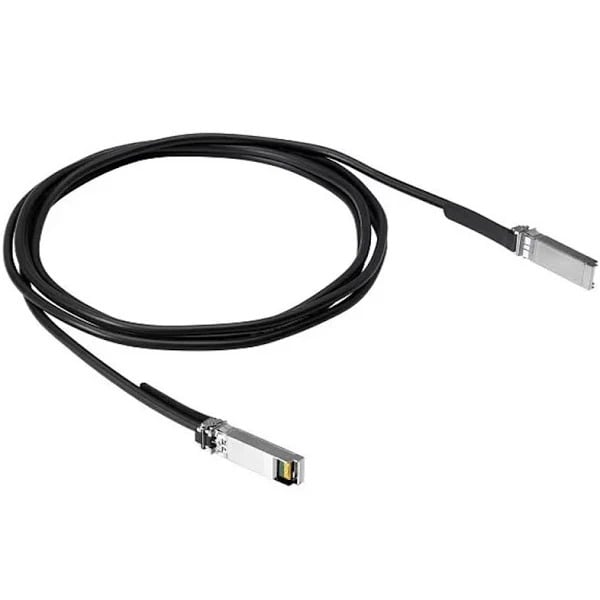
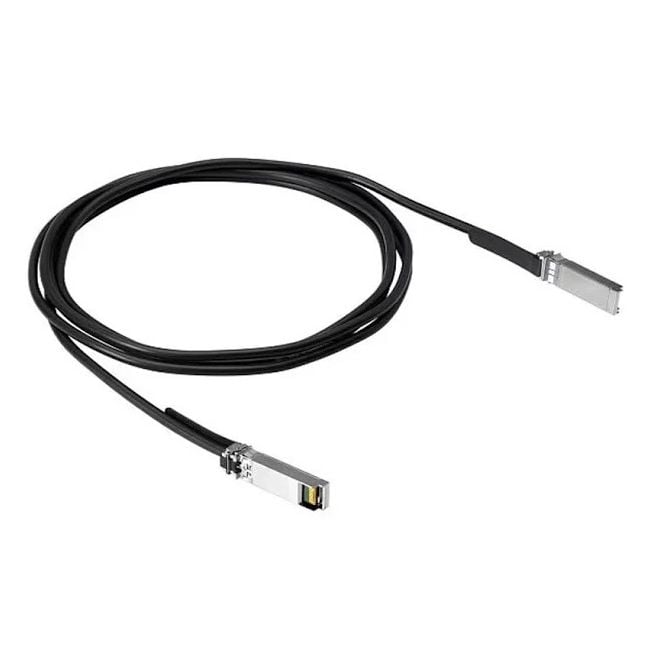
The Cisco SFP-50G-CU2.5M is a 2.5-meter direct attach copper cable that links devices at 25 or 50 gigabit speeds using the SFP56 interface. It’s designed for short-distance connectivity within data centers, providing a straightforward and energy-efficient way to connect switches, routers, and servers without additional hardware like optical transceivers. |
General Information |
|
|---|---|
| Brand | Cisco |
| Part Number | SFP-50G-CU2.5M |
Technical Information |
|
|---|---|
| Data Rate | 25Gbps,50Gbps |
| Cable Length | 2.5 m |
| Compatibility | Cisco devices with SFP56 (25G/50G) ports; compatible with Cisco switches and routers supporting SFP56/SFP-50G |
Physical Characteristics |
|
|---|---|
| Form Factor | SFP56 (Direct Attach Cable, DAC) |
| Weight | 5.00 |
| Condition | Refurbished |
Product Description |
|---|
This Cisco SFP-50G-CU2.5M is a direct attach copper (DAC) cable designed for high-speed data connections over short distances. It is commonly used to link network devices such as switches, servers, or storage systems within racks or across adjacent racks, where low latency and reliable throughput are critical. Built for data centers and enterprise networks, this cable supports both 25G and 50G Ethernet speeds, making it suitable for environments requiring scalable and efficient connectivity. Network engineers and IT professionals often rely on these cables for cost-effective, straightforward connections without needing additional optical transceivers. Key Features
This cable is typically deployed in data centers where short-range, high-bandwidth connections are frequent. It helps reduce equipment complexity by eliminating the need for separate transceivers and fiber cabling while maintaining signal integrity. In practice, it supports fast data transfer in environments like server farms, storage networks, and high-performance computing clusters. |
Use Cases |
|---|
The Cisco SFP-50G-CU2.5M direct attach copper cable is primarily deployed in data center environments where short-range, high-speed interconnects are essential. It benefits network architects and IT administrators managing high-density rack deployments requiring efficient, low-latency connections between switches and servers. How It's Used:
This cable supports operational efficiency by reducing power consumption and space requirements compared to optical transceivers. Its use in dense network topologies enables scalable performance improvements while simplifying cable management in confined data center racks. |
 Shipping Options
 International Delivery
Requires a UPS, FedEx, or DHL account. Customers may arrange pickup from our US warehouse.
International Delivery
Requires a UPS, FedEx, or DHL account. Customers may arrange pickup from our US warehouse.
 Payment Methods
We accept Visa, Mastercard, AMEX, Discover, and Wire Transfer.
Payment Methods
We accept Visa, Mastercard, AMEX, Discover, and Wire Transfer.
 Purchase Orders
We process purchase orders for government agencies, enterprises, data centers, and SMBs.
Purchase Orders
We process purchase orders for government agencies, enterprises, data centers, and SMBs.