

Subscribe To Our Newsletter!
Subscribe to the newsletter to stay up to date with the latest news and most useful
Newsletter
↑
Back to Top



Product Overview |
|---|
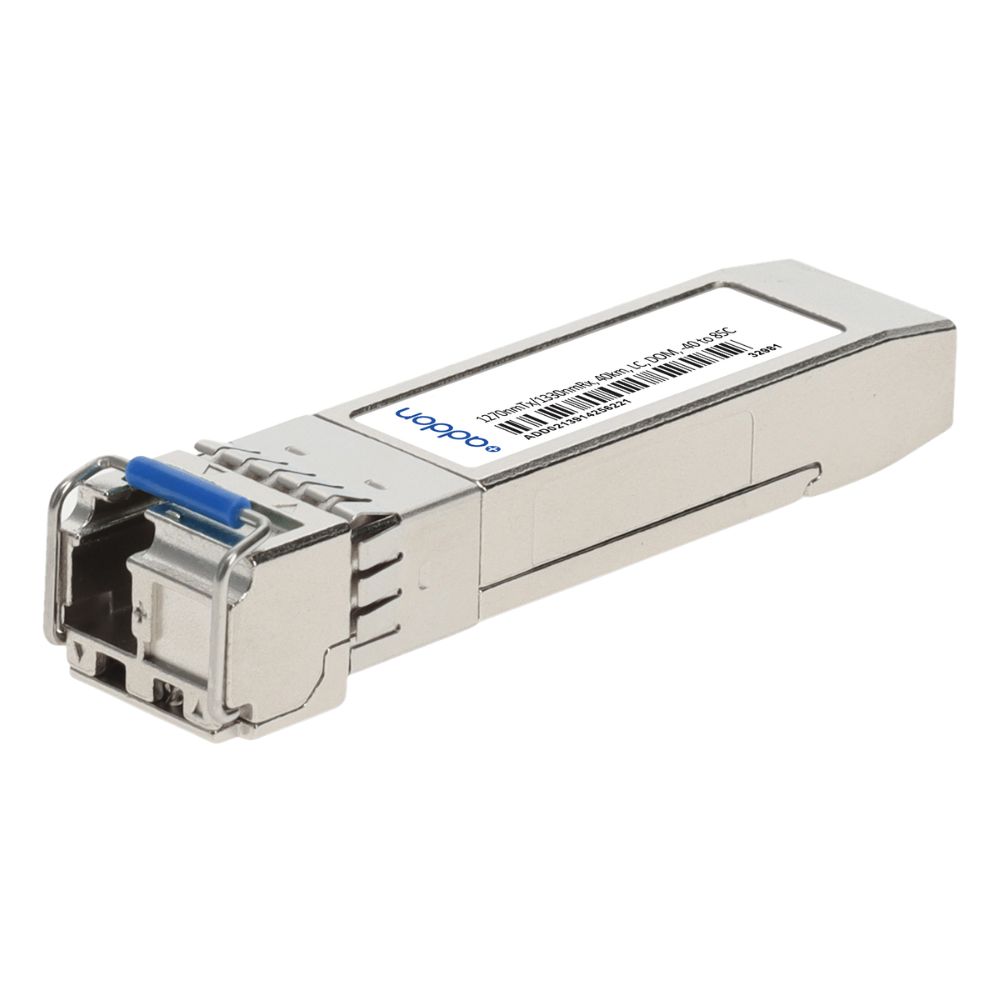
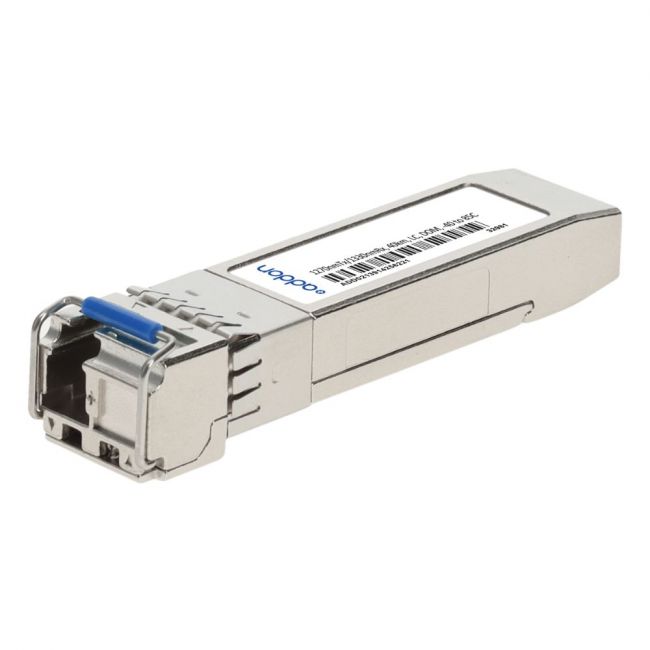
The AddOn SFP-1G-BX43-D-40-I-AO is a 1000Base-BX bidirectional SFP transceiver designed for single-mode fiber links up to 40 kilometers. It fits into standard SFP ports and enables gigabit Ethernet communication over a single fiber strand, suitable for network environments needing fiber-efficient data transmission. |
General Information |
|
|---|---|
| Brand | AddOn Networks |
Technical Information |
|
|---|---|
| Form Factor | SFP |
| Media | SMF |
| Type | DFB |
| Protocols | 1000Base-BX |
| Connector | Simplex LC |
Physical Characteristics |
|
|---|---|
| Weight | 3.00 |
| Condition | Refurbished |
Product Description |
|---|
The AddOn SFP-1G-BX43-D-40-I-AO is a small form-factor pluggable (SFP) transceiver designed for gigabit Ethernet applications using single-mode fiber. It supports 1000Base-BX standard with bidirectional transmission over a single fiber strand, enabling efficient use of fiber infrastructure. This transceiver is typically utilized in enterprise networking environments, telecom networks, and data center interconnects requiring fiber optic links up to 40 kilometers. Network administrators and IT professionals use it to extend network reach without additional fiber cabling. Key Features
This AddOn SFP transceiver offers a practical solution for network extension where single fiber infrastructure exists or fiber conservation is necessary. It allows efficient deployment in long-distance fiber networks without requiring dual fibers, simplifying installation and maintenance. |
Use Cases |
|---|
This SFP transceiver is commonly used in network environments requiring long-distance gigabit connectivity over single-mode fiber, such as campus networks, metro Ethernet, and telecom backhaul. Its bidirectional capability reduces fiber usage in constrained installations. How It's Used:
Overall, the module enables practical fiber deployment where reducing fiber strands is critical, supporting network scalability and fiber infrastructure optimization without altering existing hardware setups. |
FAQ's |
|---|
|
 Shipping Options
 International Delivery
Requires a UPS, FedEx, or DHL account. Customers may arrange pickup from our US warehouse.
 Payment Methods
We accept Visa, Mastercard, AMEX, Discover, and Wire Transfer.
 Purchase Orders
We process purchase orders for government agencies, enterprises, data centers, and SMBs.