

Subscribe To Our Newsletter!
Subscribe to the newsletter to stay up to date with the latest news and most useful
Newsletter
↑
Back to Top



| Product Overview |
|---|
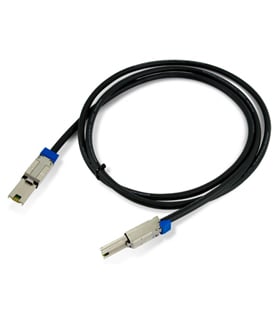
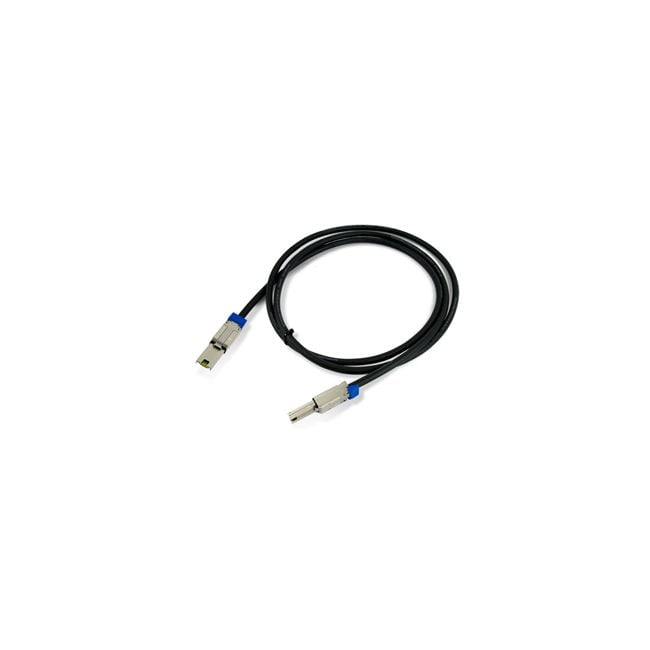
The Dell SFF8088 SAS External Cable 6.6 ft connects servers or RAID controllers to external SAS storage devices. It’s built to deliver reliable, high-speed data transfer in enterprise storage environments where stable, long-term connections are essential. |
| General Information | |
|---|---|
| Brand | Dell |
| Part Number | SFF8088 |
| Technical Information | |
|---|---|
| Data Rate | 12Gbps,6Gbps |
| Cable Length | 6.6 ft (2.0 m) |
| Physical Characteristics | |
|---|---|
| Weight | 5.00 |
| Condition | Refurbished |
| Product Description |
|---|
This Dell SFF8088 SAS external cable is designed to connect high-performance storage devices to servers or RAID controllers. It's commonly used in data centers and enterprise environments where reliable, fast data transfer is critical. Built for IT professionals and system administrators, this cable supports expanding storage arrays or linking external drives over SAS interfaces. You’ll often find it in setups requiring robust, error-free connectivity between storage hardware. Key Features
This cable is typically deployed in rack-mounted server setups or external storage enclosures. It plays a key role in maintaining fast, reliable communication between server controllers and SAS drives, helping ensure smooth operation of storage systems. |
| Use Cases |
|---|
The SFF8088 Dell 6.6ft 12Gbps External SAS Cable is designed for enterprise IT environments requiring robust external storage connectivity. It is particularly suited for data centers and storage clusters where high-throughput and reliable SAS connections are critical for maintaining performance and data integrity. How It's Used:
This cable aids in maintaining consistent operational efficiency by providing a dependable physical link for high-speed SAS data transfers. Its use in scalable storage architectures enables seamless growth while supporting performance demands typical of enterprise-grade workloads. |
 Shipping Options
 International Delivery
Requires a UPS, FedEx, or DHL account. Customers may arrange pickup from our US warehouse.
International Delivery
Requires a UPS, FedEx, or DHL account. Customers may arrange pickup from our US warehouse.
 Payment Methods
We accept Visa, Mastercard, AMEX, Discover, and Wire Transfer.
Payment Methods
We accept Visa, Mastercard, AMEX, Discover, and Wire Transfer.
 Purchase Orders
We process purchase orders for government agencies, enterprises, data centers, and SMBs.
Purchase Orders
We process purchase orders for government agencies, enterprises, data centers, and SMBs.