

Subscribe To Our Newsletter!
Subscribe to the newsletter to stay up to date with the latest news and most useful
Newsletter
↑
Back to Top



Product Overview |
|---|
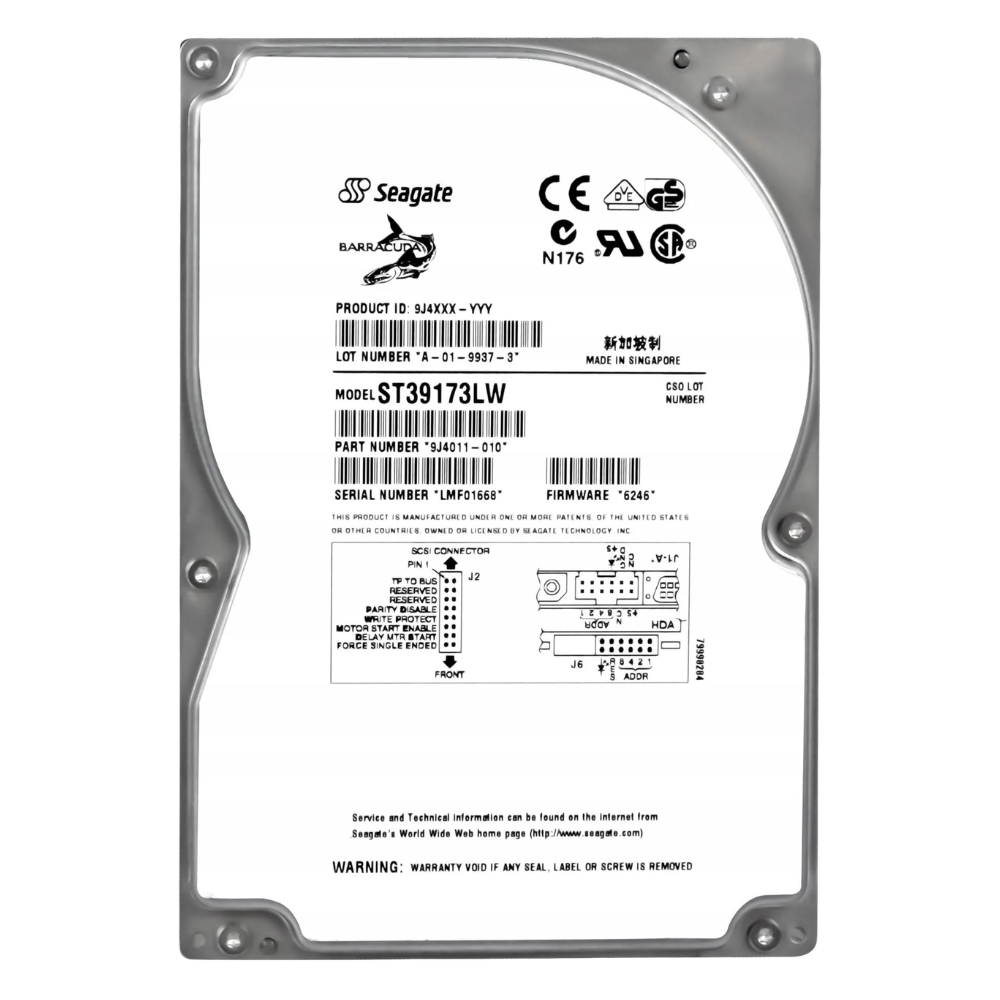
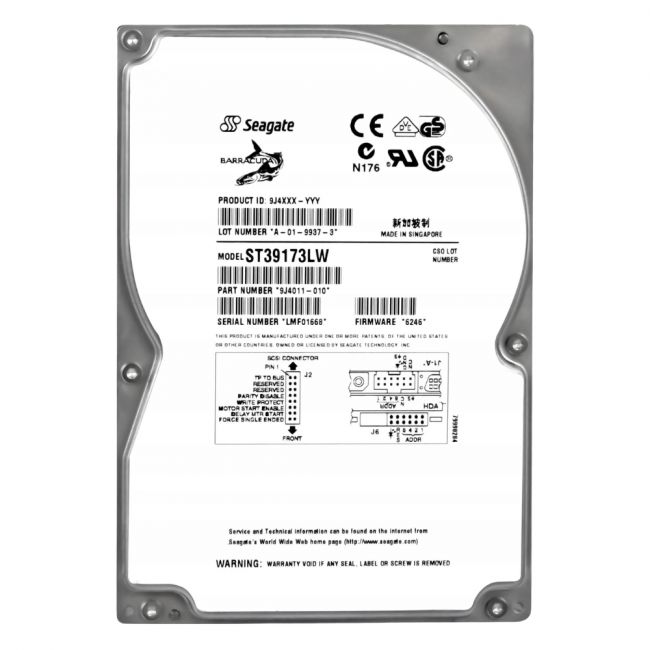
The ST39173LW Seagate Barracuda hard drive delivers 9.1GB of dependable storage at 7,200 RPM with an Ultra2 SCSI interface, making it well-suited for legacy servers, RAID arrays, and industrial-grade systems requiring reliable low-profile drives with solid performance in continuous-duty operations. |
General Information |
|
|---|---|
| Brand | Seagate |
| Part Number | ST39173LW |
Technical Information |
|
|---|---|
| Capacity | 9.1GB |
| Spindle Speed | 7200 RPM |
Interfaces/Ports |
|
|---|---|
| Interface | SCSI |
Physical Characteristics |
|
|---|---|
| Condition | Refurbished |
| Weight | 1.76 |
Miscellaneous |
|
|---|---|
| Eco Friendly | Yes |
Product Description |
|---|
The ST39173LW Seagate Barracuda is a reliable 3.5-inch internal hard drive designed for legacy servers, storage arrays, and industrial systems requiring stable data access and low-profile integration. Key Features
Ideal for legacy enterprise environments, archival systems, and embedded industrial applications, this drive provides dependable performance where newer interface compatibility is not required. Its compact form allows it to fit into tight enclosures while maintaining consistent throughput. |
Use Cases |
|---|
The ST39173LW Seagate Barracuda 9.1GB hard drive is primarily utilized in legacy server environments and industrial systems where space constraints and reliability are critical. IT professionals managing aging infrastructure or specialized applications benefit from its low-profile design and robust Ultra2 SCSI interface, ensuring stable operation in demanding continuous workloads. How It's Used:
This hard drive supports operational continuity by providing dependable storage performance tailored to environments constrained by physical space and legacy interface requirements. Its design facilitates scalability in existing infrastructures requiring consistent data access and long-term serviceability. |
 Shipping Options
 International Delivery
Requires a UPS, FedEx, or DHL account. Customers may arrange pickup from our US warehouse.
International Delivery
Requires a UPS, FedEx, or DHL account. Customers may arrange pickup from our US warehouse.
 Payment Methods
We accept Visa, Mastercard, AMEX, Discover, and Wire Transfer.
Payment Methods
We accept Visa, Mastercard, AMEX, Discover, and Wire Transfer.
 Purchase Orders
We process purchase orders for government agencies, enterprises, data centers, and SMBs.
Purchase Orders
We process purchase orders for government agencies, enterprises, data centers, and SMBs.