

Subscribe To Our Newsletter!
Subscribe to the newsletter to stay up to date with the latest news and most useful
Newsletter
↑
Back to Top



Product Overview |
|---|
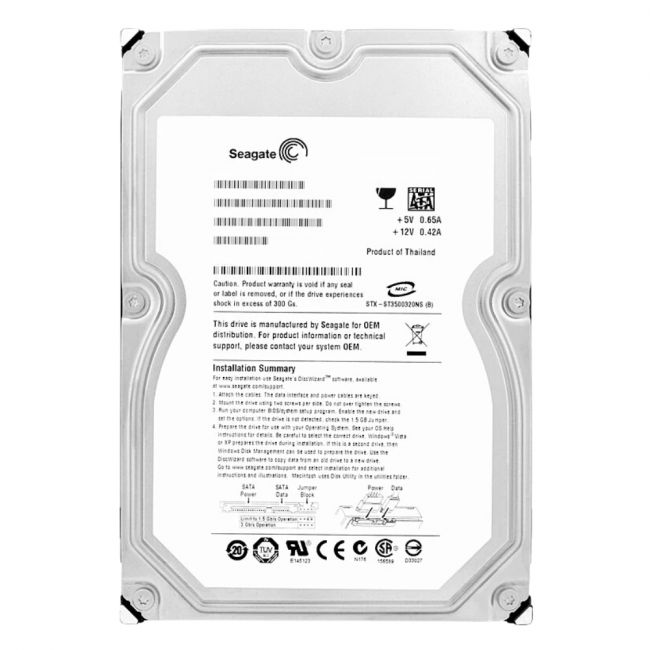
The Seagate Cheetah 10K.7 73GB 3.5-inch internal hard drive delivers reliable enterprise performance with its 10K RPM spindle speed, Ultra-320 SCSI interface, and 8MB cache. Designed for older server infrastructures, it provides efficient operation in data-intensive and mission-critical systems. |
General Information |
|
|---|---|
| Brand | Seagate |
| Part Number | ST37320LC |
Technical Information |
|
|---|---|
| Capacity | 73GB |
| Form Factor | 3.5-inch |
| Cache | 8MB |
| Spindle Speed | 10000 RPM |
Interfaces/Ports |
|
|---|---|
| Interface | SCSI |
Physical Characteristics |
|
|---|---|
| Condition | Refurbished |
| Weight | 1.76 |
Miscellaneous |
|
|---|---|
| Eco Friendly | Yes |
Product Description |
|---|
The Seagate Cheetah 10K.7 73GB internal hard drive is engineered for performance-driven environments that demand fast data access and long-term reliability. With a 10K RPM spindle speed and Ultra-320 SCSI interface, it ensures quick throughput for enterprise-grade systems. Key Features
This drive is suitable for legacy servers, storage arrays, and enterprise-grade systems that require stable performance and SCSI compatibility, especially in environments with sustained workload demands. |
Use Cases |
|---|
The Seagate Cheetah 10K.7 73GB hard drive is commonly deployed in legacy server environments where high-speed data access and reliability are critical. IT professionals managing mid-sized data centers or enterprise storage arrays often utilize this drive to maintain performance in older SCSI-based infrastructures. It is especially suited for workloads requiring consistent I/O throughput and low latency. How It's Used:
This hard drive contributes to sustained operational performance by delivering reliable data throughput under demanding workloads. Its compatibility with established server configurations allows organizations to extend the lifecycle of their infrastructure while managing storage performance and capacity effectively. |
 Shipping Options
 International Delivery
Requires a UPS, FedEx, or DHL account. Customers may arrange pickup from our US warehouse.
International Delivery
Requires a UPS, FedEx, or DHL account. Customers may arrange pickup from our US warehouse.
 Payment Methods
We accept Visa, Mastercard, AMEX, Discover, and Wire Transfer.
Payment Methods
We accept Visa, Mastercard, AMEX, Discover, and Wire Transfer.
 Purchase Orders
We process purchase orders for government agencies, enterprises, data centers, and SMBs.
Purchase Orders
We process purchase orders for government agencies, enterprises, data centers, and SMBs.