

Subscribe To Our Newsletter!
Subscribe to the newsletter to stay up to date with the latest news and most useful
Newsletter
↑
Back to Top



Product Overview |
|---|
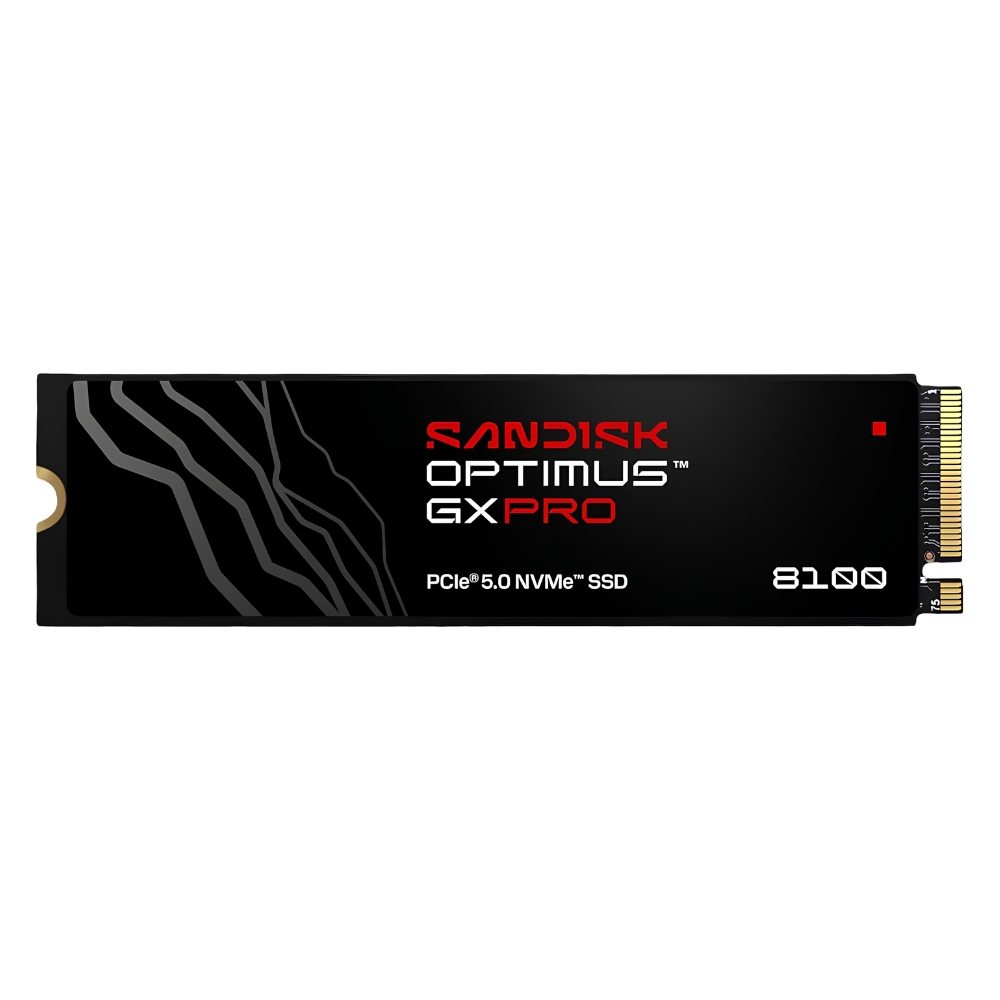
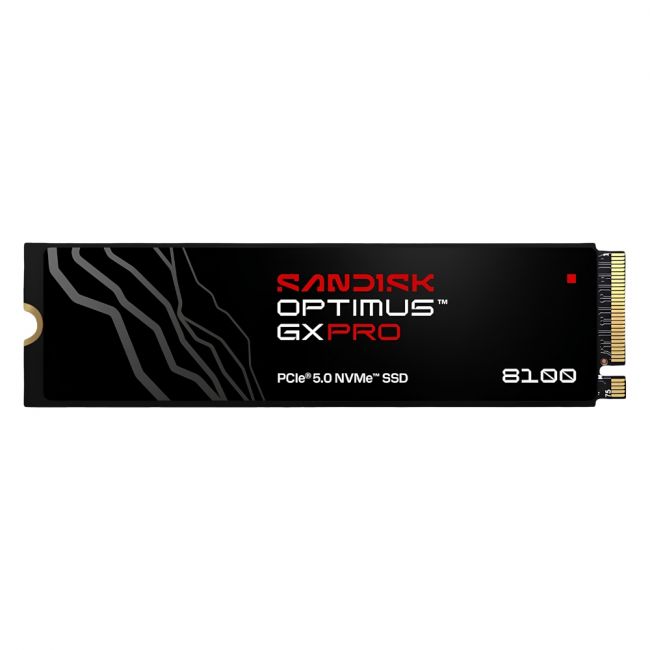
The SanDisk Optimus GX PRO 8100 8TB SSD provides high-capacity internal storage with a PCIe Gen5 x4 interface and NVMe 2.0 protocol support. Its M.2 2280 form factor includes a built-in heatsink to help maintain operating temperatures, making it suitable for data-intensive environments requiring direct-attached storage solutions. |
General Information |
|
|---|---|
| Brand | SanDisk |
Technical Information |
|
|---|---|
| Capacity | 8TB |
| NAND Flash | 3D TLC NAND |
| Memory Technology | Triple-Level Cell (TLC) |
| Form Factor | M.2 2280 |
| Interface | PCIe Gen 5.0 x4 |
| Hot Swappable | No |
| Hot Pluggable | No |
Physical Characteristics |
|
|---|---|
| Weight | 0.60 |
| Condition | Refurbished |
Miscellaneous |
|
|---|---|
| Compliance Standards | WEEE, RoHS, CE, FCC |
Product Description |
|---|
The SanDisk Optimus GX PRO 8100 SDSP82800TAH is an internal solid-state drive designed to deliver substantial storage capacity combined with the latest PCIe Gen5 capabilities. It connects via a PCIe Gen5 x4 interface and utilizes the NVMe 2.0 protocol to provide efficient data transfer. The M.2 2280 form factor and integrated heatsink support thermal management during heavy workloads. This SSD is suitable for users requiring large-scale storage solutions in environments that support M.2 PCIe Gen5 devices, such as enterprise servers or advanced workstations. IT professionals and system integrators can deploy this drive to address high-capacity and high-throughput needs. Key Features
This product plays a critical role in supporting large datasets and sustained data operations where thermal management and interface speed are important. Its design is tailored to fit within modern systems that embrace PCIe Gen5 technology and require reliable internal solid-state storage. |
Use Cases |
|---|
This SSD is typically deployed in data centers, enterprise servers, and high-end workstations where substantial storage capacity and PCIe Gen5 bandwidth are required. It benefits workloads involving large file transfers, database operations, and storage-intensive applications that take advantage of NVMe 2.0 performance. How It's Used:
The drive's configuration supports efficient data flow and temperature regulation, contributing to stable operation in environments demanding continuous storage access. It suits professionals managing large datasets and system builders requiring PCIe Gen5 SSDs with integrated cooling. |
FAQ's |
|---|
|
 Shipping Options
 International Delivery
Requires a UPS, FedEx, or DHL account. Customers may arrange pickup from our US warehouse.
 Payment Methods
We accept Visa, Mastercard, AMEX, Discover, and Wire Transfer.
 Purchase Orders
We process purchase orders for government agencies, enterprises, data centers, and SMBs.