

Subscribe To Our Newsletter!
Subscribe to the newsletter to stay up to date with the latest news and most useful
Newsletter
↑
Back to Top



Product Overview |
|---|
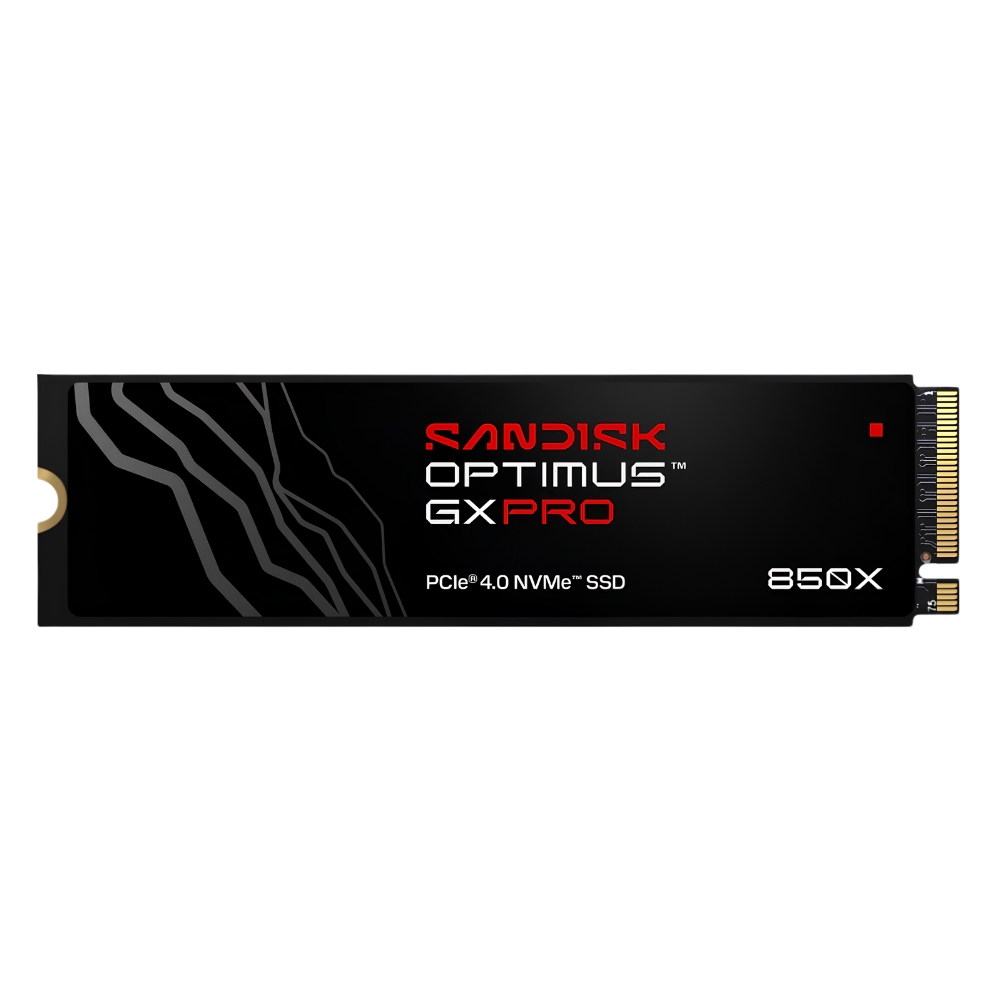
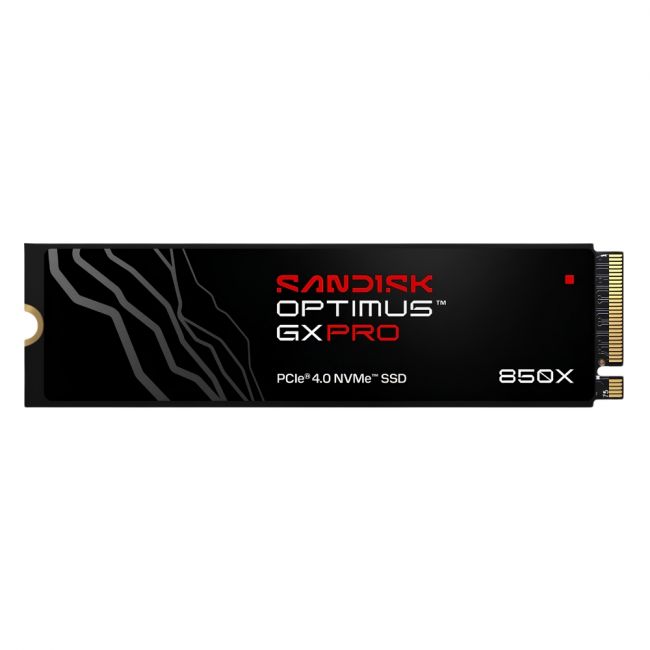
The SanDisk Optimus GX PRO 850X 2TB SSD is an internal M.2 2280 drive designed to provide substantial storage capacity with a PCIe Gen4 x4 interface and NVMe 1.4 protocol. It features an integrated heatsink for thermal management, supporting demanding data transfer tasks in compatible systems. |
General Information |
|
|---|---|
| Brand | SanDisk |
Technical Information |
|
|---|---|
| Capacity | 2TB |
| Memory Technology | Triple-Level Cell (TLC) |
| Form Factor | M.2 2280 |
| Hot Swappable | No |
| Hot Pluggable | No |
Physical Characteristics |
|
|---|---|
| Weight | 0.60 |
| Condition | Refurbished |
Miscellaneous |
|
|---|---|
| Compliance Standards | WEEE, RoHS, CE, FCC |
Product Description |
|---|
The SanDisk Optimus GX PRO 850X 2TB SSD is a solid-state drive designed for use in systems supporting PCIe Gen4 x4 interfaces. With an M.2 2280 form factor and NVMe 1.4 protocol, this internal drive delivers substantial storage capacity coupled with high throughput capabilities. This SSD incorporates a built-in heatsink to help dissipate heat during intensive data operations, maintaining performance stability. It is suitable for users who require fast and large-scale storage solutions in computing environments that support PCIe Gen4 technology. Key Features
This SSD serves as a robust storage option where large volume and rapid access to data are necessary. Its form factor and interface type make it suitable for modern desktop or workstation environments that can accommodate M.2 Gen4 SSDs with thermal management needs. |
Use Cases |
|---|
This SSD is typically used in high-capacity storage environments requiring fast data access, such as workstations or gaming rigs that support PCIe Gen4 interfaces. It benefits users who handle large files or run applications demanding sustained throughput. How It's Used:
Overall, this SSD supports operational requirements where high capacity, fast PCIe Gen4 connectivity, and thermal stability are essential for maintaining system responsiveness and data accessibility. |
FAQ's |
|---|
|
 Shipping Options
 International Delivery
Requires a UPS, FedEx, or DHL account. Customers may arrange pickup from our US warehouse.
 Payment Methods
We accept Visa, Mastercard, AMEX, Discover, and Wire Transfer.
 Purchase Orders
We process purchase orders for government agencies, enterprises, data centers, and SMBs.