

Subscribe To Our Newsletter!
Subscribe to the newsletter to stay up to date with the latest news and most useful
Newsletter
↑
Back to Top



Product Overview |
|---|
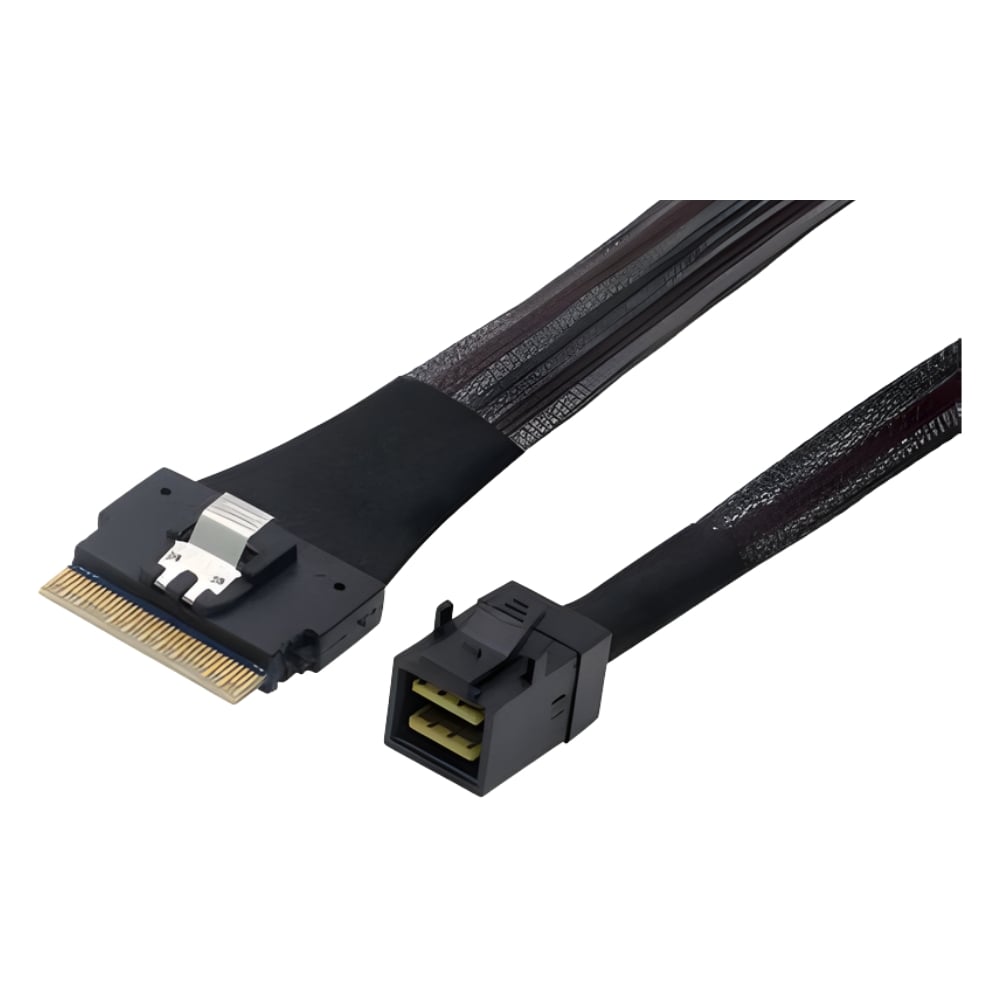
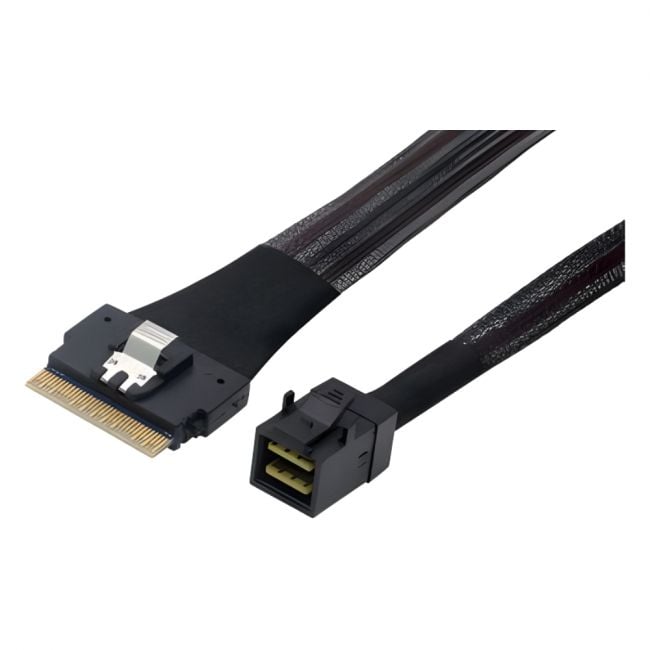
The Lenovo Interposer NVMe Reverse Cable links Mini-SAS HD ports to Slimline x8 connectors, providing a practical solution for front backplane NVMe connections. It fits neatly in storage enclosures that require compact, reliable cabling and supports the data demands of modern enterprise storage systems. |
General Information |
|
|---|---|
| Brand | Lenovo |
| Part Number | SC17A59363 |
| Alternate Part Number | SC17A59363-13-CT |
Technical Information |
|
|---|---|
| Cable Family | Storage |
| Standard | SAS 12Gb/s |
| Data Rate | PCIe 3.0 x4 per drive (NVMe via interposer); supports SAS 12Gb/s on Mini-SAS HD side |
| Cable Length | 800mm |
| Compatibility | Lenovo NVMe front backplanes, Lenovo servers and drive cages that use Slimline x8 backplanes (used as NVMe reverse interposer) |
| product type | Interposer NVMe reverse cable |
| Product Category | Data Cables |
Connectivity |
|
|---|---|
| Connector A | SAS SFF-8643 |
| Connector B | SlimSAS SFF-8654 |
| Cable Connector Gender | Male to Male |
| Connector Type | Mini-SAS HD x2 to Slimline x8 (interposer) |
Physical Characteristics |
|
|---|---|
| Weight | 3.00 |
| Condition | Refurbished |
Product Description |
|---|
This Lenovo interposer cable acts as a bridge between Mini-SAS HD connectors and Slimline x8 interfaces, optimized for NVMe reverse data flow. It’s commonly used in enterprise storage setups where front backplane connections require a reliable and compact cabling solution. Built for data center professionals and IT administrators, this cable helps maintain system performance while simplifying cabling in tight spaces. It’s often found in Lenovo storage enclosures and server configurations needing efficient NVMe connectivity. Key Features
This cable is typically deployed inside storage arrays and server chassis where front panel connections are crucial. It enables smoother NVMe device integration and helps maintain system stability. Its role is essential for setups demanding consistent high-speed data transfer in compact environments. |
 Shipping Options
 International Delivery
Requires a UPS, FedEx, or DHL account. Customers may arrange pickup from our US warehouse.
International Delivery
Requires a UPS, FedEx, or DHL account. Customers may arrange pickup from our US warehouse.
 Payment Methods
We accept Visa, Mastercard, AMEX, Discover, and Wire Transfer.
Payment Methods
We accept Visa, Mastercard, AMEX, Discover, and Wire Transfer.
 Purchase Orders
We process purchase orders for government agencies, enterprises, data centers, and SMBs.
Purchase Orders
We process purchase orders for government agencies, enterprises, data centers, and SMBs.