

Subscribe To Our Newsletter!
Subscribe to the newsletter to stay up to date with the latest news and most useful
Newsletter
↑
Back to Top



Product Overview |
|---|
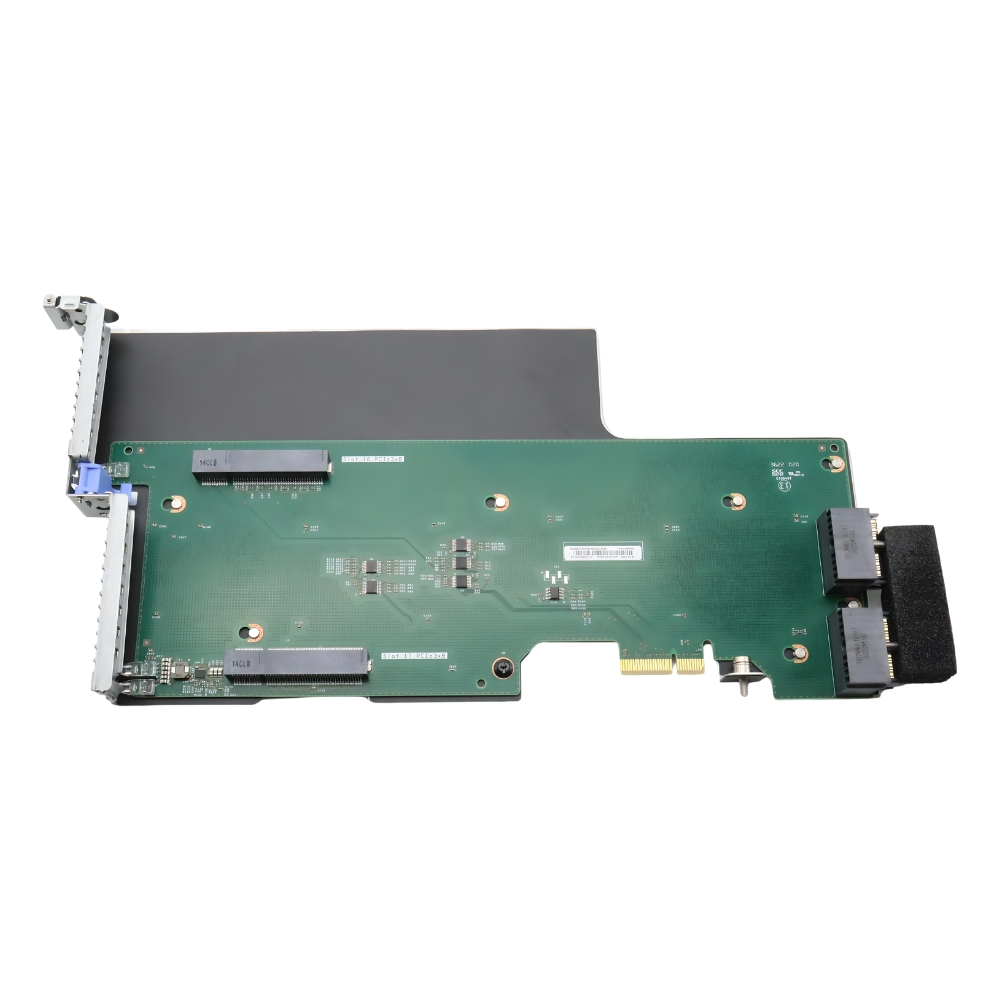
The SB27A00779 Lenovo ThinkSystem SR950 I/O 2-Slot x8 PCIe Riser expands your server’s capability by allowing two PCIe x8 cards to be installed in the SR950 chassis. It fits neatly inside the server to provide extra card slots without affecting the system’s stability or performance, making it a practical component for enhancing server flexibility in demanding computing environments. |
General Information |
|
|---|---|
| Brand | Lenovo |
| Part Number | SB27A00779 |
| Alternate Part Number | SB27A00779-13-CT |
Technical Specification |
|
|---|---|
| Host Interface | PCI Express x8 (PCIe x8) |
| Ports | 2 |
| Compatibility | Lenovo ThinkSystem SR950 |
Physical Characteristics |
|
|---|---|
| Form Factor | 2-slot x8 PCIe riser card |
| Weight | 3.00 |
| Condition | Refurbished |
Miscellaneous |
|
|---|---|
| Assembly Required | Yes |
| Eco Friendly | Yes |
| Compliance Standards | WEEE, RoHS, cURus, CE, FCC, CCC, UL, TUV, cULus, CSA, cUL |
Product Description |
|---|
The SB27A00779 Lenovo ThinkSystem SR950 I/O 2-Slot x8 PCIe Riser is built to expand the PCIe slot availability in your server, allowing two x8 PCIe cards to be installed in the SR950 chassis. This riser card is commonly used in enterprise data centers and high-demand computing setups where additional I/O capacity is needed to support storage, networking, or accelerator cards. Typically found in environments relying on scalable server configurations, it's a practical solution for IT professionals and system administrators looking to enhance their server's versatility without compromising performance or reliability. Key Features
Often deployed in servers handling virtualized workloads, large databases, or network-intensive applications, this riser card plays a key role in adapting the hardware to specific operational needs. It provides a straightforward way to increase I/O capacity, helping data centers maintain flexibility as hardware demands evolve. |
 Shipping Options
 International Delivery
Requires a UPS, FedEx, or DHL account. Customers may arrange pickup from our US warehouse.
International Delivery
Requires a UPS, FedEx, or DHL account. Customers may arrange pickup from our US warehouse.
 Payment Methods
We accept Visa, Mastercard, AMEX, Discover, and Wire Transfer.
Payment Methods
We accept Visa, Mastercard, AMEX, Discover, and Wire Transfer.
 Purchase Orders
We process purchase orders for government agencies, enterprises, data centers, and SMBs.
Purchase Orders
We process purchase orders for government agencies, enterprises, data centers, and SMBs.