

Subscribe To Our Newsletter!
Subscribe to the newsletter to stay up to date with the latest news and most useful
Newsletter
↑
Back to Top



Product Overview |
|---|
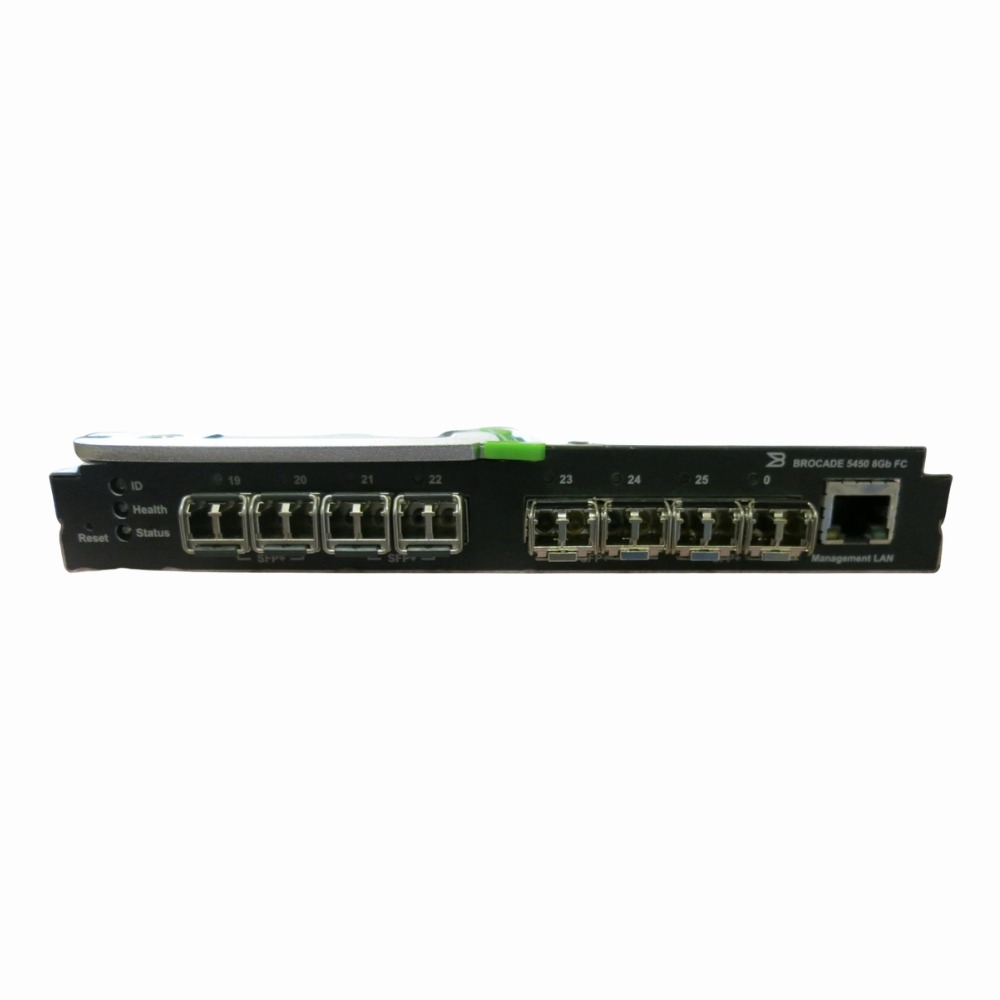
The Fujitsu 5450 26-port SAN Switch is a specialized networking device that manages Fibre Channel connections in storage area networks. It fits neatly within setups like the BX900, handling high-speed data traffic to keep storage resources accessible and responsive without unnecessary delay. |
General Information |
|
|---|---|
| Brand | Fujitsu |
| Part Number | S26361-K1305-V26 |
| Condition | Refurbished |
Technical Information |
|
|---|---|
| Switch Ports | 26 |
| Number of Ports | 26-Ports |
| Port Type | SFP+ |
| Port Speed | 8 Gbps Fibre Channel |
| POE Support | No |
| VLAN Support | No |
| Stackable | No |
| Layer Support | Layer 2 |
| Connector Type | SFP+ |
Management and Configuration |
|
|---|---|
| Remote Protocols | Yes |
| Management Interfaces | CLI (SSH/Telnet), Web GUI (HTTPS), SNMP, Serial Console (RJ-45) |
| Security Features | Role-Based Access Control (RBAC), RADIUS, TACACS+, SSH, SSL |
| Remote Management Protocol | SSH, Telnet, HTTPS, SNMP |
Physical Characteristics |
|
|---|---|
| Weight | 4.00 |
Miscellaneous |
|
|---|---|
| Compliant Standards | Fibre Channel (8 Gbps) |
Product Description |
|---|
The Fujitsu 5450 SAN Switch with 26 ports delivers reliable 8Gb/s Fibre Channel connectivity tailored for storage area networks. It is commonly used in data centers or enterprise setups requiring fast and consistent access to storage resources. Built for integration within the Fujitsu BX900 storage platform, this switch is often found in environments where high performance and low latency are critical, such as database management, virtualization, or large-scale backup solutions. IT professionals and system administrators benefit from its straightforward deployment and stable operation. Key Features
This switch is typically deployed in enterprise storage networks where consistent throughput and uptime matter. It plays a key role in connecting servers to storage arrays, facilitating rapid data access and efficient resource sharing. Its presence in the network infrastructure helps maintain performance during heavy workloads and ensures that storage systems operate without bottlenecks. |
 Shipping Options
 International Delivery
Requires a UPS, FedEx, or DHL account. Customers may arrange pickup from our US warehouse.
International Delivery
Requires a UPS, FedEx, or DHL account. Customers may arrange pickup from our US warehouse.
 Payment Methods
We accept Visa, Mastercard, AMEX, Discover, and Wire Transfer.
Payment Methods
We accept Visa, Mastercard, AMEX, Discover, and Wire Transfer.
 Purchase Orders
We process purchase orders for government agencies, enterprises, data centers, and SMBs.
Purchase Orders
We process purchase orders for government agencies, enterprises, data centers, and SMBs.