

Subscribe To Our Newsletter!
Subscribe to the newsletter to stay up to date with the latest news and most useful
Newsletter
↑
Back to Top



Product Overview |
|---|
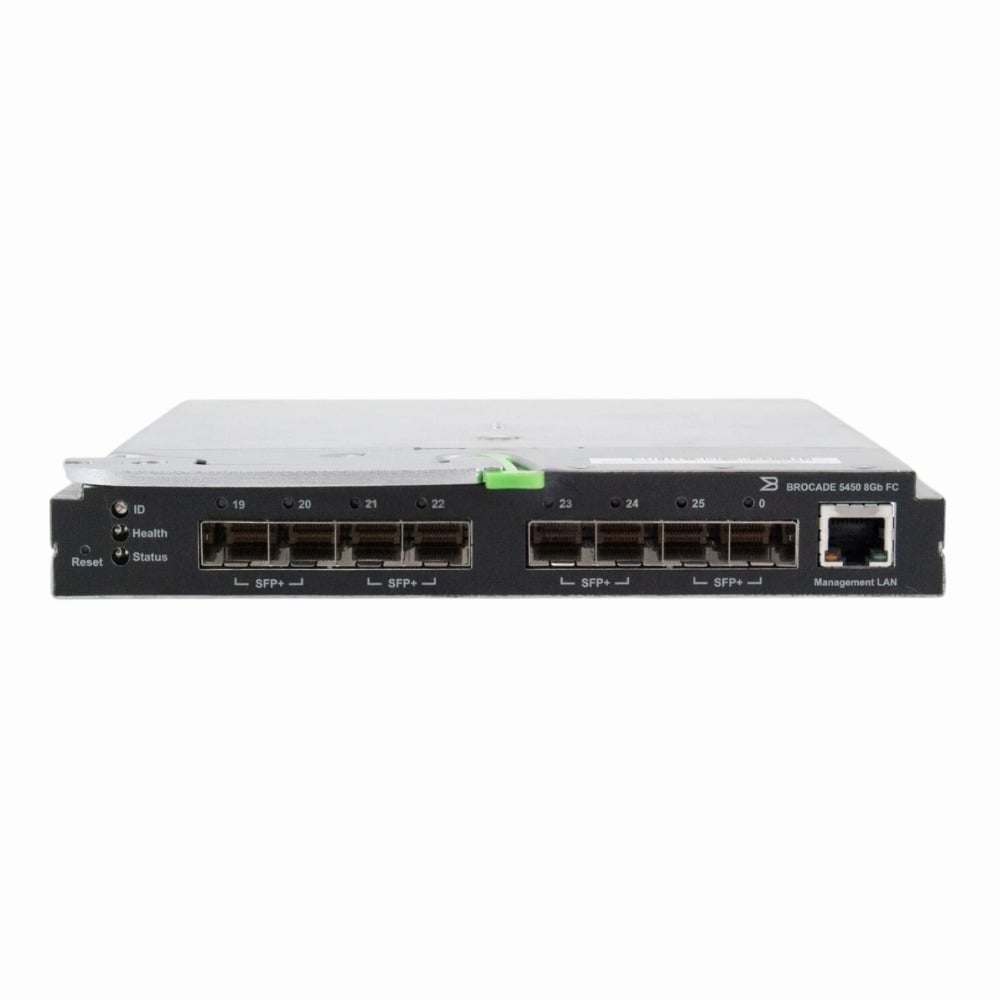
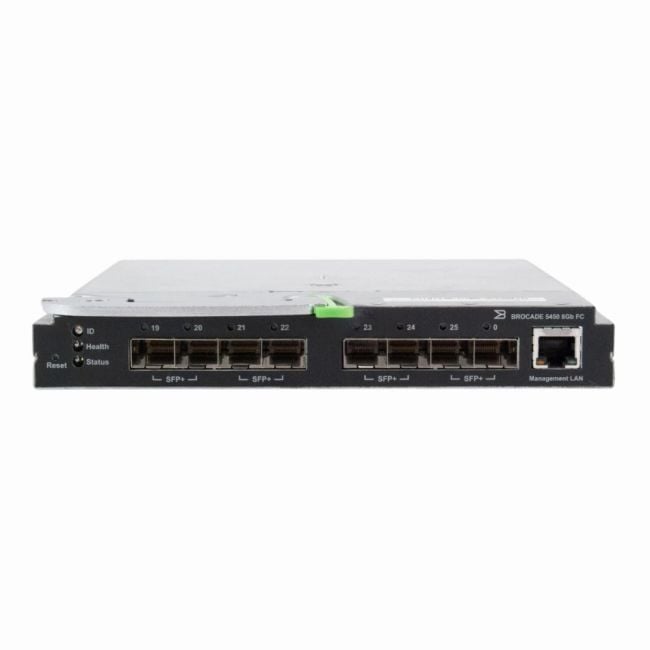
The Fujitsu Brocade 5450 18/8 Fibre Channel switch offers a reliable way to connect and manage storage networks within blade server setups. It fits well in environments where fast, stable data exchanges between storage and servers are needed, especially with Primergy BX900 systems. Its mix of internal and external ports provides flexible connectivity options without adding unnecessary complexity. |
General Information |
|
|---|---|
| Brand | Fujitsu |
| Part Number | S26361-D2940-A100 |
| Condition | Refurbished |
Technical Information |
|
|---|---|
| Switch Ports | 26 |
| Number of Ports | 26-Ports |
| Port Type | SFP |
| Port Speed | 8 Gbps |
| UpLink Ports | 8 |
| POE Support | No |
| VLAN Support | No |
| Stackable | No |
| Connector Type | SFP |
Management and Configuration |
|
|---|---|
| Remote Protocols | Yes |
| Management Interfaces | CLI (SSH, Telnet), SNMP, Serial Console (RJ-45) |
| Security Features | Role-Based Access Control (RBAC), SSH, RADIUS, TACACS+, Secure CLI |
| Remote Management Protocol | SSH, Telnet, SNMP |
Physical Characteristics |
|
|---|---|
| Weight | 4.00 |
Product Description |
|---|
The Fujitsu Brocade 5450 switch is built to optimize storage area networks, especially in data centers using Primergy BX900 blade servers. It facilitates fast, reliable connections between servers and storage devices, making it a key component for environments requiring efficient data transfer and storage access. Often found in mid-sized enterprise setups and virtualized environments, this switch enhances storage performance and scalability. IT professionals managing blade server infrastructures benefit from its straightforward integration and dependable operation. Key Features
This switch is typically deployed in data centers where blade servers are central to the computing infrastructure. It enables streamlined communication between storage arrays and servers, reducing latency and improving overall system responsiveness. Its role is crucial in maintaining efficient SAN operations in business-critical applications. |
 Shipping Options
 International Delivery
Requires a UPS, FedEx, or DHL account. Customers may arrange pickup from our US warehouse.
International Delivery
Requires a UPS, FedEx, or DHL account. Customers may arrange pickup from our US warehouse.
 Payment Methods
We accept Visa, Mastercard, AMEX, Discover, and Wire Transfer.
Payment Methods
We accept Visa, Mastercard, AMEX, Discover, and Wire Transfer.
 Purchase Orders
We process purchase orders for government agencies, enterprises, data centers, and SMBs.
Purchase Orders
We process purchase orders for government agencies, enterprises, data centers, and SMBs.