

Subscribe To Our Newsletter!
Subscribe to the newsletter to stay up to date with the latest news and most useful
Newsletter
↑
Back to Top



Product Overview |
|---|
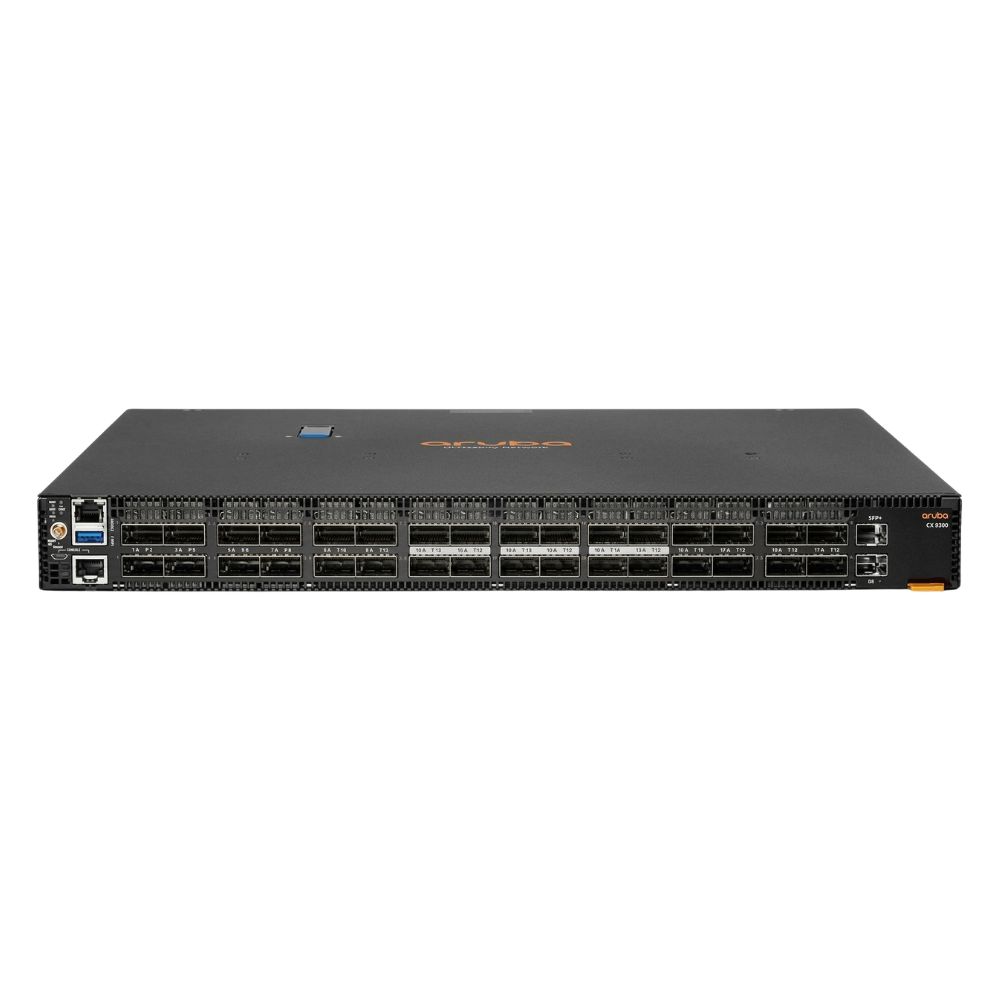
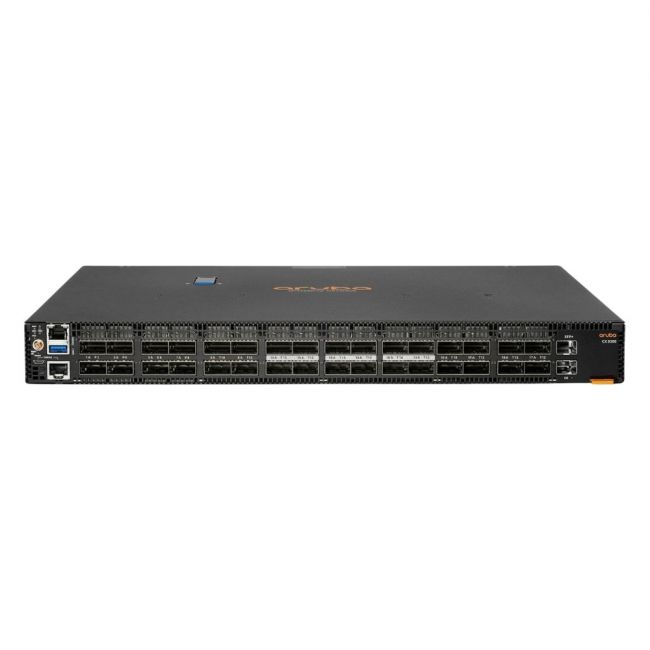
The HPE Aruba CX 9300S 32x QSFP28 100G Network Switch offers 32 QSFP28 ports enabling 100 Gigabit Ethernet connectivity tailored for dense network environments. It fits within data centers and enterprise networks requiring robust, scalable switching solutions supporting modern network protocols. |
General Information |
|
|---|---|
| Brand | HPE |
| Condition | Refurbished |
Technical Information |
|
|---|---|
| Switch Type | Layer 3, Managed Switch |
| Form Factor | Rack-Mountable |
| Mount Type | 1U Rack |
| Switch Ports | QSFP28 |
| Number of Ports | 32-Ports |
| Port Type | 100G QSFP28 |
| Port Speed | 100G |
| POE Support | No |
| Switching Capacity | 6.4 Tbps |
| VLAN Support | Yes |
| Max VLANs Supported | 1-4094 |
| Layer Support | Layer 3 |
| Connector Type | QSFP28 |
Performance |
|
|---|---|
| Jumbo Frame Support | Up To 9216 Bytes |
Physical Characteristics |
|
|---|---|
| Weight | 3.00 |
Miscellaneous |
|
|---|---|
| Eco Friendly | Yes |
| Assembly Required | No |
Product Description |
|---|
The HPE Aruba CX 9300S 32x QSFP28 100G Network Switch (S0F96A) provides 32 QSFP28 ports supporting 100 Gigabit Ethernet connections. It is engineered to serve as a core or aggregation switch within data centers and enterprise networks requiring high bandwidth and port density. This switch is typically deployed by network architects and IT professionals who manage large-scale infrastructure and need to support intensive data workloads and cloud applications. Key Features
This network switch plays a crucial role in delivering high-capacity connectivity and simplifying network topology in enterprise and data center settings. Its design facilitates efficient traffic handling and streamlines infrastructure growth without compromising on performance. |
Use Cases |
|---|
This switch is well-suited for data center and enterprise networks where high-density 100G connectivity is necessary. It supports environments with intensive data throughput demands and complex traffic patterns managed by IT teams focused on scalable infrastructure. How It's Used:
These applications highlight its role in maintaining efficient data flows and enabling network expansion without requiring frequent hardware replacement, thus supporting evolving network demands. |
FAQ's |
|---|
|
 Shipping Options
 International Delivery
Requires a UPS, FedEx, or DHL account. Customers may arrange pickup from our US warehouse.
 Payment Methods
We accept Visa, Mastercard, AMEX, Discover, and Wire Transfer.
 Purchase Orders
We process purchase orders for government agencies, enterprises, data centers, and SMBs.