

Subscribe To Our Newsletter!
Subscribe to the newsletter to stay up to date with the latest news and most useful
Newsletter
↑
Back to Top



Product Overview |
|---|
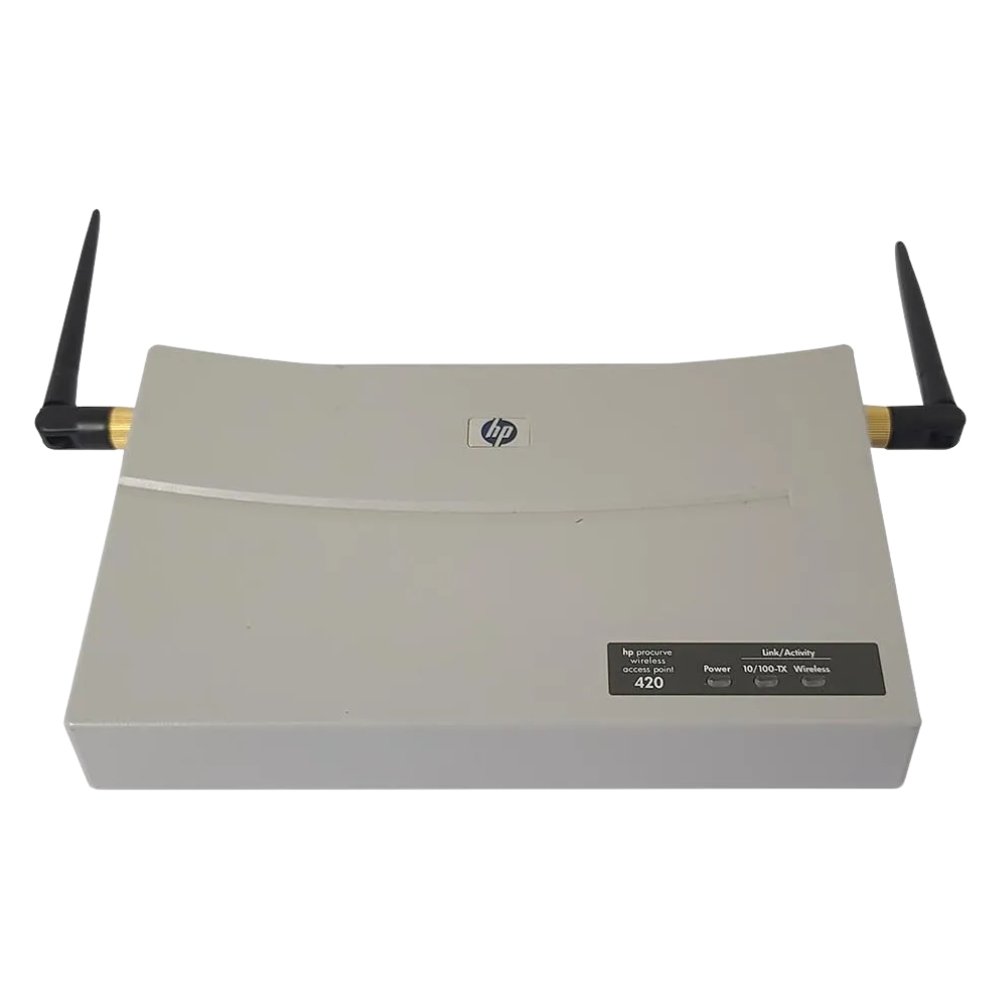
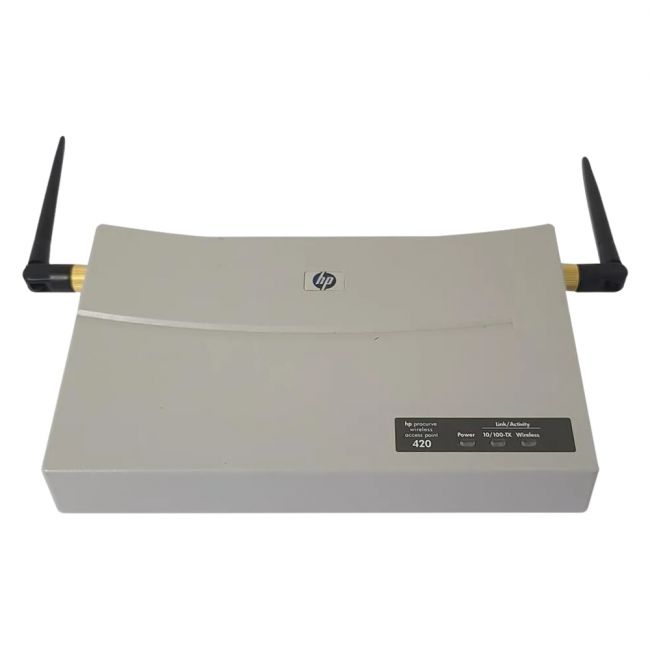
The RSVLC-0301B HP ProCurve 420 wireless access point delivers wireless network extension over the 2.4GHz band with support for 802.11b/g devices. It fits well into office or enterprise network setups requiring basic wireless coverage, combining a straightforward design with essential connectivity and security features. |
General Information |
|
|---|---|
| Brand | HP |
Technical Information |
|
|---|---|
| Frequency Bands | 2.4 GHz |
| Data Rate | 54 Mbit/s, 11 Mbit/s |
| Interface | 802.11b/g (Wi-Fi) |
| WiFi Standard | IEEE 802.11b, IEEE 802.11g |
| Security | WEP, WPA-PSK, 802.1X |
| MIMO | No |
| Ethernet Port | 1 x 10/100Base-TX |
| Compatibility | IEEE 802.11b/g clients |
| Operating Modes | Access Point, Managed (controller/standalone) |
| Management | Web UI, SNMP, HP ProCurve Manager |
Physical Characteristics |
|
|---|---|
| Weight | 3.00 |
| Condition | Refurbished |
Miscellaneous |
|
|---|---|
| Assembly Required | No |
| Compliance Standards | CE, FCC |
Product Description |
|---|
The RSVLC-0301B HP ProCurve 420 functions as a wireless access point that provides reliable Wi-Fi connectivity within network infrastructures. It is commonly found in office settings and enterprise networking environments where wireless coverage is essential. IT professionals and network administrators utilize this device to extend wired networks wirelessly, enabling mobile device access and network flexibility. Key Features
This access point serves as a dependable component in establishing wireless LANs, providing stable performance and consistent connectivity. Its design and specifications cater to the needs of maintaining network efficiency and managing wireless traffic smoothly. |
Use Cases |
|---|
The RSVLC-0301B is typically deployed in small to medium business environments and branch offices where wireless access needs to be integrated into established wired networks. It benefits IT teams that require scalable, manageable wireless infrastructure components without complex setups. How It's Used:
In these roles, the device enhances network flexibility and supports consistent wireless performance, allowing IT teams to maintain operational efficiency and adapt to changing connectivity requirements. |
 Shipping Options
 International Delivery
Requires a UPS, FedEx, or DHL account. Customers may arrange pickup from our US warehouse.
International Delivery
Requires a UPS, FedEx, or DHL account. Customers may arrange pickup from our US warehouse.
 Payment Methods
We accept Visa, Mastercard, AMEX, Discover, and Wire Transfer.
Payment Methods
We accept Visa, Mastercard, AMEX, Discover, and Wire Transfer.
 Purchase Orders
We process purchase orders for government agencies, enterprises, data centers, and SMBs.
Purchase Orders
We process purchase orders for government agencies, enterprises, data centers, and SMBs.