

Subscribe To Our Newsletter!
Subscribe to the newsletter to stay up to date with the latest news and most useful
Newsletter
↑
Back to Top



Product Overview |
|---|
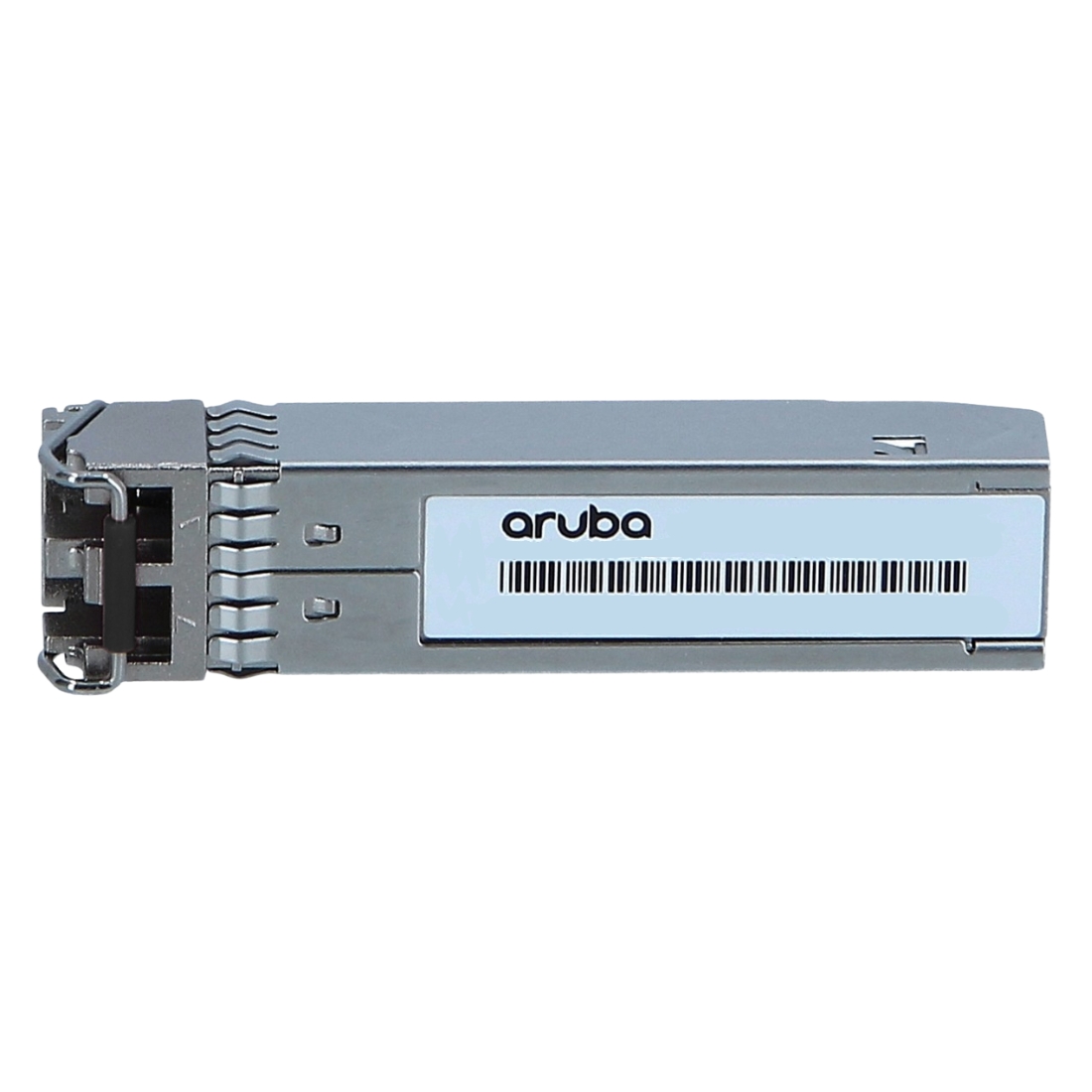
The R9B42A - HPE Aruba 400GB/s SMF MPO-12 QSFP-DD Transceiver enables rapid data transmission with single-mode fiber support, fitting seamlessly into high-density network setups. It handles demanding bandwidth requirements while maintaining compatibility with established fiber optic systems, making it a practical choice for evolving network environments. |
General Information |
|
|---|---|
| Brand | HPE |
Technical Information |
|
|---|---|
| Media | SMF |
| Connector | MTP/MPO |
| DOM Support | Yes |
Physical Characteristics |
|
|---|---|
| Weight | 3.00 |
| Condition | Refurbished |
Product Description |
|---|
The R9B42A is a high-performance transceiver designed to deliver 400Gb/s data transfer over single-mode fiber, utilizing a QSFP-DD interface with MPO-12 connectivity. It's commonly found in data center environments and enterprise networks where high bandwidth and reliable long-distance optical links are essential. Networking professionals and system architects often rely on this transceiver to support dense, high-speed interconnections. Key Features
This transceiver provides a solid balance of speed and reach, ensuring reliable data transfer across longer distances without compromising performance. Its design aligns well with the needs of current network infrastructures, delivering consistent connectivity where it matters most. |
Use Cases |
|---|
This transceiver is typically deployed in environments that demand high-throughput, long-distance optical links, such as large data centers and enterprise campus backbones. It suits network engineers and IT teams managing scalable, high-capacity infrastructures requiring reliable optical interconnects. How It's Used:
By enabling stable and swift data transfers across significant distances, the R9B42A transceiver helps maintain operational efficiency and scalability. It fits into complex network architectures while providing consistent optical performance for demanding workloads. |
 Shipping Options
 International Delivery
Requires a UPS, FedEx, or DHL account. Customers may arrange pickup from our US warehouse.
International Delivery
Requires a UPS, FedEx, or DHL account. Customers may arrange pickup from our US warehouse.
 Payment Methods
We accept Visa, Mastercard, AMEX, Discover, and Wire Transfer.
Payment Methods
We accept Visa, Mastercard, AMEX, Discover, and Wire Transfer.
 Purchase Orders
We process purchase orders for government agencies, enterprises, data centers, and SMBs.
Purchase Orders
We process purchase orders for government agencies, enterprises, data centers, and SMBs.