

Subscribe To Our Newsletter!
Subscribe to the newsletter to stay up to date with the latest news and most useful
Newsletter
↑
Back to Top



Product Overview |
|---|
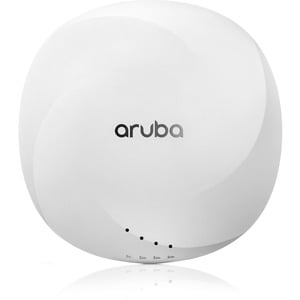
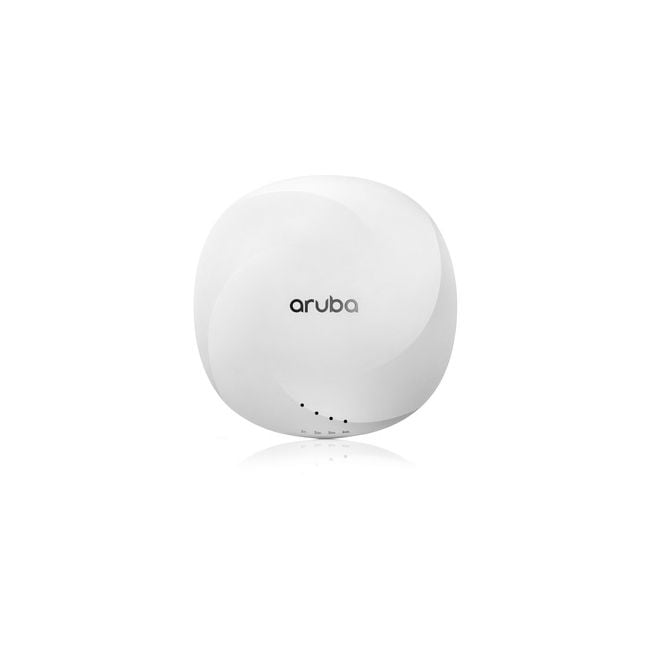
The HP Aruba 650 Series AP-655 combines tri-band Wi-Fi 6E capabilities with dual PoE+ ports to provide flexible, high-speed wireless access in enterprise networks. It fits into environments that demand robust, dense wireless coverage and supports the latest standards to keep up with modern connectivity needs. |
General Information |
|
|---|---|
| Brand | HPE |
| Part Number | R7J39A |
Technical Information |
|
|---|---|
| Frequency Bands | 2.4 GHz,5 GHz,6 GHz |
| Data Rate | 7.8 Gbit/s (aggregate maximum) |
| Interface | Wi-Fi (802.11ax / Wi‑Fi 6E), Ethernet (RJ-45) |
| WiFi Standard | IEEE 802.11ax (Wi‑Fi 6E) |
| Security | WPA2-PSK,WPA2-Enterprise,WPA3,WPA3-Enterprise,802.1X,EAP-TLS,802.11i |
| MIMO | Yes |
| Ethernet Port | 2 x 5GbE (5000Base-T) RJ-45 with PoE+ support |
Physical Characteristics |
|
|---|---|
| Weight | 5.00 |
| Condition | Refurbished |
Miscellaneous |
|
|---|---|
| Eco Friendly | Yes |
| Compliance Standards | WEEE, RoHS, CE, FCC, UL, TUV, cULus |
Product Description |
|---|
The HP Aruba 650 Series AP-655 is a wireless access point built for delivering fast and reliable Wi-Fi 6E connectivity in high-density environments. It extends wireless networks by adding the 6GHz band alongside traditional 2.4GHz and 5GHz bands, offering more channels and less interference. This access point is commonly found in enterprise settings such as offices, campuses, and public venues where consistent, high-speed wireless access is crucial. IT administrators and network managers benefit from its scalability and advanced features. Key Features
This access point is typically deployed in offices or educational campuses where multiple users require seamless wireless connections. The 6GHz band helps reduce congestion, improving overall network performance. By integrating this device, organizations can deliver a smoother Wi-Fi experience to users and better support bandwidth-intensive applications. |
Use Cases |
|---|
The HPE Aruba AP-655 Tri-Band Wi-Fi 6E access point is tailored for enterprise and campus environments requiring high-density wireless connectivity and advanced spectrum management. It is ideal for organizations deploying next-generation wireless infrastructure to support bandwidth-intensive applications and seamless roaming across large facilities. How It's Used:
By leveraging tri-band Wi-Fi 6E technology and dual PoE+ ports, the AP-655 enhances operational efficiency through optimized spectrum utilization and flexible power options. This ensures scalable network performance that adapts to evolving enterprise wireless demands without compromising coverage or reliability. |
 Shipping Options
 International Delivery
Requires a UPS, FedEx, or DHL account. Customers may arrange pickup from our US warehouse.
International Delivery
Requires a UPS, FedEx, or DHL account. Customers may arrange pickup from our US warehouse.
 Payment Methods
We accept Visa, Mastercard, AMEX, Discover, and Wire Transfer.
Payment Methods
We accept Visa, Mastercard, AMEX, Discover, and Wire Transfer.
 Purchase Orders
We process purchase orders for government agencies, enterprises, data centers, and SMBs.
Purchase Orders
We process purchase orders for government agencies, enterprises, data centers, and SMBs.