

Subscribe To Our Newsletter!
Subscribe to the newsletter to stay up to date with the latest news and most useful
Newsletter
↑
Back to Top



Product Overview |
|---|
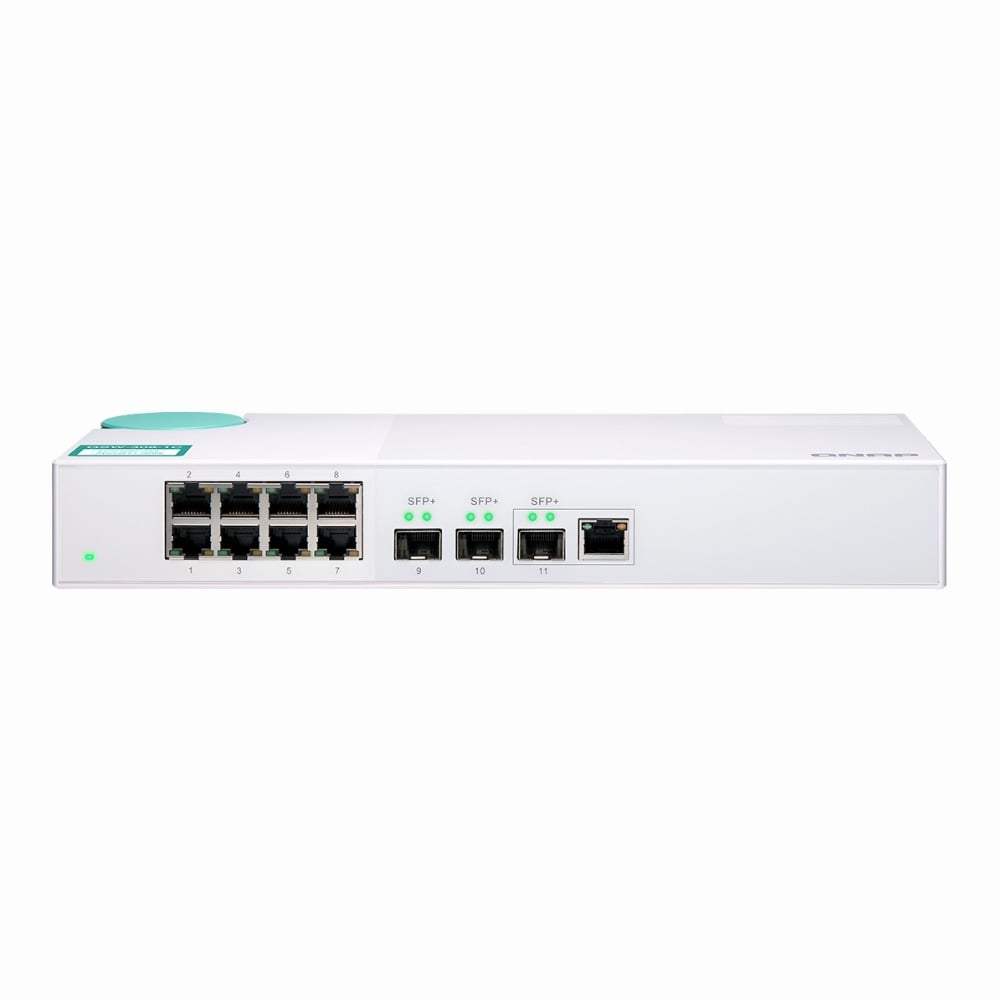
The QNAP QSW-308-1C is a desktop network switch that combines eight gigabit Ethernet ports with three 10GbE SFP+ ports (including one combo port) to offer flexible connectivity options. It’s geared toward small office or home environments where reliable wired networking and fast uplinks are needed without complicated configuration. This switch fits well where users want a straightforward way to connect a mix of devices at varying speeds. |
General Information |
|
|---|---|
| Brand | QNAP |
| Part Number | QSW-308-1C |
| Condition | Refurbished |
Technical Information |
|
|---|---|
| Switch Ports | 8 x 1000Base-T,2 x SFP+,1 x Combo RJ-45/SFP |
| Number of Ports | 8-Ports |
| Port Type | 10/100/1000Base-T, Combo RJ-45/SFP, SFP+ |
| Port Speed | 1 Gbps,10 Gbps |
| UpLink Ports | 2 x SFP+,1 x Combo RJ-45/SFP |
| POE Support | No |
| VLAN Support | No |
| Stackable | No |
| Layer Support | Layer 2 |
| Connector Type | RJ-45,SFP+,Combo RJ-45/SFP |
Performance |
|
|---|---|
| Jumbo Frame Support | Up To 9000 Bytes |
Management and Configuration |
|
|---|---|
| Remote Protocols | No |
Power & Cooling |
|
|---|---|
| Fans | Fanless |
Physical Characteristics |
|
|---|---|
| Weight | 4.00 |
Product Description |
|---|
The QNAP QSW-308-1C is a versatile network switch designed to handle multiple wired connections with ease. It strikes a balance between gigabit Ethernet ports and high-speed 10GbE SFP+ ports, allowing for both standard network devices and faster uplinks or storage access. Often found in small offices, workgroups, or home networks that require reliable wired infrastructure, this switch is built for users who need solid performance without complex management features. It supports a range of devices including PCs, NAS units, and servers. Key Features
This switch is typically deployed in environments where expanding network speed without upgrading all devices is necessary. It’s commonly integrated with NAS systems for quicker file sharing or used in multimedia setups requiring more bandwidth. The straightforward design helps keep small networks running efficiently without fuss. |
Use Cases |
|---|
The QNAP QSW-308-1C switch is tailored for small office and home office setups where mixed-speed device connectivity and high-speed uplinks are essential. It is suitable for environments requiring seamless integration of gigabit Ethernet devices with 10GbE links, such as creative studios, remote workspaces, and compact server rooms. How It's Used:
This switch enhances network performance by providing flexible port configurations that accommodate evolving connectivity demands. Its desktop form factor combined with multi-gigabit options enables efficient scaling and simplified management in distributed IT environments. |
 Shipping Options
 International Delivery
Requires a UPS, FedEx, or DHL account. Customers may arrange pickup from our US warehouse.
International Delivery
Requires a UPS, FedEx, or DHL account. Customers may arrange pickup from our US warehouse.
 Payment Methods
We accept Visa, Mastercard, AMEX, Discover, and Wire Transfer.
Payment Methods
We accept Visa, Mastercard, AMEX, Discover, and Wire Transfer.
 Purchase Orders
We process purchase orders for government agencies, enterprises, data centers, and SMBs.
Purchase Orders
We process purchase orders for government agencies, enterprises, data centers, and SMBs.