

Subscribe To Our Newsletter!
Subscribe to the newsletter to stay up to date with the latest news and most useful
Newsletter
↑
Back to Top



Product Overview |
|---|
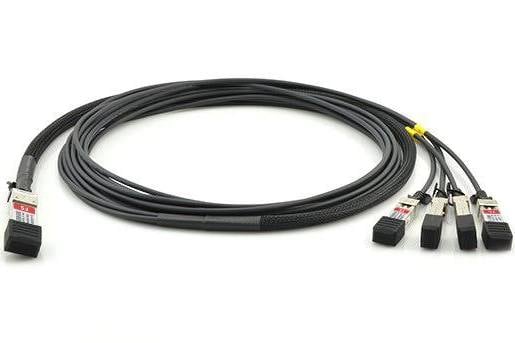
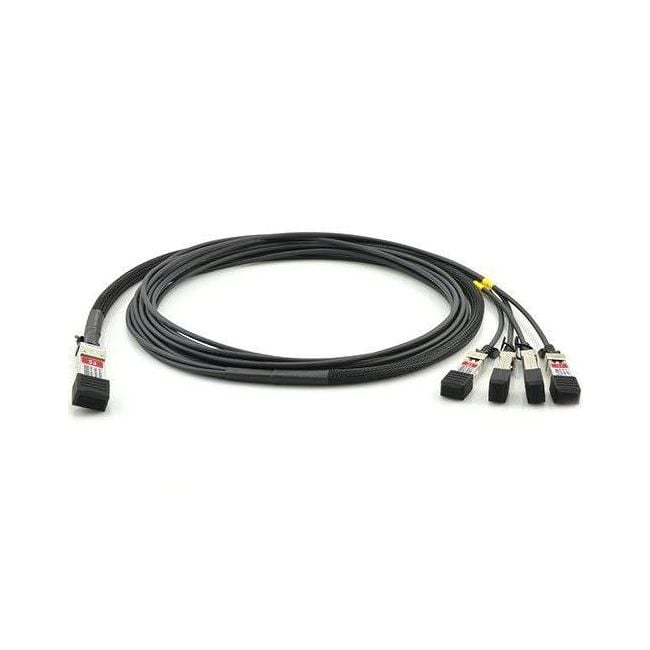
The QSFP-4SFP25G-CU3M is a passive copper breakout cable that splits a 100G QSFP port into four separate 25G SFP ports. It fits well in data center setups where high-speed connections need to be broken into smaller lanes without adding power or complexity. This 3-meter cable bridges devices efficiently, supporting flexible network layouts and reliable signal transmission over short distances. |
General Information |
|
|---|---|
| Brand | Cisco |
| Part Number | QSFP-4SFP25G-CU3M |
Technical Information |
|
|---|---|
| Data Rate | 100 Gbps (aggregate), 25 Gbps per lane |
| Cable Length | 3 m (3 meters) |
| Compatibility | Cisco QSFP-4SFP25G-CU3M, Cisco QSFP28 ports, SFP28 / SFP25G ports, 100GBASE QSFP to 4x25G compatible devices |
| Stacking Bandwidth | 100 Gbps |
| product type | Passive Direct Attach Copper (DAC) breakout cable, QSFP28 to 4x SFP28 (4x25G) |
| Product Category | Cables & Adapters, Cables, Breakout DAC Cable |
Connectivity |
|
|---|---|
| Connector Type | 1x QSFP28 to 4x SFP28 (SFP25G) |
Physical Characteristics |
|
|---|---|
| Form Factor | Breakout cable (QSFP28 to 4x SFP28) |
| Weight | 5.00 |
| Condition | Refurbished |
Product Description |
|---|
This Cisco 3-meter passive breakout cable connects a 100G QSFP port to four separate 25G SFP ports, offering a convenient way to split high-speed signals into multiple lanes. It's often used in data centers and high-performance computing environments to simplify network architecture and improve flexibility. Built for network engineers and IT professionals, this cable is commonly found in switch-to-switch or switch-to-server connections where breaking out 100G into smaller 25G channels is necessary. Its passive copper design means it doesn't require additional power, making it reliable and efficient for dense network deployments. Key Features
This cable is typically deployed within enterprise data centers, cloud infrastructure, and service provider networks. It helps maintain high throughput while offering flexibility to connect different devices with varying speed requirements. The passive copper cable is especially useful for short-distance connections where minimizing latency and power draw matters. |
Use Cases |
|---|
The QSFP-4SFP25G-CU3M cable is primarily utilized in data center environments where high-bandwidth 100G QSFP ports require segmentation into multiple 25G SFP lanes. Network architects and system integrators leverage this solution to optimize port density and improve network flexibility without introducing active components. How It's Used:
This passive copper breakout cable enhances operational efficiency by simplifying physical layer connectivity and reducing power overhead. Its capability to convert a single high-speed interface into multiple lanes supports scalable network designs and maintains signal integrity across short distances in complex infrastructure setups. |
 Shipping Options
 International Delivery
Requires a UPS, FedEx, or DHL account. Customers may arrange pickup from our US warehouse.
International Delivery
Requires a UPS, FedEx, or DHL account. Customers may arrange pickup from our US warehouse.
 Payment Methods
We accept Visa, Mastercard, AMEX, Discover, and Wire Transfer.
Payment Methods
We accept Visa, Mastercard, AMEX, Discover, and Wire Transfer.
 Purchase Orders
We process purchase orders for government agencies, enterprises, data centers, and SMBs.
Purchase Orders
We process purchase orders for government agencies, enterprises, data centers, and SMBs.