

Subscribe To Our Newsletter!
Subscribe to the newsletter to stay up to date with the latest news and most useful
Newsletter
↑
Back to Top



Product Overview |
|---|
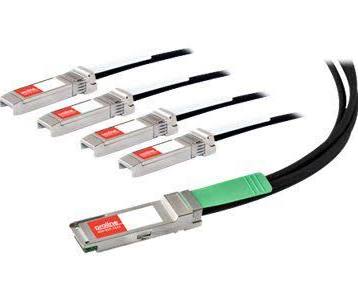
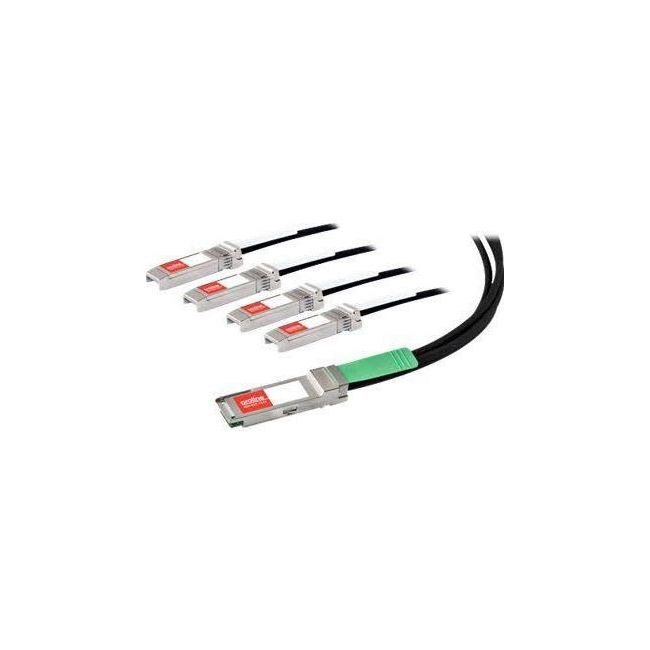
The Cisco QSFP-4SFP10G-CU5M cable converts a single QSFP+ port into four SFP+ interfaces using a 5-meter copper cable. It fits well in data centers where efficient, short-distance 10G connectivity is required, helping network engineers manage bandwidth distribution and cabling with fewer components. |
General Information |
|
|---|---|
| Brand | Cisco |
| Part Number | QSFP-4SFP10G-CU5M |
Technical Information |
|
|---|---|
| Data Rate | 40Gbps (aggregate), 10Gbps per SFP+ |
| Cable Length | 5 m (16.4 ft) |
| Compatibility | Cisco Nexus, Cisco Catalyst, QSFP+ ports, SFP+ ports |
| Stacking Bandwidth | 40Gbps |
| product type | Passive Copper Direct-Attach Breakout Cable (DAC) |
| Product Category | Cables & Adapters, Cables |
Connectivity |
|
|---|---|
| Connector Type | QSFP+ to 4 x SFP+ |
Physical Characteristics |
|
|---|---|
| Form Factor | Breakout cable (QSFP+ to 4x SFP+), Passive DAC |
| Weight | 5.00 |
| Condition | Refurbished |
Product Description |
|---|
This Cisco 5M SFP+ copper direct-attach breakout cable splits a single QSFP port into four individual SFP+ connections. It’s commonly used in data centers to connect high-speed switches or servers that require 10 Gigabit Ethernet per lane. The cable is built for short-range, high-bandwidth links where fiber optics aren’t necessary. Key Features
These cables are often found in data centers and enterprise network environments that need to maximize port density without adding extra fiber transceivers. They provide a straightforward way to split a high-speed link into multiple 10G connections while minimizing latency and cost. |
Use Cases |
|---|
The QSFP-4SFP10G-CU5M cable is primarily deployed in high-density data centers and enterprise networking environments that require efficient bandwidth management and short-range high-speed connections. It serves network engineers and IT professionals aiming to optimize port utilization by breaking out a single QSFP+ port into multiple 10Gbps SFP+ links, facilitating scalable and flexible network topologies. How It's Used:
This cable design streamlines cabling complexity and improves port efficiency, enabling scalable network configurations without additional transceiver modules. Its direct-attach copper construction supports low-latency performance, essential for maintaining operational throughput in dense networking environments. |
 Shipping Options
 International Delivery
Requires a UPS, FedEx, or DHL account. Customers may arrange pickup from our US warehouse.
International Delivery
Requires a UPS, FedEx, or DHL account. Customers may arrange pickup from our US warehouse.
 Payment Methods
We accept Visa, Mastercard, AMEX, Discover, and Wire Transfer.
Payment Methods
We accept Visa, Mastercard, AMEX, Discover, and Wire Transfer.
 Purchase Orders
We process purchase orders for government agencies, enterprises, data centers, and SMBs.
Purchase Orders
We process purchase orders for government agencies, enterprises, data centers, and SMBs.