

Subscribe To Our Newsletter!
Subscribe to the newsletter to stay up to date with the latest news and most useful
Newsletter
↑
Back to Top



Product Overview |
|---|
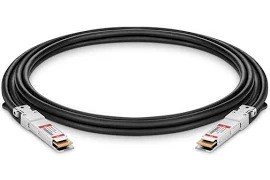
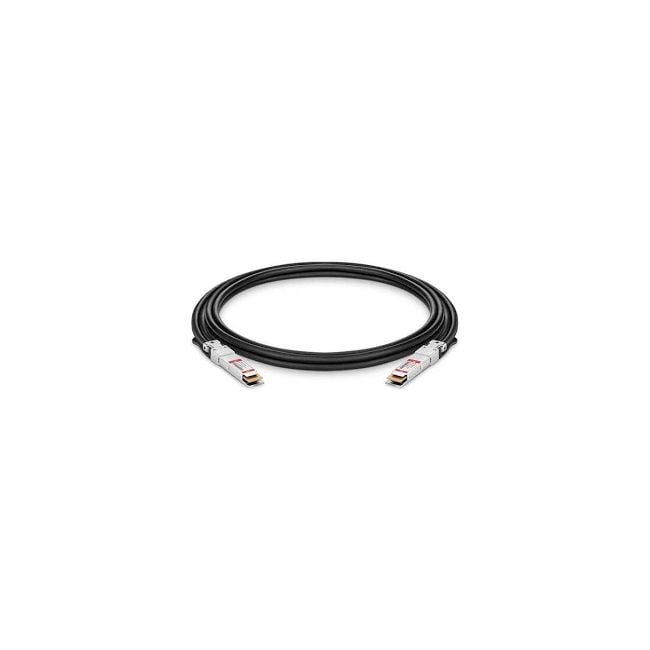
The QDD-400-CU3M cable provides a direct, passive connection between QSFP-DD interfaces, ideal for short-distance, high-bandwidth links. It fits well in environments where high-speed data transfer is critical, such as in data centers and enterprise networking racks. |
General Information |
|
|---|---|
| Brand | Cisco |
| Part Number | QDD-400-CU3M |
Technical Information |
|
|---|---|
| Data Rate | 400Gbps |
| Cable Length | 3m |
| Stacking Bandwidth | 400Gbps |
Physical Characteristics |
|
|---|---|
| Weight | 5.00 |
| Condition | Refurbished |
Product Description |
|---|
This 3-meter QSFP-DD to QSFP-DD passive twinax cable is designed to connect high-speed networking equipment directly without the need for transceivers. It's often found in data centers and enterprise networks where reliable, short-range, high-bandwidth links are necessary. Built for environments demanding 400Gbps data transfers, this cable suits network engineers and IT professionals aiming to streamline their infrastructure with efficient cabling solutions. Key Features
Typically deployed in data center racks or high-performance computing clusters, this cable simplifies high-speed connections without additional hardware. Its straightforward plug-and-play setup helps maintain clean, reliable links. |
Use Cases |
|---|
The QDD-400-CU3M cable is typically deployed in high-performance data center environments where low-latency and high-throughput connections between servers and switches are essential. It is especially suited for network architects and IT professionals managing dense rack deployments requiring cost-effective, short-range interconnect solutions. How It's Used:
By utilizing the QDD-400-CU3M cable, organizations can maintain operational efficiency through simplified cabling and ensure scalable, high-performance connectivity in critical networking segments. Its passive design further reduces power consumption while sustaining data integrity across short distances. |
 Shipping Options
 International Delivery
Requires a UPS, FedEx, or DHL account. Customers may arrange pickup from our US warehouse.
International Delivery
Requires a UPS, FedEx, or DHL account. Customers may arrange pickup from our US warehouse.
 Payment Methods
We accept Visa, Mastercard, AMEX, Discover, and Wire Transfer.
Payment Methods
We accept Visa, Mastercard, AMEX, Discover, and Wire Transfer.
 Purchase Orders
We process purchase orders for government agencies, enterprises, data centers, and SMBs.
Purchase Orders
We process purchase orders for government agencies, enterprises, data centers, and SMBs.