Subscribe To Our Newsletter!
Subscribe to the newsletter to stay up to date with the latest news and most useful
Newsletter
↑
Back to Top



Product Overview |
|---|
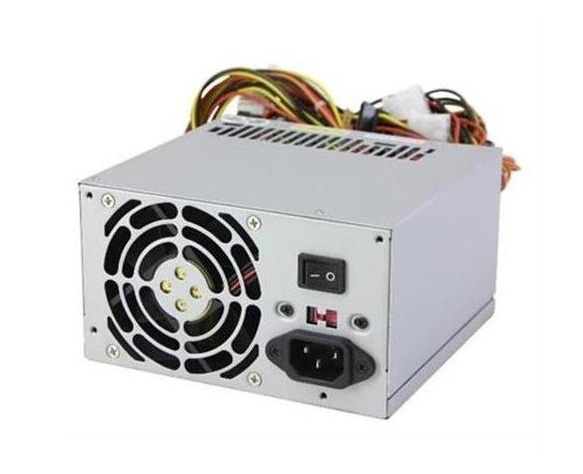
The Cisco PWR-4200-AC power supply supports Catalyst 4500 series switches by providing reliable dual input AC power with up to 4200 watts capacity. It fits into environments needing consistent, redundant power sources to keep network equipment running smoothly and is designed to be integrated easily into existing infrastructure without interrupting operations. |
General Information |
|
|---|---|
| Brand | Cisco |
| Part Number | PWR-4200-AC |
| Product Type | Network Equipment Power Supply |
| Condition | Refurbished |
Technical Information |
|
|---|---|
| Input Voltage | AC (dual AC inputs) |
| Input Frequency | 50/60 Hz |
| Output | 48V DC |
| Max. Output Power | 4200W |
| Hot Swappable | Yes |
| Redundant Support | Yes |
| Cooling Type | Active Fan |
| Modularity | Non-Modular |
| rail_design | Single 48V Rail |
| Number of Fans | 2 |
Compatibility |
|
|---|---|
| Form Factor | Proprietary |
| Compatible For | Cisco Catalyst 4500 Series (e.g., WS-C4506, WS-C4507R, WS-C4510R) |
Physical Characteristics |
|
|---|---|
| Weight | 3.00 |
Product Description |
|---|
The Cisco PWR-4200-AC is a dual input power supply built for Catalyst 4500 series switches, delivering stable and robust power to support enterprise network infrastructure. Often found in data centers and large-scale network environments, it ensures that switches maintain uptime even in higher power demand scenarios. Commonly used in settings where network availability is critical, this power supply benefits network administrators and IT professionals who need dependable hardware to avoid downtime. Its dual input design supports redundancy, allowing for seamless operation during power source changes. Key Features
This power supply is typically deployed in enterprise networks, campus environments, and data centers where Catalyst 4500 switches are installed. Its ability to provide consistent power helps maintain network stability and reduces the risk of outages due to power issues. |
 Shipping Options
 International Delivery
Requires a UPS, FedEx, or DHL account. Customers may arrange pickup from our US warehouse.
International Delivery
Requires a UPS, FedEx, or DHL account. Customers may arrange pickup from our US warehouse.
 Payment Methods
We accept Visa, Mastercard, AMEX, Discover, and Wire Transfer.
Payment Methods
We accept Visa, Mastercard, AMEX, Discover, and Wire Transfer.
 Purchase Orders
We process purchase orders for government agencies, enterprises, data centers, and SMBs.
Purchase Orders
We process purchase orders for government agencies, enterprises, data centers, and SMBs.