

Subscribe To Our Newsletter!
Subscribe to the newsletter to stay up to date with the latest news and most useful
Newsletter
↑
Back to Top



| Product Overview |
|---|
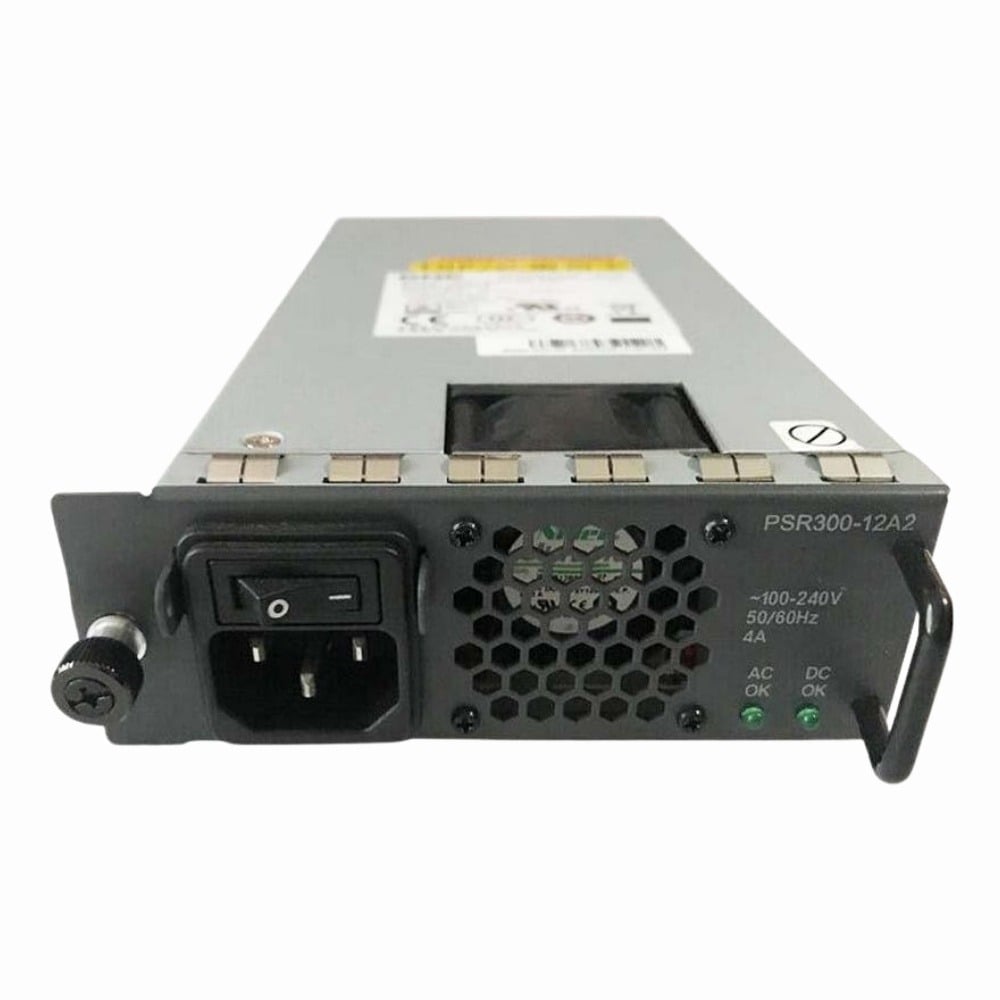
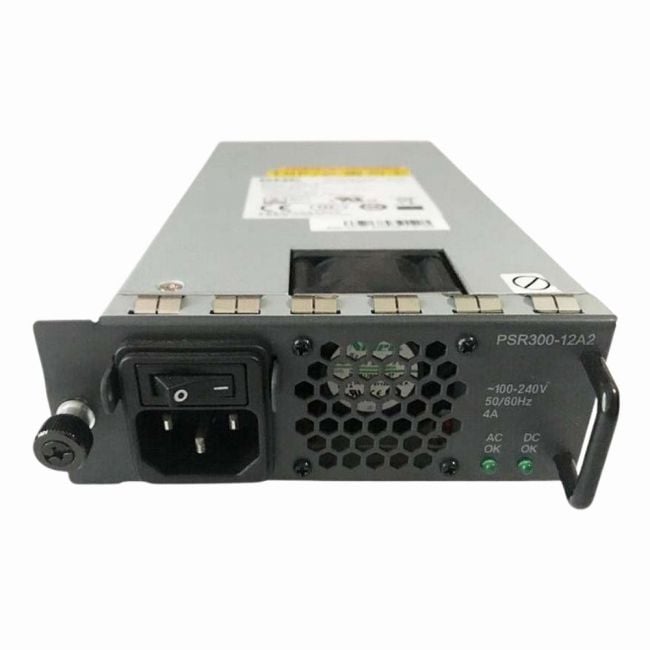
The PSR300-12A power supply offers dependable 300-watt power output at 12 volts DC, fitting well in industrial and commercial power setups. It balances compactness with protection features, making it a straightforward choice for stable and secure power delivery in various technical environments. |
| General Information | |
|---|---|
| Brand | HP |
| Part Number | PSR300-12A |
| Condition | Refurbished |
| Technical Information | |
|---|---|
| Input Voltage | 100-240V AC |
| Input Frequency | 50-60 Hz |
| Output | 12V |
| Max. Output Power | 300W |
| Cooling Type | Active Fan |
| Modularity | Non-Modular |
| rail_design | Single 12V Rail |
| Number of Fans | 1 |
| Compatibility | |
|---|---|
| Form Factor | Proprietary |
| Physical Characteristics | |
|---|---|
| Weight | 3.00 |
| Product Description |
|---|
The PSR300-12A power supply provides a steady 300 watts of power, ensuring consistent performance for devices requiring 12V DC input. Often found in industrial and commercial setups, this power supply is built for stability and safety in demanding environments. Technicians and engineers typically use it where reliable power delivery is critical. Key Features
This power supply is commonly deployed in control panels, communication systems, and other industrial applications. Its dependable output helps maintain system uptime and reduces risks of equipment damage. |
| Use Cases |
|---|
The PSR300-12A power supply is commonly deployed in industrial automation and commercial equipment settings where stable 12V DC power is critical. It serves technical teams managing legacy systems and control panels requiring reliable energy input without frequent maintenance interruptions. How It's Used:
By ensuring a steady and protected power source, the PSR300-12A helps maintain operational continuity and reduces downtime risks. Its compact form factor aids scalability, allowing facility managers to efficiently incorporate it into expanding technical infrastructures. |
 Shipping Options
 International Delivery
Requires a UPS, FedEx, or DHL account. Customers may arrange pickup from our US warehouse.
International Delivery
Requires a UPS, FedEx, or DHL account. Customers may arrange pickup from our US warehouse.
 Payment Methods
We accept Visa, Mastercard, AMEX, Discover, and Wire Transfer.
Payment Methods
We accept Visa, Mastercard, AMEX, Discover, and Wire Transfer.
 Purchase Orders
We process purchase orders for government agencies, enterprises, data centers, and SMBs.
Purchase Orders
We process purchase orders for government agencies, enterprises, data centers, and SMBs.