

Subscribe To Our Newsletter!
Subscribe to the newsletter to stay up to date with the latest news and most useful
Newsletter
↑
Back to Top



Product Overview |
|---|
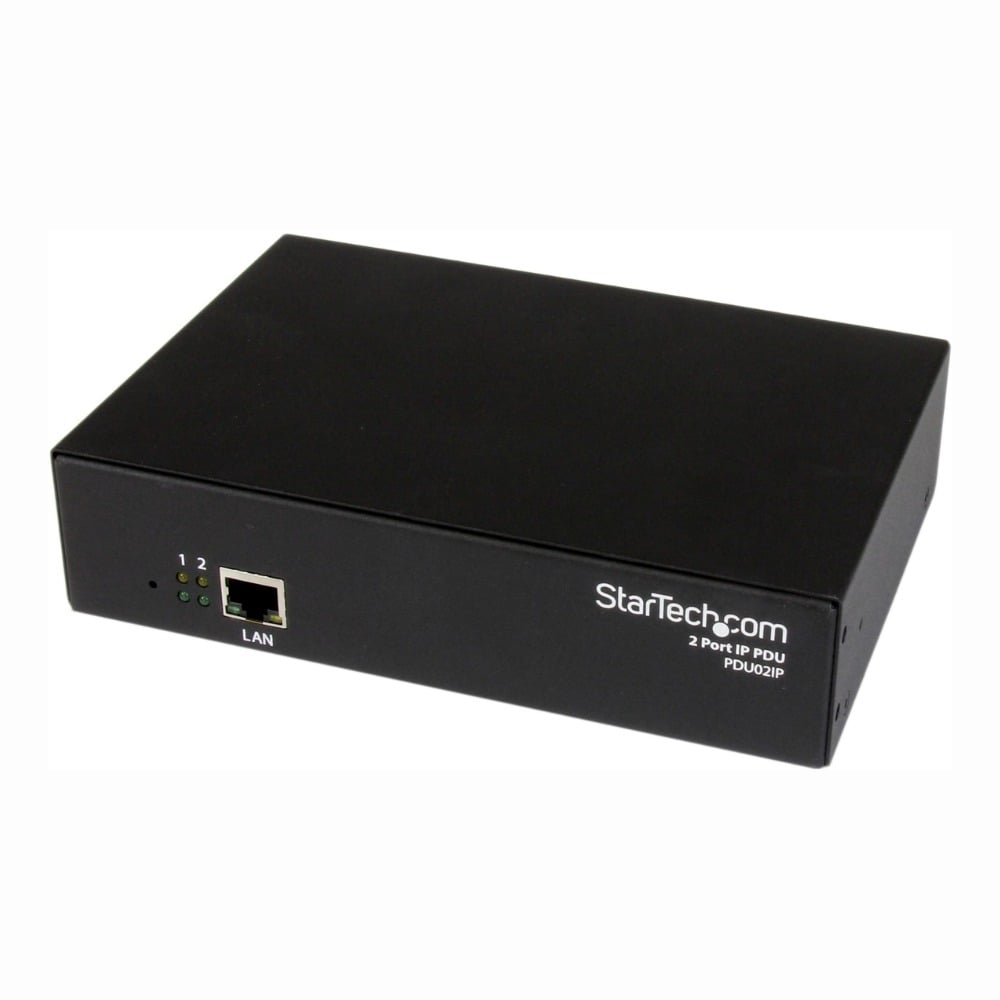
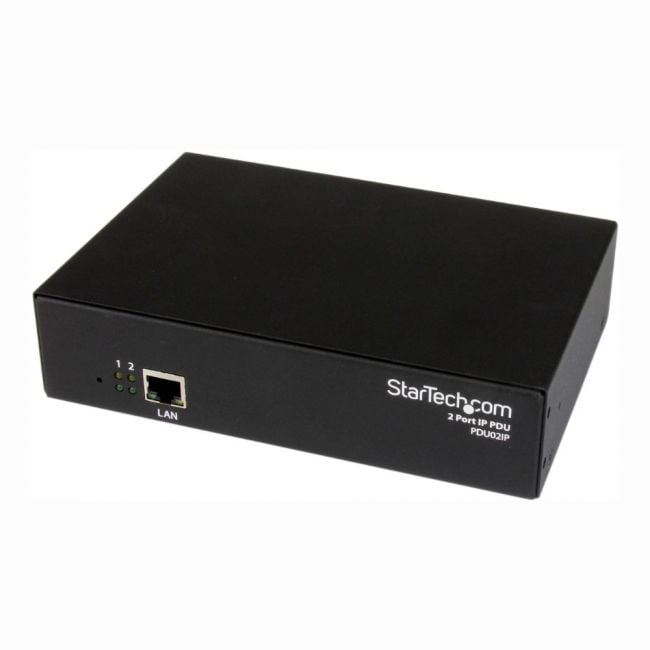
The PDU02IP is a compact, remotely managed power switch that fits well in network or server environments where controlling power remotely is necessary. It manages two outlets individually and connects over IP, offering practical power management without the need to be physically present. |
General Information |
|
|---|---|
| Brand | StarTech |
| Part Number | PDU02IP |
| Condition | Refurbished |
Technical Information |
|
|---|---|
| Switch Ports | 2 |
| Number of Ports | 2-Ports |
| Port Type | 10/100Base-TX |
| POE Support | No |
Management and Configuration |
|
|---|---|
| Remote Protocols | Yes |
Physical Characteristics |
|
|---|---|
| Weight | 4.00 |
Product Description |
|---|
The PDU02IP is a switched power distribution unit designed to give users remote control over connected devices. It allows administrators to manage power to critical equipment from anywhere via an IP connection. Often found in small server rooms, network closets, or edge deployments, this PDU helps prevent downtime by enabling remote reboot or shutdown of outlets. IT professionals and network managers benefit from its ability to reduce physical trips to equipment racks. Key Features
You'll typically see this unit deployed in network infrastructure where space is limited and uptime matters. It plays a practical role in managing power without needing onsite access, saving time and reducing service disruptions. |
Use Cases |
|---|
The PDU02IP is commonly utilized in small to medium-sized network environments where remote power management is essential. IT administrators and network engineers benefit from its ability to control critical devices without physical access, particularly in edge computing sites or distributed office locations. How It's Used:
This power distribution unit enhances operational efficiency by enabling precise remote control of connected equipment, reducing the need for physical intervention. Its compact design supports scalability within constrained rack spaces while maintaining network performance reliability. |
 Shipping Options
 International Delivery
Requires a UPS, FedEx, or DHL account. Customers may arrange pickup from our US warehouse.
International Delivery
Requires a UPS, FedEx, or DHL account. Customers may arrange pickup from our US warehouse.
 Payment Methods
We accept Visa, Mastercard, AMEX, Discover, and Wire Transfer.
Payment Methods
We accept Visa, Mastercard, AMEX, Discover, and Wire Transfer.
 Purchase Orders
We process purchase orders for government agencies, enterprises, data centers, and SMBs.
Purchase Orders
We process purchase orders for government agencies, enterprises, data centers, and SMBs.