

Subscribe To Our Newsletter!
Subscribe to the newsletter to stay up to date with the latest news and most useful
Newsletter
↑
Back to Top



Product Overview |
|---|
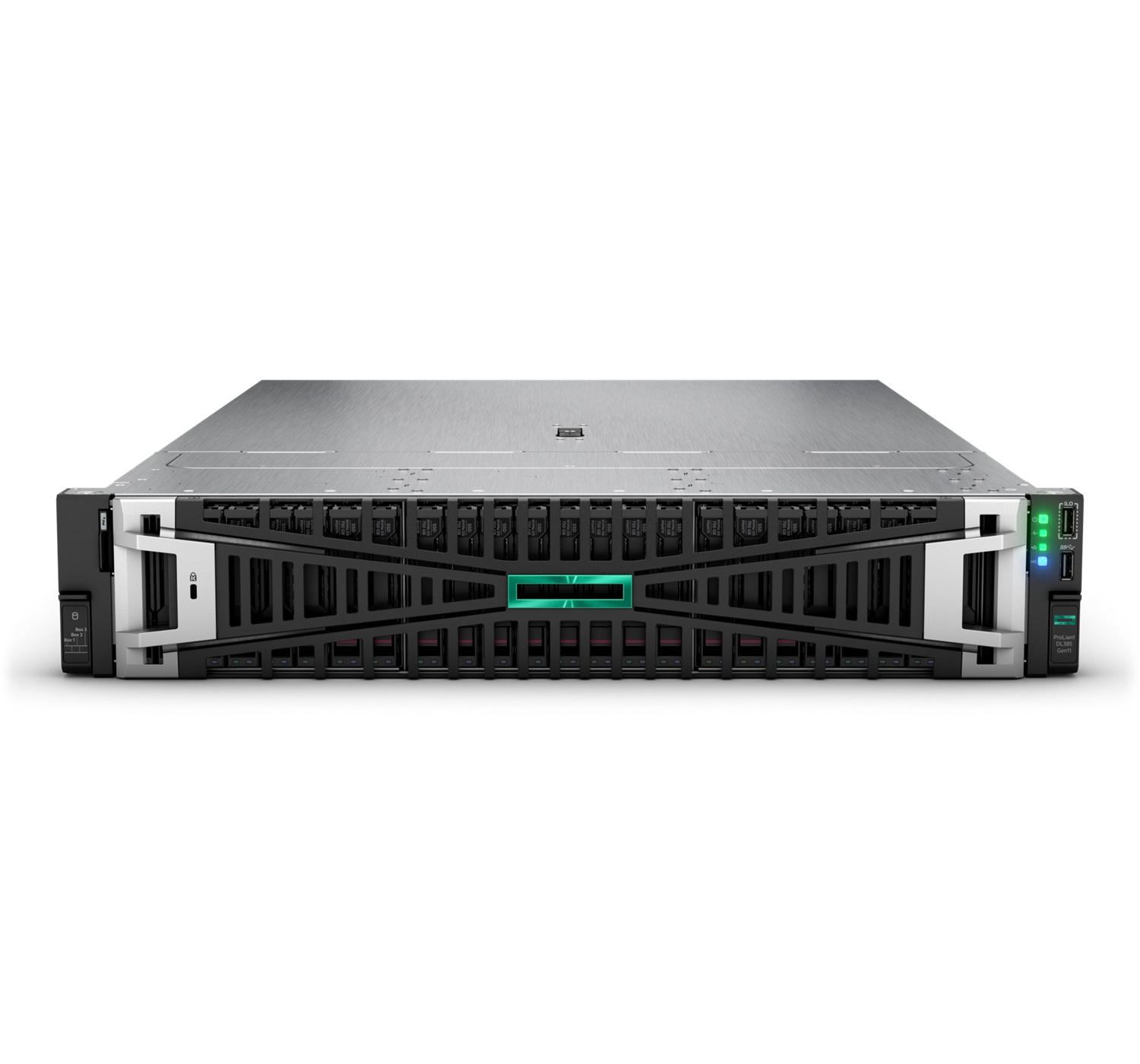
The HPE DL385 Gen11 server combines reliable AMD EPYC processing power with ample memory and flexible storage setups. It fits neatly into business data centers looking for balanced server performance that supports a variety of applications, from virtual machines to database servers. |
General Information |
|
|---|---|
| Brand | HPE |
| Part Number | P66781-B21 |
Technical Information |
|
|---|---|
| Memory | 32GB DDR5 (factory-installed) |
| Processor | 1 x AMD EPYC 9124 (single-socket) |
| Storage | 8 x SFF (2.5") hot-plug drive bays (supports SATA/SAS/NVMe) |
Physical Characteristics |
|
|---|---|
| Weight | 5.00 |
| Condition | Refurbished |
Product Description |
|---|
The HPE DL385 Gen11 server is built for demanding data center environments where balanced compute power and storage flexibility are essential. It’s commonly found in setups requiring scalable processing alongside significant storage capacity. This server often fits well in businesses running virtualization, database management, or other intensive applications. IT professionals benefit from its robust build and manageable form factor. Key Features
Typically deployed in medium to large enterprise environments, this server is well-suited for virtualization hosts, data analytics, and cloud infrastructure nodes. Its combination of processing power and storage versatility allows it to adapt to evolving IT demands without frequent hardware changes. |
Use Cases |
|---|
The HPE AMD EPYC 9124 32GB 8SFF 800W DL385 Gen11 server is well-suited for data centers and enterprise IT environments that require a balance of compute power and flexible storage options. It benefits organizations running virtualization platforms, database workloads, and mixed application environments that demand reliable and scalable server infrastructure. How It's Used:
This server platform facilitates operational efficiency through scalable compute and storage configurations, enabling IT teams to adapt infrastructure to evolving workload demands. Its architecture supports sustained performance while maintaining manageable power consumption and rack density. |
 Shipping Options
 International Delivery
Requires a UPS, FedEx, or DHL account. Customers may arrange pickup from our US warehouse.
 Payment Methods
We accept Visa, Mastercard, AMEX, Discover, and Wire Transfer.
 Purchase Orders
We process purchase orders for government agencies, enterprises, data centers, and SMBs.